

Many tech companies often overlook the importance of continually evolving their website design to enhance user experience. In today’s digital landscape, staying ahead of the curve is crucial for attracting and retaining customers. In this blog post, we will share valuable tips and best practices for tech companies looking to revamp their websites to create more engaging and user-friendly experiences for their audience. By implementing these recommendations, tech companies can ensure that their online presence reflects their innovative and cutting-edge brand identity while maximizing user satisfaction and interaction.
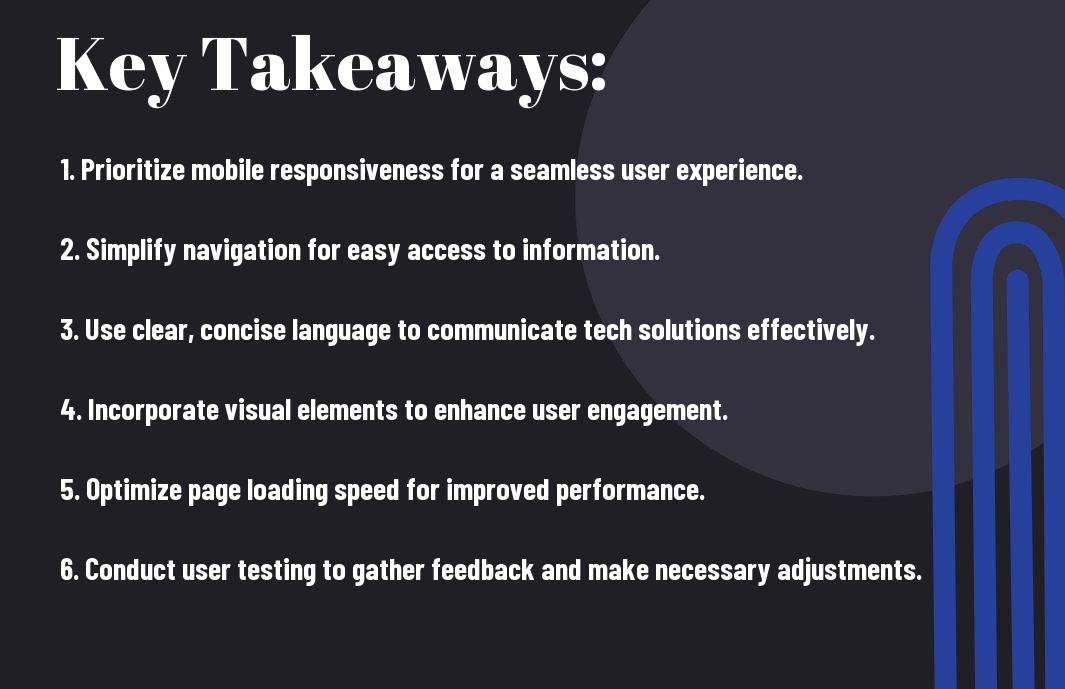
Key Takeaways:
- Understand User Behavior: Conduct research to fully understand your target audience’s needs and preferences.
- Simplify Navigation: Create an intuitive and easy-to-navigate website structure to improve user experience.
- Optimize for Mobile: Ensure your website is responsive and optimized for mobile devices to reach a wider audience.
- Focus on Load Time: Optimize your website’s performance to improve loading speed and reduce bounce rates.
- Prioritize Content: Highlight imperative information and use clear call-to-actions to guide users through the website.
- Implement User Feedback: Incorporate feedback mechanisms to gather insights and continuously improve the website’s user experience.
- Stay Consistent: Maintain brand consistency in design elements, messaging, and user experience across all pages of the website.

Understanding the Importance of User Experience
The Connection Between UX and Company Success
Importance: Before plunging into the specifics of user experience (UX) design for tech companies, it is crucial to understand the significant impact it has on the success of a business. The quality of user experience directly correlates with customer satisfaction, retention rates, and overall business growth. A positive user experience can lead to increased customer loyalty, higher conversion rates, and ultimately, a competitive edge in the market.
Defining User Experience in the Tech Industry Context
Importance: User experience in the tech industry goes beyond just the visual aspects of a website or application. It encompasses every interaction a user has with a digital product, including usability, accessibility, and overall satisfaction. In the fast-paced and ever-evolving tech sector, providing a seamless and intuitive user experience is not only a competitive advantage but a necessity for tech companies looking to stand out in a crowded marketplace.
Company: Tech companies must prioritize user experience to meet the expectations of today’s consumers who demand efficiency, ease of use, and innovation. By focusing on UX design, tech companies can create products that not only meet user needs but also exceed their expectations, leading to increased user engagement and loyalty. In a rapidly changing digital landscape, a user-centric approach to product design is imperative for tech companies to stay relevant and successful.
Planning Your Website Redesign Strategy
Setting Clear Objectives
Redesigning your website requires a strategic approach. Start by setting clear objectives for the redesign project. Define what you want to achieve with the new website. Whether it’s increasing engagement, improving user experience, or boosting conversions, having specific goals will guide the entire redesign process and ensure that you stay focused on what matters most.
Analyzing Your Current Website’s Performance
Before submerging into the redesign process, it’s imperative to analyze your current website’s performance. Take a close look at metrics such as traffic, bounce rates, conversion rates, and user engagement. This data will provide valuable insights into what is working well on your current site and what areas need improvement.
For instance, if you notice a high bounce rate on certain pages, it could indicate that the content or user experience is not resonating with visitors. By identifying these pain points, you can develop a redesign strategy that addresses them effectively, ultimately leading to a more successful website relaunch.
Key Elements of a Successful Website Redesign
Responsive and Mobile-Friendly Design
Unlike the past, today’s websites must be responsive and mobile-friendly. Redesigning your site with a focus on responsiveness ensures that users have a seamless experience across all devices. With the rise of mobile internet usage, optimizing your website for mobile can significantly improve user engagement and retention.
Intuitive Navigation and Structure
Successful website redesign goes beyond aesthetics; it involves creating an intuitive navigation system. Users should be able to easily find what they are looking for without getting lost in a maze of pages. Clear and logical navigation not only enhances user experience but also boosts conversions and reduces bounce rates.
Designing a website with a user-centric approach involves structuring the content in a way that makes sense to your audience. Conducting usability tests and gathering feedback can help in refining the navigation and overall structure of the website, ensuring a smooth and enjoyable browsing experience for visitors.
Visual Design and Branding Consistency
Navigation within a website should be consistent and intuitive to provide users with a seamless browsing experience. Design elements such as colors, fonts, and imagery should be aligned with your brand identity to reinforce brand recognition and trust among users.
It is important to incorporate user feedback and testing throughout the redesign process. Any changes made to the website should be based on data-driven insights and user preferences. By listening to your audience and continuously testing for improvements, you can create a website that truly resonates with your target demographic.
Advanced Techniques to Enhance UX
Despite the many challenges that come with redesigning a website, implementing advanced techniques can significantly enhance the user experience for tech companies. For more tips and recommendations on website redesign, check out Website Redesign – Tips and Recommendations.
- Leveraging Artificial Intelligence and Machine Learning
The Power of AI and Machine Learning
The integration of artificial intelligence (AI) and machine learning technologies can revolutionize the user experience on a website. By analyzing user behavior patterns and preferences, these technologies can personalize content, recommend products, and streamline the user journey. Utilizing AI and machine learning can lead to more personalized and intuitive experiences for users, ultimately increasing engagement and conversions.
- Implementing Personalization Features
Leveraging Personalization for Enhanced UX
With the advancement of technology, implementing personalization features on a website has become vital for tech companies. Personalization allows companies to tailor the user experience based on individual preferences, behaviors, and demographics. By displaying customized content, product recommendations, and targeted offers, companies can significantly improve user engagement and loyalty. Implementing personalization features can lead to higher conversion rates and customer satisfaction.
Summing up
Now, implementing a user-centric approach to website redesign is crucial for tech companies looking to enhance user experience. By focusing on clean and intuitive design, streamlined navigation, mobile responsiveness, and clear call-to-actions, companies can improve user engagement and satisfaction. Prioritizing speed and visual appeal, as well as incorporating user feedback and data-driven decisions, will ensure a successful website redesign that effectively showcases the company’s products and services. By following these tips, tech companies can create a user-friendly website that drives conversions and establishes a strong online presence in today’s competitive digital landscape.
FAQ
Q: Why is website redesign important for tech companies?
A: Website redesign is crucial for tech companies to stay competitive, adapt to changing trends, and improve user experience.
Q: What are the key benefits of enhancing user experience through website redesign?
A: Enhancing user experience through website redesign can lead to increased engagement, higher conversion rates, and improved brand perception.
Q: How can tech companies ensure a successful website redesign project?
A: Tech companies can ensure a successful website redesign project by setting clear goals, conducting thorough research, and involving users in the process.
Q: What are some best practices for optimizing user experience in website redesign?
A: Best practices for optimizing user experience in website redesign include responsive design, intuitive navigation, fast load times, and accessible content.
Q: How can tech companies leverage user feedback in website redesign?
A: Tech companies can leverage user feedback in website redesign by conducting surveys, usability testing, and analyzing user behavior data to make informed decisions.
Q: What role does mobile responsiveness play in website redesign for tech companies?
A: Mobile responsiveness is important in website redesign for tech companies as a large portion of users access websites through mobile devices, and a seamless mobile experience is crucial for success.
Q: How often should tech companies consider website redesign to enhance user experience?
A: Tech companies should consider website redesign periodically, at least every 2-3 years, to ensure their website stays modern, relevant, and user-friendly.