
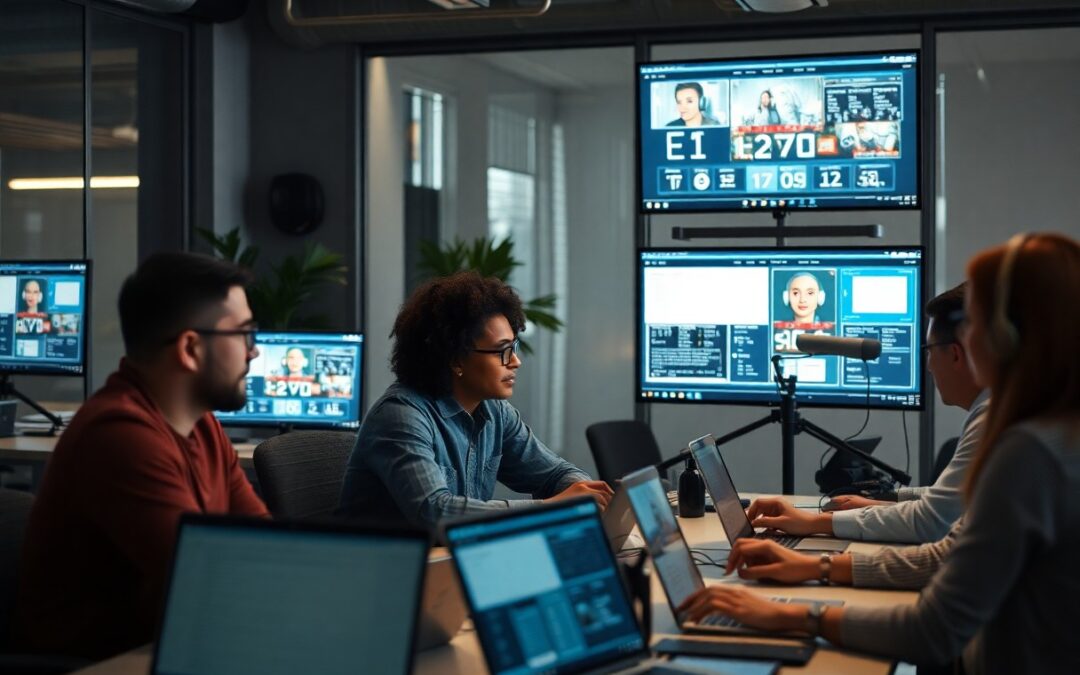
Voiceovers are an integral part of engaging video content, and artificial intelligence is transforming how you approach scriptwriting and voiceover production. With advanced algorithms and machine learning, AI offers tools that streamline the writing process, optimize dialogue, and even generate voiceovers that sound incredibly natural. By leveraging AI technologies, you can enhance your storytelling efficiency, improve audience engagement, and save time on production. In this post, you will discover the ways AI is reshaping these necessary elements of video creation, empowering you to elevate your content to new heights.
The Technological Revolution Behind AI Scriptwriting
The emergence of AI in scriptwriting reflects a technological revolution that harnesses complex algorithms and vast datasets, reshaping how content is created. You can leverage these advancements to streamline your writing process, enabling you to focus more on creativity while letting AI handle repetitive tasks. This enhancement is not just about speed; it facilitates a deeper understanding of audience preferences and trends, ensuring your scripts resonate with viewers on multiple levels.
Machine Learning and Language Processing Innovations
Machine learning has dramatically transformed how AI comprehends and generates language, allowing for more nuanced and context-aware scripts. As you interact with these systems, they adapt and improve by learning from user preferences and patterns in successful content. Innovations like transformer models contribute to this evolution, providing AI with a sophisticated toolkit for understanding the complexities of human language, from idioms to emotional tones.
Breakthroughs in Natural Language Generation
Recent advancements in natural language generation (NLG) have made it possible for AI to produce human-like text that is coherent and stylistically appropriate for various video content. These breakthroughs allow you to create scripts that are not only contextually relevant but also tailored to the specific emotional and narrative arcs you wish to convey. By utilizing NLG, you gain the power to generate entire drafts quickly or refine existing material to enhance engagement, significantly reducing the time spent in the writing phase of production.
NLG technologies leverage neural networks to generate text, taking into account factors like tone, audience demographics, and genre conventions. For instance, companies like OpenAI have developed models capable of producing scripts for various content types, from marketing spots to educational videos. This means you can quickly produce a script that aligns perfectly with your audience’s interests or project objectives, allowing for rapid adaptation to current trends or feedback. With AI’s capability to analyze and mimic successful styles, writers can harness these tools to explore new creative avenues without sacrificing authenticity.

Enhancing Creativity: AI as a Collaborative Tool
AI isn’t just a tool for automating tasks; it’s becoming a creative partner in the scripting process. By collaborating with writers, AI can provide fresh perspectives and new ideas that might not have emerged otherwise. This synergy enables you to explore different narrative possibilities, enhancing the depth of your storytelling and making your video content more engaging for audiences.
Augmenting Human Ideas with AI-Driven Suggestions
AI can analyze existing scripts and trending themes to offer you suggestions that align with current audience preferences. By harnessing natural language processing, AI identifies patterns in what resonates with viewers, allowing you to refine your content. This data-driven approach helps you craft narratives that not only captivate but also connect on a deeper emotional level, making your video projects stand out.
Balancing Originality and AI Contributions
Striking a balance between your unique voice and AI-generated content can elevate your projects. While AI provides suggestions and frameworks, your creative vision remains necessary. The challenge lies in blending these AI inputs with your original ideas, ensuring that your scripts reflect your personal touch while benefiting from AI’s data-driven insights.
Finding the right equilibrium between AI’s contributions and your originality fosters a more dynamic creative process. Many successful content creators have started integrating AI-generated outlines or dialogue, but the key lies in personalizing and adapting these suggestions to align with your vision. You might ask for an AI-generated premise, then infuse it with your unique voice or cultural references. This blend not only enriches your script but also ensures authenticity, making your video content more relatable and engaging to viewers while still leveraging the efficiency of AI.
Tailoring Voiceovers: Personalization Through AI
AI technology excels in personalizing voiceovers, enabling tailored experiences that resonate with diverse audiences. By analyzing user data, preferences, and even cultural nuances, AI can generate voice content that aligns seamlessly with your brand identity. This capacity for customization enhances the emotional connection between your content and its viewers, ensuring that your message is delivered effectively and memorably.
Customizable Voice Options Catering to Diverse Audiences
With AI, you can select from a plethora of voice options that cater to various demographic segments. Whether your target audience is children, professionals, or seniors, AI-generated voiceovers can mirror the characteristics and preferences of these groups. This level of customization allows for a more relatable and engaging viewer experience, increasing the likelihood of capturing and retaining their attention.
Emotion and Tone Adaptation for Enhanced Engagement
Emotion and tone play pivotal roles in how your audience connects with your content. AI systems can analyze the context and adjust the vocal delivery to match the intended message dynamically. This means that whether your content is meant to inspire, inform, or entertain, the AI can modulate vocal pitch, speed, and emotional inflection to amplify your narrative’s impact.
By incorporating advanced algorithms, AI can identify emotional cues from the script and produce corresponding voiceovers that evoke specific feelings. For example, a motivational video can feature an upbeat tone and a fast-paced delivery, while a heartfelt story can be articulated more slowly, with softer intonations. Research shows that well-matched emotions enhance viewer retention by up to 60%. This level of adaptability not only fosters deeper engagement but also enriches the overall viewer experience, making your content more memorable and effective.
Streamlining the Production Process with AI
AI revolutionizes the production process by enhancing efficiency and reducing bottlenecks. It allows creators to focus more on storytelling and less on repetitive tasks, which often consume valuable time. Streamlined workflows derived from AI technologies improve collaboration amongst teams, ensuring that deadlines are met without sacrificing quality. By integrating AI into your production pipeline, you pave the way for faster turnarounds and higher-quality content.
Automating Repetitive Tasks in Scriptwriting
You can streamline your scriptwriting process by leveraging AI to handle mundane tasks. From generating prompt ideas to optimizing dialogue for pacing, AI tools can automatically transform your rough concept into a polished draft. Automation expedites the editing process, allowing you to dedicate more time to creative aspects such as character development and thematic depth without getting bogged down in repetitive editing.
Speeding Up Voiceover Production with Advanced Technologies
Utilizing advanced AI technologies in voiceover production significantly reduces time and costs. AI voice synthesis engines can generate high-quality voiceovers instantly, allowing you to review multiple vocal styles effortlessly. Furthermore, adding features such as emotion modulation enables you to tailor the voice to fit specific scenes or moods without needing to record multiple voice actors. This not only shortens production cycles but also enhances overall content quality.
- AI voice synthesis for instant production
- Emotion modulation capabilities for personalized delivery
- Multiple vocal styles reviewed in minutes
- Cost-effective solutions compared to traditional methods
| Benefits of AI Voiceover Technologies | Impact |
| Reduced Production Times | Faster delivery of final videos |
| Lower Costs | Decreased need for multiple voice actors |
| Increased Flexibility | Ability to adapt voiceovers on-the-fly |
Advanced AI technologies in voiceover production not only act as a time-saving mechanism but also enhance your content’s overall emotional connection with the audience. For instance, AI allows dynamic adjustments to tone and pitch to better align with your narrative. As you design your project, keeping these capabilities in mind enables you to create compelling and engaging content that resonates well—both creatively and commercially.
- Dynamic adjustments for tone
- Voice customization tailored to target demographics
- Rapid prototyping of audio content
- Easier collaboration with sound designers
| AI Applications in Voiceover | Examples |
| Text-to-Speech Applications | Google’s WaveNet |
| Emotion Detection | Altered Reality’s software |
| Voice Cloning Technologies | Descript’s Overdub |
Navigating Ethical Concerns in AI-Driven Content Creation
Navigating the ethical landscape of AI-driven content creation involves addressing concerns that are reshaping the creative industry. Issues around authenticity, ownership, and fair use can complicate the relationship between technology and creativity. As AI tools increasingly contribute to scriptwriting and voiceover, you may find yourself confronting these ethical dilemmas. How can you leverage AI’s strengths while ensuring that the integrity of your work and the rights of others remain intact?
Addressing Authenticity and Ownership Issues
Your reliance on AI for content creation raises questions about authenticity and ownership. With algorithms generating scripts or voiceovers based on existing works, determining who truly ‘owns’ the content can be challenging. The blending of human creativity and AI assistance requires an acknowledgment of each contributor’s role, ultimately influencing how you attribute credit and protect intellectual property.
Ensuring Fair Use of AI in the Creative Process
Fair use in the context of AI-generated content hinges on the balance between inspiration and imitation. By understanding your legal rights and responsibilities with AI tools, you can foster a harmonious relationship with technology. This means not just using AI for efficient production but ensuring that the material it generates does not inadvertently infringe upon copyrighted works. You’ll want to familiarize yourself with the legal implications surrounding AI use, including fair use guidelines and licensing, so you can make informed decisions throughout your creative process.
When navigating fair use, consider the transformative nature of your work. If your AI-generated content offers fresh perspectives or incorporates unique elements, it may qualify as fair use. Familiarize yourself with landmark cases in copyright law, such as the “Google Books” case, which can offer insights into how courts perceive transformative use. Consult legal experts or use copyright resources to ensure that your use of AI remains compliant, safeguarding your creative outputs without sacrificing innovation.
To wrap up
The integration of AI in scriptwriting and voiceovers is transforming how you create video content, enabling you to enhance storytelling and produce high-quality audio effortlessly. With AI tools, you can generate scripts that cater to your audience’s preferences and achieve personalized voiceovers that resonate with viewers. By harnessing these innovations, you not only streamline your production process but also elevate the overall impact of your content, allowing you to engage your audience more effectively.