

Just as in the physical world, your online reputation holds immense power in shaping the success of your business. In today’s digitally-driven age, reputation management is crucial to ensure your online presence remains strong and positive. From handling negative reviews to amplifying positive feedback, implementing best practices can make all the difference. In this blog post, we will probe into the importance of maintaining a positive online reputation and explore effective strategies to uphold and safeguard your brand’s image in the vast digital landscape.
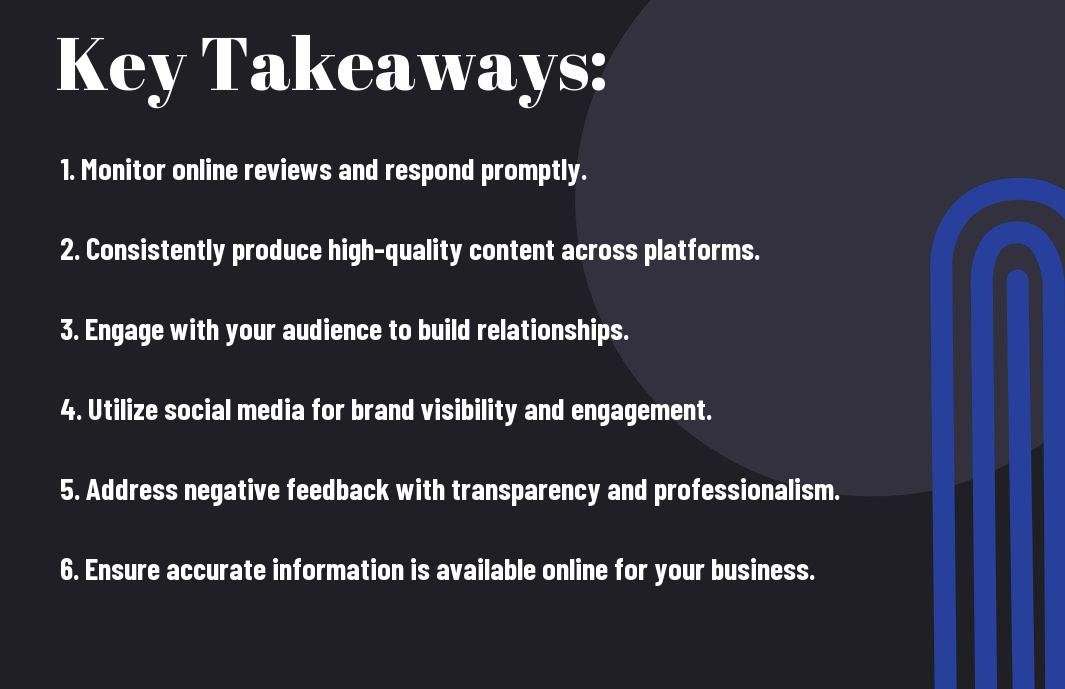
Key Takeaways:
- Monitor Your Online Reputation: Regularly monitor mentions of your brand on social media, review sites, and search engines to stay informed about what customers are saying about your business.
- Engage with Customers: Respond to both positive and negative reviews in a timely and professional manner to show customers that you value their feedback and are committed to providing excellent service.
- Focus on Building Trust: Consistently deliver high-quality products/services and engage with customers in a transparent and authentic way to build trust and credibility with your target audience.
Building Your Online Brand
Crafting Your Image
Little can be as crucial to success in the online world as carefully crafting your image. Your online image is the perception that customers form based on the information they find about your brand online. It includes your website, social media profiles, reviews, and any other digital footprint your business leaves behind.
Consistent Brand Messaging
Any successful brand knows the importance of consistent brand messaging. This means that your brand should have a unified voice and tone across all online platforms. Whether a customer is reading your website, interacting with your social media posts, or seeing your digital ads, they should instantly recognize your brand. This consistency in messaging helps build trust and credibility with your audience.
Avoid mixed signals and conflicting information about your brand, as it can confuse and turn away potential customers. By maintaining a consistent brand image and messaging, you establish a strong online presence that resonates with your target audience.
Monitoring Your Online Reputation
Setting up Alerts and Tools
The key to maintaining a strong online presence is proactively monitoring your reputation. To stay ahead of any potential issues, set up alerts and tools that notify you of any mentions of your brand online. Services like Google Alerts, social media monitoring tools, and online review platforms can help you stay informed of what is being said about your business.
Responding to Negative Feedback
One of the most crucial aspects of reputation management is how you respond to negative feedback. Addressing complaints or criticisms in a timely and professional manner can turn a dissatisfied customer into a loyal advocate for your brand. Always respond with empathy, take the conversation offline if necessary, and seek to resolve the issue to the customer’s satisfaction.
Plus, always remember that how you handle negative feedback can have a significant impact on your reputation. Ignoring or responding inappropriately to criticism can lead to a damaged brand image and loss of trust among customers.

Engaging with Your Audience
Leveraging Social Media
Not embracing social media as a tool for engaging with your audience is a missed opportunity in today’s digital landscape. Platforms like Facebook, Twitter, and Instagram allow you to interact directly with your customers, answer their queries, address concerns, and showcase your brand’s personality. Regularly posting relevant content, running promotions, and hosting interactive sessions can help in building a loyal online following.
Encouraging Positive Reviews
With the power of online reviews shaping consumer decisions, encouraging positive feedback is crucial for maintaining a stellar reputation. Your reputation can be significantly impacted by what customers say about your business. Monitoring review sites and responding promptly to both positive and negative feedback can demonstrate your commitment to customer satisfaction. Incentivizing happy customers to leave reviews or making the review process easy and accessible can also boost your online reputation.
For instance, offering discounts on future purchases for leaving a review or creating a user-friendly feedback form on your website can encourage customers to share their positive experiences. Note, a few positive reviews can strengthen your brand’s credibility and attract new customers.
Legal Considerations and Ethics
Managing Defamation
Considerations: To maintain a strong online presence, it’s crucial to address any instances of defamation promptly. Defamation can severely damage your reputation and credibility, leading to potential legal actions. Implement a proactive approach by monitoring mentions of your brand online, responding promptly to any false claims, and seeking legal advice if necessary.
Transparency and Honesty
Legal: As far as transparency and honesty in reputation management, it’s necessary to abide by ethical standards and legal regulations. Providing accurate information, disclosing any potential conflicts of interest, and being truthful in all communications are key practices. For instance, falsely presenting positive reviews or misleading customers about your products or services can lead to severe consequences, including legal repercussions and loss of trust from your audience.
Advanced Reputation Management Strategies
All reputation management strategies play a crucial role in maintaining a positive online presence. When tackling advanced strategies, it’s important to explore tactics such as search engine optimization (SEO) and utilizing analytics for continuous improvement.
- SEO Tactics for Reputation Enhancement
Tactics involving SEO are necessary for boosting your online reputation. By optimizing website content, utilizing relevant keywords, and obtaining backlinks from reputable sources, you can improve your search engine rankings and ensure that positive information about your brand is prominently displayed to online users.
- Utilizing Analytics for Improvement
Analyzing data through various tools can provide valuable insights into how your brand is perceived online. By tracking key metrics such as website traffic, user engagement, and social media mentions, you can identify areas for improvement and make data-driven decisions to enhance your online reputation.
Tactics for SEO Enhancement
Tactics involving SEO are necessary for boosting your online reputation. By optimizing website content, utilizing relevant keywords, and obtaining backlinks from reputable sources, you can improve your search engine rankings and ensure that positive information about your brand is prominently displayed to online users.
Analyzing Data for Improvement
Improvement Analyzing data through various tools can provide valuable insights into how your brand is perceived online. By tracking key metrics such as website traffic, user engagement, and social media mentions, you can identify areas for improvement and make data-driven decisions to enhance your online reputation.
Final Words
So, maintaining a strong online presence with reputation management best practices is imperative for any business looking to thrive in the digital era. By following the guidelines outlined in WHAT ARE THE BEST PRACTICES OF ONLINE REPUTATION MANAGEMENT IN THE DIGITAL ERA?, you can navigate the online landscape successfully and protect your brand from potential reputation risks. Note, a proactive approach to reputation management is key to fostering trust, credibility, and long-term success in today’s competitive market. Stay vigilant, monitor your online presence regularly, and address any issues promptly to maintain a positive reputation that resonates with your target audience.
FAQ
Q: Why is maintaining a strong online presence important?
A: Maintaining a strong online presence is necessary because it shapes how your brand is perceived by potential customers. Positive online reputation can lead to increased trust, credibility, and ultimately, more business.
Q: What are some best practices for reputation management?
A: Some best practices for reputation management include regularly monitoring online mentions of your brand, responding promptly and professionally to customer reviews and feedback, being transparent and authentic in your communications, and actively seeking out positive reviews from satisfied customers.
Q: How can I improve my online reputation if it has been damaged?
A: If your online reputation has been damaged, you can start by addressing the root cause of the negative feedback and finding ways to rectify the situation. Engage with disgruntled customers in a positive and empathetic manner, and work towards resolving any issues. Additionally, you can create and promote positive content to overshadow any negative search results.