

Indubitably, social media has become an integral part of brand promotion and visibility in the digital age. For startups, having a strong presence on social media platforms is imperative for gaining traction and establishing a reputable brand identity. Here are five compelling reasons why startups must prioritize social media management in order to enhance their brand visibility.
First and foremost, social media platforms provide startups with an unparalleled opportunity to connect with their target audience. By actively engaging with potential customers and building rapport, startups can effectively cultivate a loyal following and increase brand visibility. Additionally, social media offers a cost-effective means of reaching a wider audience, which is particularly beneficial for startups with limited marketing budgets. Furthermore, social media enables startups to gather valuable insights about their target market’s preferences and behaviors, allowing them to refine their marketing strategies and tailor their products or services to better suit the needs of their audience.
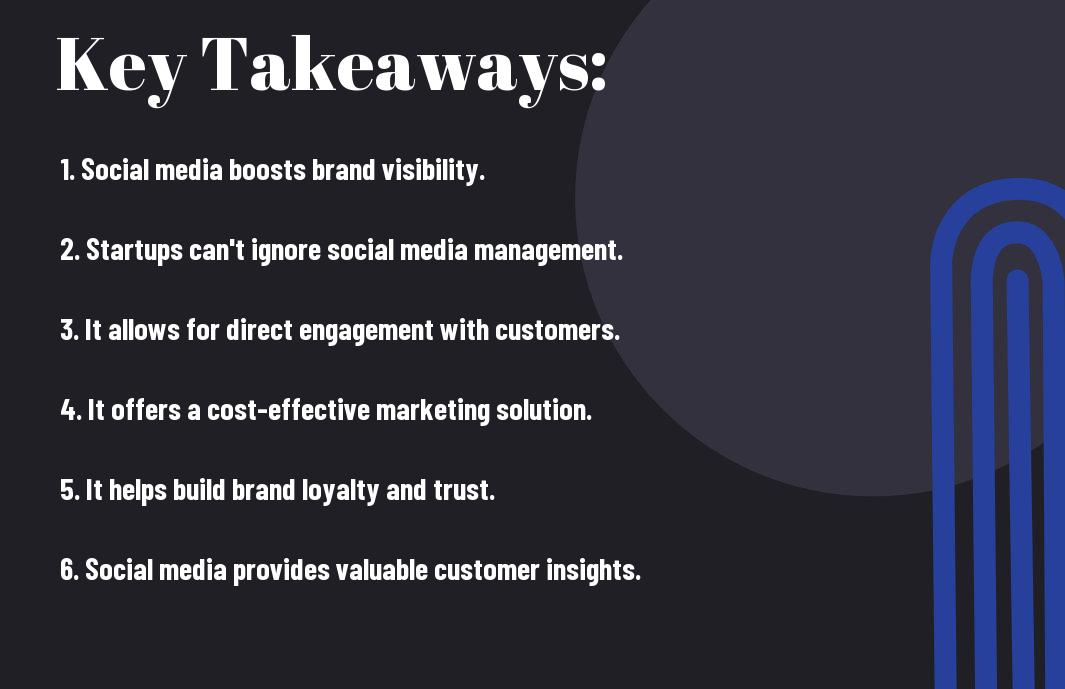
Key Takeaways:
- Brand Exposure: Social media management can significantly increase a startup’s brand visibility and reach a larger audience.
- Engagement Opportunities: By actively managing social media platforms, startups can engage with their audience, build relationships, and create brand loyalty.
- Competitive Edge: Ignoring social media management can put startups at a disadvantage against competitors who are effectively leveraging these platforms to boost their brand visibility.
The Imperative of Social Media for Startups
While traditional advertising and marketing methods may have been the go-to for established businesses, social media has become an absolute necessity for startups. With the vast reach and low-cost options available, social media platforms have provided startups with unprecedented opportunities to connect with their audience and build a strong brand presence.
Leveling the Playing Field
It is imperative for startups to recognize the power of social media in leveling the playing field against larger, more established competitors. Unlike traditional advertising, where budget constraints may limit startups’ ability to compete, social media allows startups to reach a wider audience and engage with them on a personal level. This can give startups a fighting chance to showcase their products and services and compete on an equal footing with bigger players in the market.
Startups and the Digital Landscape
Playing a significant role in the digital landscape, social media provides startups with a platform to build brand awareness, establish thought leadership, and engage with their target audience. In today’s digital age, social media has become an essential tool for startups to carve out a distinct identity and voice in the crowded online space.
Leveling the playing field against larger competitors, startups need to leverage the power of social media to boost brand visibility and engage with their audience.

Reason 1: Extended Reach and Engagement
The importance of social media management for startups cannot be overstated. With the right strategies in place, startups can significantly extend their reach and engage with their target audience in a meaningful way.
Exploring Global Audiences
Reach a wider audience by leveraging the global reach of social media platforms. With the ability to connect with people from all over the world, startups can expand their brand visibility and attract potential customers from diverse cultural backgrounds. By understanding the preferences and behavior of global audiences, startups can tailor their content to resonate with a wider spectrum of customers, ultimately leading to increased brand exposure and engagement.
Building Community Engagement
The key to brand visibility and loyalty lies in establishing a strong community engagement through social media management. By fostering meaningful interactions with their audience, startups can create a loyal fan base who actively support and promote their products or services. This kind of engagement not only increases brand visibility but also creates a sense of trust and credibility among the community, leading to long-term customer relationships and brand advocacy.
To further enhance community engagement, startups can organize interactive campaigns, encourage user-generated content, and respond promptly to customer inquiries and feedback. By incorporating these strategies, startups can strengthen their brand presence and build a loyal customer base, ultimately leading to sustainable business growth and success.
Reason 2: Cost-Effective Marketing
Nowadays, social media management offers startups a cost-effective way to market their products, reach their personas, and increase brand visibility. Unlike traditional marketing methods that incur high costs, social media platforms provide a more budget-friendly alternative that can yield significant results.
Comparing Traditional and Social Media Costs
With traditional marketing, products promotion, and advertising can be quite expensive, especially for startups with limited budgets. On the other hand, social media platforms allow for cost-effective marketing through targeted advertising and content promotion. Let’s look at a comparison of traditional and social media costs:
| Traditional Marketing | Social Media Marketing |
| High upfront costs | Lower upfront costs |
| Less targeted advertising | Highly targeted advertising |
The Power of Targeted Advertising
Costs associated with targeted advertising on social media platforms are significantly lower compared to traditional advertising methods. This allows startups to reach their personas more effectively and generate a higher return on investment. With the ability to target specific demographics, interests, and behaviors, social media platforms offer businesses the opportunity to create personalized and impactful advertising campaigns that resonate with their subjects.
Reason 2: Startups can leverage the power of targeted advertising on social media platforms to reach and engage with their personas effectively, all while keeping their marketing costs low.
Reason 3: Customer Insights and Feedback
Despite the importance of social media in brand visibility, startups can’t ignore the value of customer insights and feedback gained through social media management. This aspect of social media allows startups to understand their target audiences better and tailor their strategies accordingly.
Harnessing Data for Strategy
Reason 3 for prioritizing social media management is the opportunity to harness data for strategy development. Through analytics and insights gathered from social media platforms, startups can gain valuable information about their customers, including their preferences, behaviors, and demographics. This data can then be utilized to inform marketing campaigns, product development, and overall business strategy.
Direct Communication with the Customer Base
Any startup cannot afford to overlook the direct communication with their customer base that social media provides. Through engagement with followers, startups can receive timely and valuable feedback on their products or services, helping them to improve and innovate based on customer input. Additionally, direct communication fosters a sense of community and trust, essential for building a strong brand relationship with customers.
Plus, social media engagement allows startups to humanize their brand and create a personal connection with their target audience, leading to increased loyalty and customer retention.
Reason 4: Brand Authenticity and Reputation Management
Your startup’s brand authenticity and reputation management are critical factors in gaining and maintaining visibility in the market. Social media management plays a key role in shaping the perception of your brand and ensuring that it is perceived as authentic and trustworthy.
Storytelling and Brand Personality
An engaging brand story and personality can help your startup stand out in a crowded market. Social media platforms provide the perfect opportunity to showcase the human side of your brand, giving your audience a glimpse into the values, culture, and people behind your products or services. By sharing compelling stories and engaging content, you can build a strong emotional connection with your audience, which can lead to increased brand loyalty and advocacy.
Crisis Management and Customer Trust
Reputation management is crucial for startups as a single negative incident can have a lasting impact on the brand’s credibility. In the age of social media, a crisis can escalate rapidly, making it essential for startups to have a clear strategy in place for managing and mitigating potential reputational damage. By being proactive and transparent in addressing issues, your startup can demonstrate its commitment to customer trust and satisfaction, ultimately protecting and enhancing its reputation.
Trust, transparency, customer satisfaction, crisis management, reputation, authenticity, and brand personality are all vital aspects of brand visibility and reputation management that startups cannot afford to ignore.
Reason 5: Innovation and Trendsetting
Not leveraging social media for brand visibility means missing out on the opportunity to showcase your startup as an innovative and trendsetting player in the market. Social media management allows startups to demonstrate their expertise and thought leadership in their industry, becoming a go-to source for the latest trends and developments.
Staying Ahead of the Curve
Any startup aiming to stay ahead of the curve must actively engage in social media management to showcase their forward-thinking approach. By sharing industry insights, thought-provoking content, and engaging with industry leaders, startups can position themselves as the forefront of innovation, attracting attention and gaining credibility in the market.
Virality, Memes, and Brand Awareness
One of the key benefits of social media management for startups is the potential to achieve virality, create memes, and increase brand awareness. For instance, a well-crafted meme or a viral campaign can exponentially increase brand visibility, reaching a wide audience and generating positive buzz around the startup’s products or services.
By tapping into trending topics and leveraging the power of social media, startups can create memorable, shareable content that resonates with their target audience, leading to increased brand recognition and customer engagement.
Integrating Social Media Management into Business Strategy
After recognizing the importance of social media in boosting brand visibility, it’s crucial for startups to integrate social media management into their overall business strategy. This means utilizing social media platforms as a key tool for marketing, customer engagement, and brand building.
The Role of Social Media Managers
Social media managers play a pivotal role in implementing and executing the social media strategy of a startup. They are responsible for developing content calendars, creating engaging posts, monitoring audience engagement, and analyzing data to optimize social media performance. Their expertise and skills in social media management are invaluable for startups looking to establish a strong online presence.
Tools and Practices for Efficient Social Media Management
Strategy integration of various tools and practices is essential for efficient social media management. From scheduling tools and analytics platforms to influencer marketing and community management, startups need to embrace the right tools and practices to drive their social media strategies forward and maintain a competitive edge.
into their overall business strategy, startups can utilize scheduling and analytics tools, influencer marketing, and community management to optimize their social media performance and engage with their target audience more effectively. By leveraging these tools and practices, startups can create a strong online presence and stay ahead of the competition.
Conclusion
Upon reflecting on the importance of social media management for startups, it is clear that ignoring this vital aspect of brand visibility could hinder a company’s growth and success. The five reasons outlined provide a compelling argument for why startups cannot afford to overlook the power of social media in today’s digital landscape. By actively engaging with potential customers, creating valuable content, and leveraging the reach of social platforms, startups can significantly enhance their brand visibility and establish a strong online presence.
Ultimately, effective social media management is not just a marketing tool, but a crucial strategy for building brand recognition, generating leads, and driving sales. By embracing the opportunities offered by social media, startups can position themselves as industry leaders and gain a competitive edge in their respective markets. Ignoring social media management would be a missed opportunity for startups looking to establish a strong online presence and connect with their target audience in meaningful ways.
FAQ
Q: What is social media management and why is it important for startups?
A: Social media management involves the creation, scheduling, and analysis of content posted on social media platforms. It is important for startups because it helps them build brand awareness, increase their online presence, and engage with their target audience effectively.
Q: How can social media management boost brand visibility for startups?
A: Social media management can boost brand visibility for startups by allowing them to showcase their products or services, share valuable content, and interact with their audience in real-time. It helps startups reach a wider audience and create a positive brand image through consistent and compelling social media presence.
Q: What are the key benefits of effective social media management for startups?
A: The key benefits of effective social media management for startups include increased brand recognition, improved customer loyalty, higher conversion rates, valuable insights into audience preferences, and cost-effective marketing. It also helps startups stay ahead of the competition and build lasting relationships with their customers.