

It can be overwhelming for small businesses to navigate the ever-evolving world of social media. With over 3.6 billion people using social media worldwide, it’s important for companies to establish a strong online presence. However, without a solid strategy in place, it’s easy to get lost in the noise. To help small businesses make the most of their social media efforts, we’ve compiled a list of important social media management tips that can help elevate your brand, engage your audience, and drive business growth. From defining your goals to creating engaging content, these tips will empower you to navigate the digital landscape with confidence.
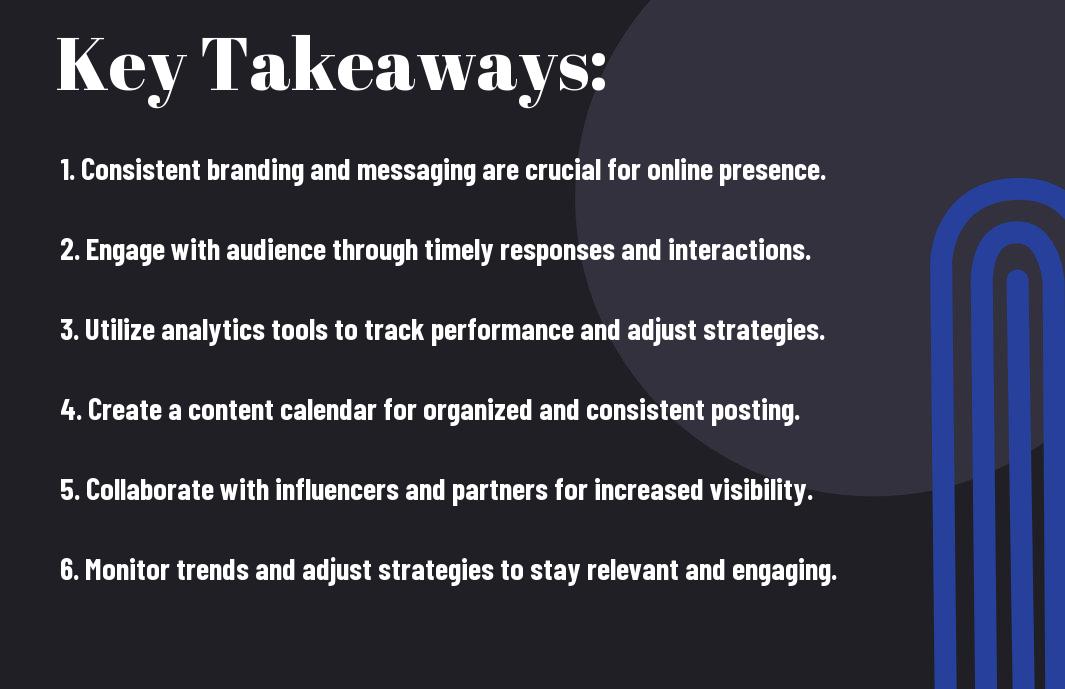
Key Takeaways:
- Consistent Branding: Ensure your small business maintains a consistent brand image across all social media platforms.
- Engage with your Audience: Regularly interact with your followers through comments, messages, and responding to their feedback.
- Plan Content in Advance: Create a content calendar to schedule posts in advance and ensure a consistent posting schedule.
- Utilize Analytics: Monitor social media metrics to understand what content resonates with your audience and adjust your strategy accordingly.
- Use Visual Content: Incorporate images, videos, and infographics to make your posts more engaging and shareable.
- Collaborate with Influencers: Partner with influencers or other businesses to expand your reach and attract new customers.
- Stay Up-to-Date: Keep abreast of social media trends and algorithm changes to adapt your strategy and stay ahead of the competition.

Crafting Your Social Media Strategy
Identifying Your Target Audience
Any successful social media strategy starts with identifying your target audience. Understanding who your audience is, what their needs are, and where they spend their time online is crucial for tailoring your content and engaging with them effectively. Conduct market research, analyze your current followers, and create buyer personas to get a clear picture of who you are trying to reach.
Setting Clear Goals and Objectives
Your social media strategy should be guided by well-defined goals and objectives. Identifying what you want to achieve through your social media efforts will help you stay focused and measure your success accurately. Whether it’s increasing brand awareness, driving website traffic, or generating leads, having clear goals will guide your content creation and engagement strategies.
With clear goals in place, you can track your progress and make data-driven decisions to optimize your social media strategy. Remember to set SMART goals – specific, measurable, achievable, relevant, and time-bound – to ensure your efforts are effective and aligned with your overall business objectives.
Managing Your Social Media Presence
Choosing the Right Platforms
Even for small businesses, it’s crucial to carefully select the social media platforms that align best with your target audience and business objectives. The key is quality over quantity; it’s better to have a strong presence on a few platforms that are most relevant to your audience than to spread yourself thin across all platforms. Consider factors such as demographics, engagement levels, and the type of content typically shared on each platform.
Creating a Content Calendar
Right from the start, establishing a content calendar is crucial for efficiently managing your social media presence. This calendar should outline the type of content you plan to post, along with specific dates and times for each post. By planning ahead, you can ensure a consistent flow of content that aligns with your overall marketing strategy and keeps your audience engaged.
Another benefit of having a content calendar is that it allows you to maintain a balanced mix of content types, such as promotional posts, industry news, user-generated content, and engagement posts. This variety keeps your audience interested and prevents your feed from becoming monotonous. Additionally, a content calendar helps you stay organized and ensures that you are posting regularly, which is crucial for maintaining a strong social media presence.
Engagement and Growth Tactics
Interacting with Your Audience
Tactics: Engaging with your audience on social media is necessary for building relationships and growing your business. Respond promptly to comments, messages, and mentions to show your audience that you value their input. Ask questions, run polls, and encourage discussions to foster a sense of community and increase engagement. By actively participating in conversations, you can humanize your brand and create loyal customers who feel connected to your business.
Leveraging Analytics for Growth
Engagement: Analyzing your social media data is crucial for understanding what content resonates with your audience and drives engagement. Use analytics tools to track key metrics such as reach, engagement, and conversions to measure the effectiveness of your social media efforts. Identify trends, patterns, and opportunities for improvement to optimize your strategy and achieve sustainable growth. By leveraging analytics, you can make informed decisions based on data-driven insights to maximize your social media performance.
Social Media Advertising
Many small businesses struggle with navigating the world of social media advertising. For a comprehensive guide on how to effectively utilize social media for your business, check out this Social Media Marketing Guide for Small Business Owners.
Understanding Paid Social Advertising
Media advertising on social media platforms involves paying to display promotional content or sponsored messages to a targeted audience. This allows businesses to reach a larger group of potential customers beyond just their followers.
Tips for Cost-Effective Ad Campaigns
- Set clear goals: Define what you want to achieve with your ad campaign.
- Target audience: Utilize the targeting options to reach the right people.
- High-quality visuals: Use eye-catching images or videos to attract attention.
- Monitor and analyze: Track your campaign’s performance and make necessary adjustments.
On top of these tips, consider using Facebook Ads Manager for detailed insights and better control over your ad campaigns. After implementing these strategies, you’ll be able to optimize your social media advertising efforts efficiently.
Mitigating Risks and Handling Crises
Your How to Do Social Media Marketing for Small Business efforts can sometimes lead to unexpected crises. It’s imperative for small businesses to have a solid plan in place to mitigate risks and handle crises effectively.
Developing a Crisis Management Plan
Handling a crisis effectively requires a well-thought-out plan. Identify potential risks, establish communication protocols, and designate spokespersons. Define escalation procedures and prepare template responses for different scenarios. Regularly review and update your crisis management plan to ensure readiness.
Online Reputation Management
The online reputation of your small business can make or break your success. The way you handle feedback, reviews, and comments can greatly impact how your brand is perceived. The online reputation management process involves monitoring online conversations about your business, promptly addressing negative feedback, and actively engaging with your audience to build trust and credibility.
To maintain a positive online reputation, small businesses must consistently deliver quality products and services, respond promptly to customer inquiries and feedback, and actively seek out opportunities to showcase positive experiences and reviews. Be mindful of, reputation management is an ongoing process that requires dedication and effort.
Tools and Resources for Efficiency
Automation and Scheduling Tools
After successfully setting up your social media profiles, it’s important to streamline your posting process. Automation tools like Hootsuite, Buffer, and Sprout Social can help you schedule posts in advance, saving you time and ensuring consistent engagement with your audience. By planning and scheduling your content, you can maintain a regular posting schedule without being tied to your devices constantly. These tools also allow you to monitor your accounts, engage with followers, and analyze performance metrics all in one place.
Measuring Success with Analytics Tools
On your journey to social media success, tracking and analyzing your performance is crucial. Analytics tools such as Google Analytics, Facebook Insights, and Twitter Analytics can provide valuable insights into the effectiveness of your social media efforts. By measuring metrics like engagement, reach, and conversions, you can see what content resonates with your audience and adjust your strategy accordingly to achieve better results.
Efficiency: When using automation and analytics tools, it’s important to maintain a balance. While automation can save time and simplify the scheduling process, over-reliance on automation can make your social media seem impersonal. Similarly, while analytics provide valuable data, obsessing over metrics can distract you from creating meaningful content. Striking a balance between automation and authentic engagement, as well as using analytics to inform rather than dictate your strategy, is key to running an efficient and successful social media campaign for your small business.
Conclusively
Implementing these important social media management tips for small businesses can improve your online presence, engage with your audience effectively, and ultimately grow your business. By consistently posting quality content, engaging with your audience, utilizing social media tools, analyzing performance metrics, and staying authentic to your brand, you can successfully manage your social media presence. For further discussion and tips from fellow small business owners, check out Small business owners, how do your keep your social media fresh and engaging? on Reddit. Be mindful of, social media is a powerful tool for connecting with your audience and increasing brand awareness, so stay committed to your strategy and adjust as needed to see optimal results.
FAQ
Q: Why is social media management important for small businesses?
A: Social media management helps small businesses to build brand awareness, connect with customers, drive website traffic, and increase sales.
Q: What are the key social media platforms that small businesses should focus on?
A: Small businesses should focus on platforms like Facebook, Instagram, Twitter, LinkedIn, and Pinterest, depending on their target audience and goals.
Q: How often should small businesses post on social media?
A: Posting frequency may vary, but a general guideline is 1-2 times per day on Facebook and Instagram, 5-10 times a week on Twitter, and 1-5 times a day on LinkedIn.
Q: How can small businesses engage with their audience on social media?
A: Small businesses can engage with their audience by responding to comments and messages promptly, running contests or giveaways, sharing user-generated content, and asking questions to spark conversations.
Q: What are some tips for creating engaging content on social media?
A: To create engaging content, small businesses should use high-quality visuals, write compelling captions, post a variety of content types (such as videos, images, and infographics), and stay consistent with their brand voice.
Q: How can small businesses measure the success of their social media efforts?
A: Small businesses can measure the success of their social media efforts by tracking metrics like engagement rates, reach, website traffic, conversion rates, and customer feedback.
Q: What are some common social media management mistakes that small businesses should avoid?
A: Common mistakes to avoid include inconsistent posting, not engaging with followers, overposting or underposting, not using analytics to track performance, and not staying updated on social media trends.