

Contemporary startups operate in a vast, evolving digital landscape that requires a strategic approach to social media management in order to thrive. Through platforms such as Facebook, Instagram, Twitter, and LinkedIn, startups can forge meaningful connections with their target audience and engage with them directly. By posting tailored content that resonates with their audience’s interests and pain points, startups can attract and retain a loyal community that is highly engaged with their brand.
Furthermore, effective social media management enables startups to create meaningful interactions with their audience through regular engagement, such as responding to comments, direct messages, and sharing user-generated content. This level of interaction helps to strengthen brand loyalty and foster a sense of community among their followers. With the right strategy and execution, social media management can be an invaluable tool for startups to establish a strong digital presence and build a loyal following from the ground up.
Key Takeaways:
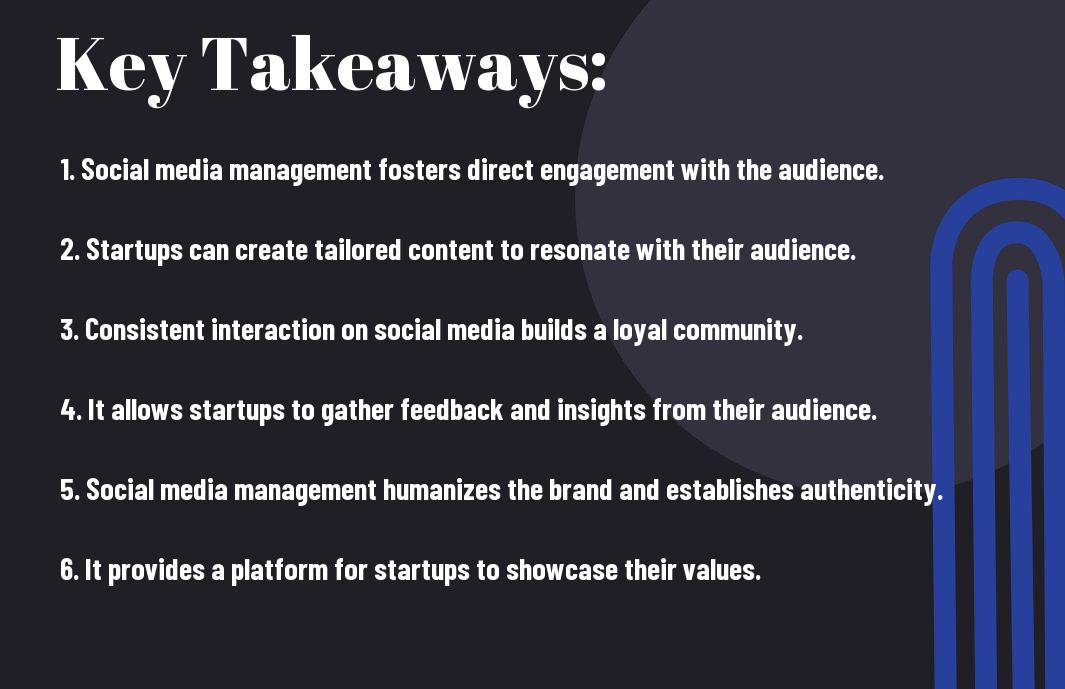
- Direct Engagement: Social media management allows startups to directly engage with their audience through comments, messages, and social media posts, creating a more personal connection with their audience.
- Meaningful Connections: By consistently interacting with their audience and creating tailored content, startups can foster meaningful connections with their audience, leading to increased brand loyalty and trust.
- Building a Loyal Community: Through regular interaction and tailored content, startups can build a loyal community of followers who are invested in their brand and more likely to support and advocate for the company.
Establishing a Brand Identity on Social Media
Obviously, social media is a powerful tool for startups to establish and communicate their brand identity. With the ability to reach a wide audience, startups can use social media to define, promote, and maintain a strong brand image that resonates with their target audience.
Defining Your Brand’s Voice and Image
Image plays a crucial role in shaping how your audience perceives your brand. By defining your brand’s voice and image, you can ensure that your messaging and visuals are consistent across all social media platforms. Take the time to clearly identify your brand’s tone, personality, and values, then ensure that these are reflected in all your social media communications and visuals. Authenticity and relatability are key to building a loyal community, so make sure your brand’s voice and image accurately reflect who you are and what you stand for.
Strategies for Brand Consistency Across Platforms
Voice consistency across the various social media platforms is essential for creating a unified brand identity. To achieve this, develop a style guide that outlines the key elements of your brand’s voice, such as language, tone, and messaging. Assign someone on your team to oversee the correct implementation of this style guide across all social media channels. This person can also be responsible for ensuring that your brand’s visual identity, including colors, fonts, and imagery, remains consistent across platforms.
To build a strong brand identity on social media, startups must pay close attention to the consistency of their brand’s voice and image across all platforms. By defining and maintaining these elements, startups can create a cohesive and memorable brand identity that resonates with their audience, ultimately leading to meaningful connections, direct engagement, and a loyal community.
Understanding Your Audience
If startups want to build a loyal community through social media, it is crucial for them to first understand their audience. Knowing who their audience is, what they like, and what they are looking for will allow them to tailor their content to meet their specific needs and preferences. Understanding the audience is the foundation for creating meaningful connections and engaging with them directly.
Tools and Methods for Audience Analysis
To gain insights into their audience, startups can utilize a variety of tools and methods for audience analysis. These may include social media analytics tools, audience surveys, and monitoring of engagement metrics. By analyzing data on demographics, behavior, and preferences, startups can gain a deeper understanding of their audience and tailor their content accordingly.
Tailoring Content to Different Audience Segments
Audience segmentation allows startups to create content that resonates with different segments of their audience. By recognizing that their audience is diverse and has varying interests and preferences, startups can tailor their content to different audience segments to ensure that each group feels seen and heard. Audience segmentation enables startups to deliver targeted and relevant content to specific groups, leading to increased engagement and connection.
Methods such as creating buyer personas, conducting A/B testing, and utilizing user-generated content can further assist in tailoring content to different audience segments. By implementing these strategies, startups can ensure that their content is highly relevant and resonates with their audience, ultimately leading to stronger connections and a loyal community.
Crafting Engaging Content
For startups, creating engaging content is crucial for building a loyal community and establishing meaningful connections with their audience. By crafting content that resonates with their target audiences, startups can effectively engage with them and drive interaction.
Types of Content that Resonate with Audiences
With social media management, startups can experiment with various types of content to see what resonates best with their audience. Some types of content that often resonate well include:
- Visual Content: such as images and videos that tell a story or evoke emotions.
- Interactive Content: like polls, quizzes, and contests that encourage engagement.
- Informative Content: such as how-to guides, industry insights, and tips that provide value to the audience.
- Entertaining Content: including memes, jokes, and behind-the-scenes glimpses that entertain and captivate audiences.
- User-Generated Content: leveraging content created by audiences to foster a sense of community and engagement.
Though these types of content can resonate well with audiences, it’s important for startups to regularly analyze feedback and engagement metrics to tailor their content strategy accordingly. Importantly, the information should be broken down into a table with 2 columns and 5 rows to effectively compare and contrast the various types of content.
Best Practices for Content Creation and Curation
Crafting engaging content also involves best practices for content creation and curation. Startups should focus on crafting content that is authentic, relevant, and valuable to their audiences. This involves understanding their audience’s preferences, pain points, and interests to create content that truly resonates.
With social media management, it’s important for startups to maintain consistent branding, tone, and messaging across all channels. This builds recognition and trust with audiences, ultimately leading to a more loyal and engaged community. By leveraging user-generated content and actively engaging with audiences, startups can also foster a sense of belonging and community among their followers.
The Power of Direct Engagement
Now more than ever, startups have the ability to directly engage with their audience through social media management. Platforms like Facebook, Twitter, and Instagram provide the perfect opportunity for startups to forge meaningful connections with their followers. By engaging directly with their audience, startups can build trust, loyalty, and a strong community around their brand.
Techniques for Interacting with Followers
Any successful social media management strategy involves active engagement with followers. Techniques such as responding to comments, messages, and mentions, asking for feedback, and running polls can help startups to build a strong rapport with their audience. By showing genuine interest in their followers and providing valuable, tailored content, startups can create a loyal and engaged community.
Measuring the Impact of Engagement on Brand Loyalty
Measuring the impact of engagement on brand loyalty is essential for startups to understand the effectiveness of their social media management efforts. By analyzing metrics such as follower growth, engagement rate, and customer retention, startups can gain valuable insights into the impact of their direct engagement with their audience. This data can be used to make informed decisions and refine their social media strategy to further strengthen brand loyalty.
Followers are the lifeblood of any startup, and building a loyal community through direct engagement can have a significant impact on brand success. By actively interacting with their audience and measuring the impact of their efforts, startups can create meaningful connections, foster loyalty, and ultimately drive business growth through their social media management.
Leveraging Social Media Algorithms
After establishing a social media presence, startups can take advantage of social media algorithms to maximize their reach and engagement. Understanding how algorithms work and using them to your advantage can significantly impact your social media strategy and the success of your startup.
How Algorithms Affect Content Visibility
The algorithms used by social media platforms determine which content is shown to users. These algorithms consider factors such as relevance, engagement, and timeliness to prioritize content in users’ feeds. This means that not all of your startup’s posts will reach your followers, and the visibility of your content is heavily dependent on how it aligns with the platform’s algorithm.
Tips for Working with Algorithms to Increase Engagement
In order to increase your startup’s visibility and engagement, it is essential to work with social media algorithms. One way to do this is by creating high-quality, engaging content that encourages interaction from your audience. Utilize hashtags and keywords relevant to your industry to improve the discoverability of your posts. Additionally, regular posting and consistency can signal to algorithms that your content is valuable and should be promoted to a wider audience. This can lead to greater organic reach and ultimately, higher engagement.
- Create compelling visuals to grab users’ attention
- Use analytics to monitor the performance of your posts
- Engage with your audience by responding to comments and messages
This knowledge can help your startup tailor its social media strategy to work in harmony with the algorithms, ultimately expanding your online community and building a loyal following.
Building a Community Around Your Brand
Unlike traditional marketing methods, social media management allows startups to build a loyal community around their brand. This community serves as a powerful asset in engaging with the audience, fostering meaningful connections, and ultimately driving business growth.
Initiatives to Foster Community Growth
On social media, startups can initiate various initiatives to foster community growth. This can include hosting regular Q&A sessions, creating exclusive groups for loyal customers, and organizing contests or giveaways to encourage interaction. By providing valuable and tailored content, startups can also attract and retain a strong and engaged community around their brand.
Encouraging User-Generated Content and Advocacy
User-generated content and advocacy play a crucial role in building a community around a startup’s brand. By encouraging users to share their experiences and thoughts, startups can create a sense of belonging and co-creation within their community. This not only strengthens brand loyalty but also increases brand awareness through authentic and positive word-of-mouth marketing.
This community serves as a valuable asset in engaging with the audience, fostering meaningful connections, and ultimately driving business growth through user-generated content, advocacy, and tailored initiatives to foster community growth.
Monitoring, Analytics, and Adapting Strategies
Keep a close eye on the performance of your social media platforms is crucial for startups looking to create meaningful connections with their audience. By monitoring, analyzing, and adapting your strategies, you can ensure that your efforts are yielding the results you desire, and make necessary adjustments to achieve your goals.
Tools for Tracking Social Media Performance
Social media management tools such as Hootsuite, Sprout Social, and Buffer provide in-depth analytics that allow startups to track the performance of their social media campaigns. These tools offer insights into engagement metrics, audience demographics, and content performance, enabling startups to make data-driven decisions and optimize their strategies for maximum impact.
Using Analytics to Refine and Improve Strategies
Monitoring the analytics of your social media performance is essential for refining and improving your strategies. By analyzing the data, startups can identify which types of content resonate most with their audience, understand when and where to engage with them for maximum impact, and tailor their content to meet the specific needs and preferences of their community. With the help of analytics, startups can refine their social media strategies to build stronger, more meaningful connections with their audience and ultimately build a loyal community of engaged followers.
Conclusion
Considering all points discussed in this article, it is evident that social media management plays a crucial role in enabling startups to form meaningful connections with their target audience. Through regular interaction and tailored content, startups can engage with their audience directly, addressing their needs and concerns, and building a loyal community. This level of interaction and engagement is essential for startups to establish their brand and gain trust and credibility in the market. By leveraging social media management, startups can effectively communicate their brand message, build relationships with their audience, and ultimately drive growth and success.
For more information on what startups need to know about social media marketing, visit What Startups Need to Know About Social Media Marketing.
FAQ
Q: How does social media management help startups create meaningful connections with their audience?
A: Social media management allows startups to humanize their brand by engaging with their audience on a personal level. Through regular interaction, startups can respond to comments, messages, and feedback, showing their audience that their opinions and thoughts are valued. By sharing authentic and relatable content, startups can build trust and form meaningful connections with their audience.
Q: In what ways does social media management enable startups to engage with their audience directly?
A: Social media management platforms provide startups with the tools to actively engage with their audience through features such as direct messaging, comment monitoring, and live chat. This direct engagement allows startups to address customer inquiries, concerns, and feedback in real-time, fostering a sense of accessibility and responsiveness that leads to increased audience engagement and loyalty.
Q: How can social media management aid startups in building a loyal community through tailored content?
A: Social media management allows startups to analyze audience demographics, behaviors, and preferences, enabling them to create tailored content that resonates with their target market. By consistently delivering relevant and engaging content, startups can build a loyal community that feels understood and catered to. Additionally, utilizing scheduling tools and content calendars within social media management platforms allows startups to maintain a regular and reliable presence, further strengthening the bond with their audience.