

Just delving into the world of Pay-Per-Click (PPC) advertising for banking institutions can be a daunting task, especially when considering the sensitive nature of the industry. Ensuring compliance with regulations, targeting the right audience, and maximizing ROI are crucial for success. In this guide, we will walk you through the 10 vital steps to set up and optimize PPC campaigns specifically tailored for banking institutions, providing you with the tools to boost visibility and drive conversions effectively.
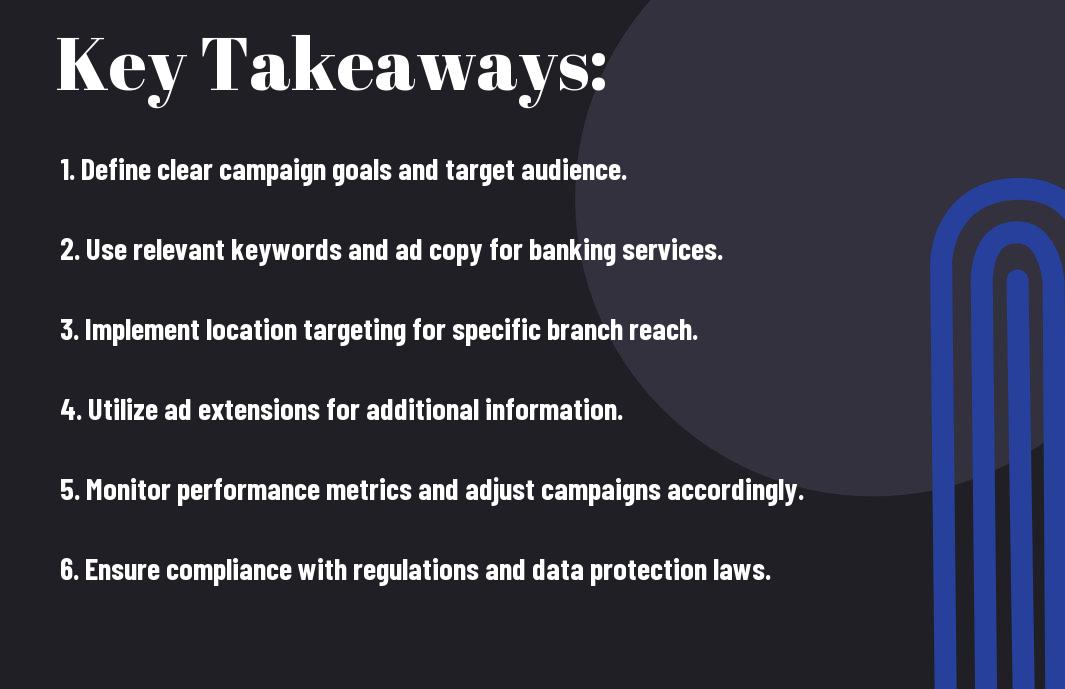
Key Takeaways:
- Understand your target audience: Identify the demographics, interests, and behavior of your target customers to tailor your PPC campaigns effectively.
- Use relevant keywords: Utilize keywords related to banking services and products to ensure your ads reach the right audience.
- Create compelling ad copy: Craft ads with strong, clear messaging that highlights the benefits of your banking institution.
- Include a strong call-to-action: Encourage potential customers to take the next step by including a clear call-to-action in your ads.
- Optimize landing pages: Ensure that your landing pages are user-friendly, relevant to the ad, and optimized for conversions.
- Monitor and analyze performance: Track key metrics such as click-through rates and conversion rates to optimize your campaigns for better results.
- Regularly test and refine: Continuously test different ad copy, keywords, and targeting strategies to improve the effectiveness of your PPC campaigns.

Define Campaign Goals
Identify Target Audience
While setting up a PPC campaign for a banking institution, it is crucial to identify the target audience. Understand who your ideal customers are, their demographics, behaviors, and financial needs. This will help tailor your campaign messaging and reach the right audience effectively.
Set Clear Objectives
Even before launching your PPC campaigns, it’s vital to set clear objectives for what you want to achieve. Whether it’s increasing brand awareness, generating leads, driving website traffic, or boosting account openings, having defined goals will shape your campaign strategy and measure success accurately.
While setting clear objectives, it’s important to consider the SMART criteria – specific, measurable, achievable, relevant, and time-bound. By following these guidelines, you ensure that your goals are well-defined and actionable, leading to a more successful PPC campaign for your banking institution.
Competitor Analysis
Research Competitors
Some of the first steps in setting up PPC campaigns for banking institutions involve thorough research of competitors. By identifying who your competitors are in the digital advertising space, you can gain valuable insights into their strategies, target audience, and messaging tactics. This information will help you craft a more effective PPC campaign that stands out in a competitive market.
Analyze Offerings
If you want to stay ahead of the competition, it is crucial to analyze the offerings of your competitors. Understand what products and services they are promoting through their PPC campaigns, and how they are positioning them in the market. By doing so, you can identify any gaps or opportunities for differentiation in your own offerings.
Competitor analysis can reveal important details such as competitive pricing strategies, unique selling propositions, and potential weaknesses that you can capitalize on. By studying your competitors’ offerings, you can tailor your PPC campaigns to attract customers and stay ahead in the competitive banking industry.
Select Keywords
Conduct Keyword Research
For a successful PPC campaign for banking institutions, keyword research is crucial. Not only will it help you understand what terms potential customers are searching for, but it will also allow you to target the right audience effectively. Use tools like Google Keyword Planner to identify relevant keywords with high search volume and low competition.
Utilize Long-Tail Keywords
LongTail keywords are more specific phrases that target a niche audience. LongTail keywords may have lower search volume, but they often result in higher conversion rates as they attract users who are closer to making a purchase decision. Incorporate long-tail keywords into your campaign to drive targeted traffic to your banking institution’s website.
Any banking institution looking to optimize their PPC campaigns should consider the power of long-tail keywords. LongTail keywords help narrow down the focus of your ads, ensuring that you reach the most relevant audience for your banking products or services. Additionally, long-tail keywords often have lower competition and cost per click, making them a cost-effective strategy for maximizing your PPC campaign’s ROI.
Structuring Campaigns
Keep your PPC campaigns well-organized and optimized to maximize performance for banking institutions. For a detailed guide on PPC advertising strategies specific to banking and financial industries, check out PPC Advertising for Banks and Financial Institutions.
Organize Ad Groups
An important step in structuring your PPC campaigns for banking institutions is to organize your ad groups effectively. Group related keywords, ad copy, and landing pages to ensure relevance and improve click-through rates. This approach also allows for better tracking and optimization opportunities.
Prioritize Products/Services
If you offer a range of products or services, it’s crucial to prioritize them based on profitability, target audience demand, and strategic goals. Allocate budget and focus on promoting the most profitable offerings to drive conversions and maximize return on investment.
Any additional products or services can be included in separate campaigns or ad groups to avoid diluting your efforts and ensure a clear and effective messaging strategy for each priority offering.
Crafting Ad Copy
Write Compelling Headlines
Many successful PPC campaigns in the banking industry start with crafting compelling headlines. Headlines are the first thing potential customers see when they come across your ads, so they need to be attention-grabbing and relevant to what users are searching for. Make sure to include keywords related to banking services and products to increase the chances of your ad being clicked on.
Include Strong CTA
There’s no doubt that including a strong call-to-action (CTA) in your ad copy is crucial for the success of your PPC campaign for banking institutions. A clear CTA prompts users to take action, whether it’s to learn more, sign up, or contact your bank. Use actionable language and create a sense of urgency to encourage users to click on your ad and engage with your banking services.
You’ll also want to ensure that your CTA aligns with your overall campaign goals. For example, if you’re promoting a new savings account, your CTA could be “Open Your Account Today” to drive conversions specifically for that product. Tailoring your CTA to the specific offering can lead to higher click-through rates and ultimately more conversions for your banking institution.
Landing Page Optimization
Ensure Relevance
All landing pages for your banking institution’s PPC campaigns must ensure relevance. This means aligning the content of the page with the ad that the user clicked on. Ensure your landing page provides the exact information the user is looking for, whether it’s about a specific banking product, service, or promotion.
Improve User Experience
With respect to optimizing landing pages for your banking institution’s PPC campaigns, improving user experience is key. Make sure your landing page is easy to navigate, loads quickly, and is mobile-responsive. Consider incorporating clear call-to-action buttons and forms that are easy to fill out to encourage conversions.
A landing page that offers a seamless user experience can significantly impact your campaign’s success. By optimizing for both relevance and user experience, you can increase the likelihood of converting PPC traffic into leads or customers for your banking institution.
Bid Strategy Development
Choose Bid Tactics
After conducting thorough keyword research and setting campaign goals, it’s time to choose the right bid tactics for your banking PPC campaign. Little decisions such as manual bidding or automated bidding can greatly impact your campaign performance. Consider your resources, expertise, and level of control you want over your bids when making this decision.
Adjust Based On Performance
Performance tracking is key to a successful banking PPC campaign. Performance data will reveal which keywords, ads, and landing pages are driving conversions and which ones are not meeting expectations. Make adjustments to your bids based on this data to ensure you are maximizing your ROI and reaching your campaign objectives.
Tactics such as bid adjustments for device, location, and time of day can help you tailor your strategy to target specific audience segments effectively. Regularly monitor your campaign performance and be prepared to make timely bid adjustments to stay competitive in the ever-evolving digital advertising landscape.
Set Budget Limits
Allocate Spending Wisely
Now that you have determined your overall budget for the PPC campaigns, it is crucial to allocate spending wisely across different ad groups and keywords. Prioritize areas that have shown the best performance in terms of conversion rates and return on investment. By focusing your budget on these high-performing areas, you can maximize the effectiveness of your campaigns.
Monitor Cost-Per-Click
While setting up your PPC campaigns, it is important to monitor the cost-per-click (CPC) for each keyword and ad group regularly. This metric indicates how much you are paying for each click on your ads and can help you optimize your budget allocation. By keeping a close eye on the CPC, you can identify keywords that are too expensive and adjust your bids accordingly to ensure cost-effectiveness.
It’s important to remember that monitoring your CPC can help prevent overspending and ensure that you are getting the most out of your budget. Adjusting bids based on the performance of each keyword can help you stay within your budget limits while maximizing the impact of your PPC campaigns.
Tracking and Analytics
Implement Conversion Tracking
Unlike other advertising channels, pay-per-click (PPC) campaigns provide a wealth of data that can be leveraged for optimization. Some of the most critical data points to track include conversion rate, cost per acquisition, and return on investment. By implementing conversion tracking, banking institutions can accurately measure the effectiveness of their PPC campaigns and identify areas for improvement.
Review Analytics Regularly
While setting up conversion tracking is vital, it is equally important to regularly review the analytics to identify trends and make informed decisions. For instance, monitoring key performance indicators such as click-through rate, bounce rate, and average session duration can provide insights into user behavior and campaign performance. By analyzing this data regularly, banking institutions can optimize their PPC campaigns for higher conversions and a better return on investment.
Summing up
Upon reflecting on the 10 steps to set up and optimize PPC campaigns for banking institutions, it becomes apparent that a well-designed strategy is crucial for success in this competitive landscape. By following these steps, including thorough research, clear goals, and continuous monitoring and optimization, banking institutions can effectively reach and engage with their target audience. To further enhance PPC campaigns, institutions can also consider implementing the suggestions outlined in 10 Strategies to Optimize Your PPC Ads and Boost Sales. By staying informed of industry trends and best practices, banking institutions can stay ahead of the curve and achieve their marketing objectives.
FAQ
Q: What are the key benefits of setting up and optimizing PPC campaigns for banking institutions?
A: Setting up and optimizing PPC campaigns for banking institutions can help reach a targeted audience, increase brand awareness, drive website traffic, generate leads, and ultimately increase conversions and revenue.
Q: How can banking institutions effectively target their audience through PPC campaigns?
A: Banking institutions can effectively target their audience through PPC campaigns by using specific keywords related to banking services, demographics, location targeting, and retargeting strategies to reach potential customers.
Q: What are some important steps to follow when setting up PPC campaigns for banking institutions?
A: Some important steps to follow when setting up PPC campaigns for banking institutions include defining campaign goals, conducting keyword research, creating compelling ad copies, setting up conversion tracking, and optimizing landing pages.
Q: How can banking institutions optimize their PPC campaigns for better performance?
A: Banking institutions can optimize their PPC campaigns for better performance by continuously monitoring and analyzing campaign data, A/B testing ad copies and landing pages, refining keyword targeting, adjusting bids, and improving quality scores.
Q: Why is it important for banking institutions to track key metrics in their PPC campaigns?
A: Tracking key metrics in PPC campaigns allows banking institutions to measure the effectiveness of their campaigns, identify areas for improvement, allocate budget more effectively, and achieve a higher return on investment (ROI).
Q: How can banking institutions stay compliant with regulations when running PPC campaigns?
A: Banking institutions can stay compliant with regulations when running PPC campaigns by ensuring all ad copies and landing pages are clear and transparent, providing accurate information, and following industry guidelines and legal requirements.
Q: What are some common mistakes to avoid when setting up and optimizing PPC campaigns for banking institutions?
A: Some common mistakes to avoid when setting up and optimizing PPC campaigns for banking institutions include neglecting to target the right audience, not monitoring campaign performance regularly, using irrelevant keywords, and not focusing on conversion optimization.