
The importance of a thorough SEO audit for banking websites cannot be overstated. Ensuring that your website is optimized for search engines is crucial for increasing visibility, driving traffic, and ultimately, attracting and retaining customers. Missing key SEO elements can lead to decreased organic traffic, lower rankings, and ultimately, a loss of potential customers. Therefore, it is necessary for banking websites to regularly conduct SEO audits to identify and address any issues that may be hindering their online success. In this blog post, we will provide a comprehensive SEO audit checklist specifically tailored for banking websites, highlighting the most critical areas that need to be addressed to ensure optimal performance.
Key Takeaways:
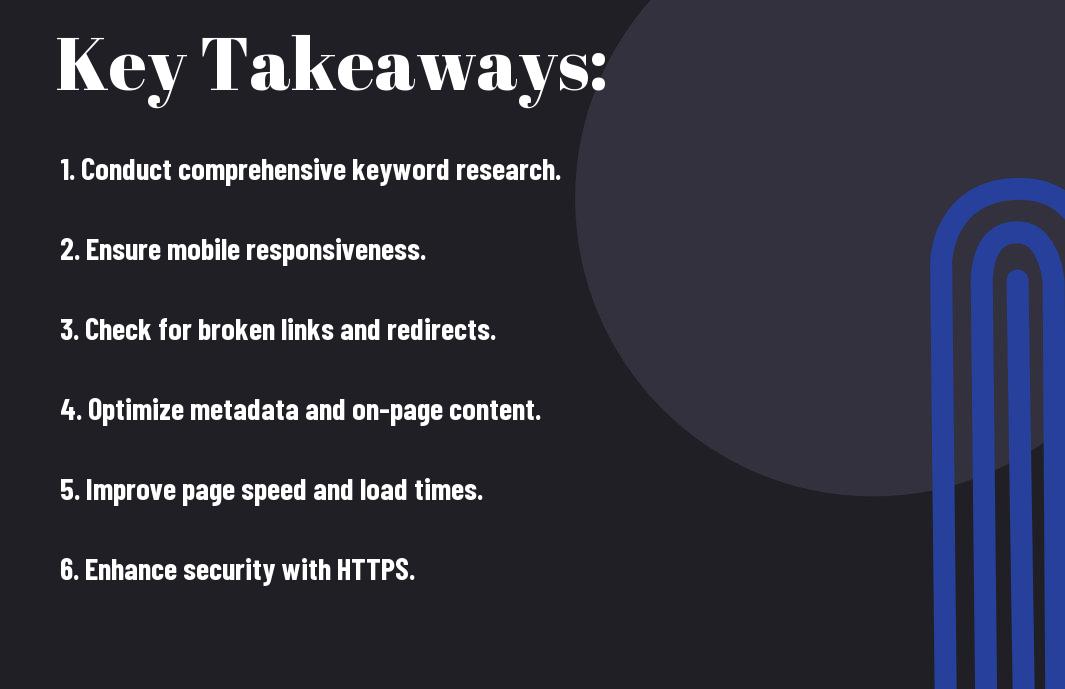
- Optimize website speed: Ensure that your banking website loads quickly on both desktop and mobile devices to improve user experience and search engine rankings.
- Improve site structure: Organize content in a clear and logical way, use proper headings, and internal links to help search engines crawl and index your site more efficiently.
- Optimize on-page elements: Include relevant keywords in meta titles, descriptions, headings, and content to improve your site’s visibility in search engine results.
- Mobile optimization: Make sure your banking website is mobile-friendly and provides a seamless user experience on mobile devices.
- Local SEO: Optimize your site for local search by including your business name, address, and phone number on every page, and by creating a Google My Business listing.
- Security and privacy: Ensure that your banking website is secure with HTTPS encryption, and clearly communicate your privacy policy to build trust with visitors.
- Regular updates and maintenance: Keep your website content fresh, fix broken links, and address any technical issues promptly to maintain a high level of SEO performance.
Technical SEO Audit
Ensuring Website Security
To ensure the security of your banking website, it is crucial to conduct regular audits. Little mistakes can lead to major security breaches that can compromise sensitive customer data. It is crucial to keep up with the latest security protocols and implement HTTPS, The Ultimate SEO Audit Checklist for Website Analysis which helps in boosting your website’s security measures.
Site Structure and Sitemap Analysis
One of the key factors in a successful SEO audit for banking websites is analyzing the site structure and sitemap. The way your website is organized and navigated can impact user experience and search engine rankings. The structure should be optimized for easy navigation and indexing by search engines.
Mobile Responsiveness and Core Web Vitals
Technical SEO audits for banking websites must include a check for mobile responsiveness and core web vitals. Little factors like page loading speed and mobile-friendliness can significantly impact user experience and search rankings. It is important to ensure that your website is optimized for mobile devices and meets Core Web Vital requirements.
Checking Site Speed and Performance
When conducting a technical SEO audit for banking websites, it is crucial to check the site speed and performance. Structure in a way that the website loads quickly and performs efficiently can have a positive impact on user experience and search engine rankings. Regularly monitor and optimize for improved site speed and performance.
Content Optimization
All The Technical SEO (& Beyond) Site Audit Checklist is useless if the content on your banking website is not optimized for search engines. Content optimization plays a crucial role in ensuring your website ranks well in search engine results and attracts the right audience.
Keyword Analysis for Banking Services
Banking services require specific keywords that resonate with your target audience. Conduct thorough keyword research to identify relevant terms that potential customers might use when searching for banking services online. Incorporate these keywords strategically into your website content to improve visibility and drive organic traffic.
Quality and Relevance of Content
On a banking website, the quality and relevance of content are paramount. Visitors seek accurate and trustworthy information regarding financial services, products, and industry news. Ensure that your content is up-to-date, informative, and tailored to address the needs of your target audience. Poor-quality or irrelevant content can harm your website’s reputation and credibility.
Meta Tags and Headings Structure
The optimization of meta tags, such as title tags and meta descriptions, is crucial for improving your banking website’s search engine visibility. Structuring headings with relevant keywords enhances the readability of your content for both users and search engines. Optimizing these elements correctly can positively impact your website’s ranking and click-through rate.
On-Page and Off-Page SEO
Internal Linking Strategies
Now, with Internal Linking Strategies, it’s crucial to ensure that your banking website has a strong internal linking structure. Internal links help search engines understand the hierarchy and relationship between different pages on your website. Incorporating relevant internal links within your content can improve user experience and boost SEO ranking.
External Backlink Profile Assessment
Internal, External Backlink Profile Assessment plays a vital role in determining the authority and credibility of your banking website. It involves evaluating the quality and quantity of backlinks pointing to your site from external sources. Having a diverse and authoritative backlink profile can significantly enhance your website’s SEO performance, while toxic or spammy backlinks can harm your rankings and reputation. It’s important to regularly audit and disavow any harmful backlinks to maintain a healthy backlink profile.
Plus, understanding the anchor text diversity and relevance of external backlinks is necessary. Anchor text variation indicates organic link building, while relevance ensures that the links are from reputable sources within the banking and finance industry.
Local SEO and Compliance
Local Listings and Maps Optimization
Maps play a crucial role in local SEO for banking websites. Ensuring your business information is accurate and up-to-date on Google My Business and other local listings is necessary. This includes your bank’s name, address, phone number, and website. Optimizing your listings with relevant keywords and business categories can help improve your visibility in local searches.
Compliance with Industry-specific Regulations
To maintain compliance with industry-specific regulations, banking websites must adhere to strict guidelines set forth by regulatory bodies. It is imperative to follow regulations such as the Gramm-Leach-Bliley Act (GLBA) and the Bank Secrecy Act (BSA) to protect customer data and prevent money laundering. Failure to comply with these regulations can result in hefty fines and damage to your bank’s reputation.
Compliance with industry-specific regulations is not optional but mandatory for banking institutions. Implementing robust security measures, conducting regular audits, and providing staff training on compliance are crucial steps to ensure adherence to regulations. Non-compliance can lead to severe consequences, including legal actions and loss of customer trust.
Tracking Performance and User Experience
Setting Up and Reviewing Analytics
An imperative part of conducting an SEO audit for banking websites is setting up and reviewing analytics. By utilizing tools like Google Analytics and Google Search Console, you can gain valuable insights into how users are interacting with your site. These tools can help you track key metrics such as website traffic, audience demographics, and user behavior. When reviewing analytics, pay close attention to metrics like bounce rate, average session duration, and conversion rates to identify areas for improvement.
User Behavior and Conversion Tracking
Another crucial aspect of tracking performance and user experience on banking websites is monitoring user behavior and conversion tracking. By implementing tools like heatmaps, session recordings, and conversion tracking pixels, you can gain a deeper understanding of how visitors navigate your site and where they may be dropping off in the conversion process. Analyzing user behavior can help you identify usability issues, optimize calls-to-action, and improve overall user experience.
Performance: It is imperative to monitor and analyze user behavior and conversion tracking data regularly to identify any pain points or areas for improvement on your banking website. By leveraging analytics tools effectively, you can make data-driven decisions to enhance user experience, improve conversion rates, and ultimately drive more traffic and engagement to your site.
Summing up
Hence, a comprehensive SEO audit checklist is crucial for ensuring that banking websites are effectively optimized for search engines. By following the key steps outlined in the checklist – including evaluating technical SEO elements, assessing content quality, analyzing website performance, and optimizing for mobile – banks can enhance their online visibility, attract more traffic, and ultimately improve user experience. Prioritizing SEO for banking websites is imperative in today’s digital landscape, and utilizing a checklist can help streamline the audit process and identify areas for improvement to stay ahead in the competitive online market.
FAQ
Q: What is an SEO Audit Checklist for Banking Websites?
A: An SEO Audit Checklist for Banking Websites is a comprehensive list of items and tasks that need to be assessed and optimized in order to improve the search engine ranking and visibility of a banking website.
Q: Why is an SEO Audit important for Banking Websites?
A: An SEO Audit is important for banking websites to ensure that they are following best practices, optimizing for relevant keywords, and providing a user-friendly experience to improve their organic search rankings and attract more potential customers.
Q: What are the key elements of an SEO Audit Checklist for Banking Websites?
A: The key elements of an SEO Audit Checklist for Banking Websites include on-page optimization, technical SEO, mobile-friendliness, site speed, content quality, user experience, backlink analysis, and competitor research.
Q: How can banking websites improve their on-page optimization through an SEO Audit?
A: Banking websites can improve their on-page optimization by optimizing meta tags, headers, URLs, and content for relevant keywords, ensuring proper internal linking, and fixing any duplicate content issues identified during the audit.
Q: Why is mobile-friendliness important in an SEO Audit for Banking Websites?
A: Mobile-friendliness is important in an SEO Audit for Banking Websites because a significant portion of users access websites on mobile devices, and search engines prioritize mobile-friendly sites in their rankings, leading to better visibility and user experience.
Q: How does site speed impact the SEO performance of Banking Websites?
A: Site speed is a critical factor in SEO performance for banking websites as faster loading times improve user experience, reduce bounce rates, and signal quality to search engines, resulting in higher rankings and organic traffic.
Q: What role does content quality play in the SEO Audit Checklist for Banking Websites?
A: Content quality plays a crucial role in the SEO Audit Checklist for Banking Websites as high-quality, relevant, and engaging content not only attracts users but also helps with search engine rankings and establishing authority in the financial industry.