

With the ever-evolving landscape of social media, businesses need effective management strategies to maximize their return on investment (ROI). In today’s digital age, social media has become a powerful tool for businesses to connect with their audience, increase brand awareness, and drive sales. However, without a strategic approach to social media management, businesses risk wasting time and resources on ineffective tactics. In this blog post, we will discuss key strategies to help you optimize your social media presence and increase your ROI.
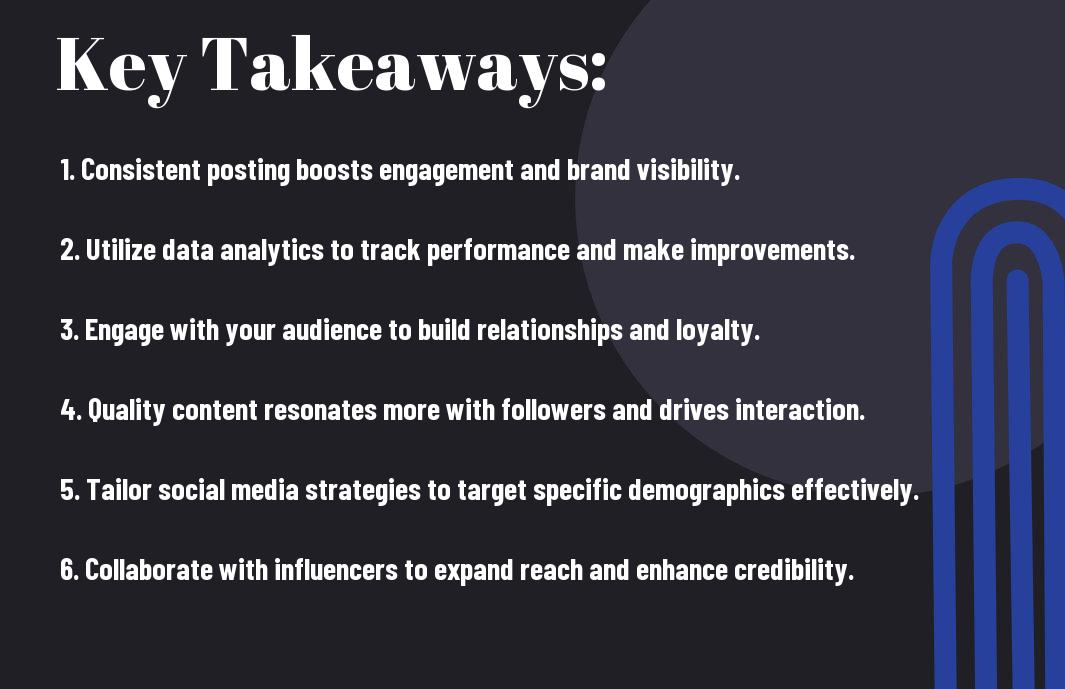
Key Takeaways:
- Consistent Branding: Ensure your social media profiles align with your brand’s identity, including your logo, messaging, and colors.
- Engagement is Key: Interact with your audience through responding to comments, messages, and creating polls to increase engagement and build relationships.
- Data-Driven Decisions: Use analytics tools to track the performance of your campaigns, understand your audience demographics, and adjust your strategies accordingly to maximize ROI.
Defining Your Social Media Goals
Aligning with Business Objectives
The first step in defining your social media goals is to align them with your overall business objectives. Understanding how social media fits into your company’s larger strategy will help you create goals that contribute directly to the bottom line. Whether it’s increasing brand awareness, driving website traffic, or generating leads, your social media goals should support your business goals.
Specific, Measurable, Achievable, Relevant, Time-bound (SMART) Goals
With social media goals, it’s necessary to be specific, measurable, achievable, relevant, and time-bound in order to track progress and measure success effectively. Setting SMART goals ensures that your objectives are clear and actionable, allowing you to focus your efforts on what truly matters for your business.
To further illustrate the importance of SMART goals, let’s take an example of a generic goal like “Increase social media engagement.” While this goal is a good starting point, it lacks the specificity and measurability required to track progress effectively. A SMART goal would be something like “Increase Instagram engagement rate by 20% within the next three months.” This goal is specific, measurable, achievable, relevant, and time-bound, making it easier to create a targeted strategy to achieve it.
Crafting Your Social Media Strategy
Choosing the Right Platforms for Your Audience
Even before plunging into social media management, it is crucial to identify the platforms where your target audience is most active. By selecting the right social media platforms, you can ensure that your content is reaching the right people at the right time.
Content Creation and Curation
To maximize your ROI, you must focus on creating high-quality content that resonates with your audience. An effective content strategy involves a mix of original content creation and content curation. By consistently providing value to your followers, you can boost engagement and build a loyal community around your brand.
Another important aspect of content creation and curation is maintaining a consistent brand voice and visual identity across all platforms. Consistency is key in establishing brand recognition and credibility among your audience. By showcasing your brand personality through your content, you can differentiate yourself from competitors and leave a lasting impression on your followers.
Tools and Techniques for Enhancing Engagement
Utilizing Analytics for Decision Making
To maximize engagement on social media, it is necessary to utilize analytics for decision making. By analyzing metrics such as reach, clicks, likes, shares, and comments, you can gain valuable insights into your audience’s preferences and behavior. This information allows you to make data-driven decisions to tailor your content strategy for higher engagement and better ROI.
Automation and Social Media Management Tools
Decision-making in social media management can be greatly enhanced by leveraging automation and social media management tools. Platforms like Hootsuite, Buffer, and Sprout Social offer features that allow you to schedule posts, monitor interactions, and analyze performance metrics efficiently. Automating repetitive tasks like posting content at optimal times and responding to messages can free up time for more strategic initiatives, while analytics tools provide actionable insights for refining your social media strategy.
With the right combination of automation and social media management tools, you can streamline your workflow and improve the effectiveness of your social media efforts. These tools not only save time and resources but also enable you to consistently engage with your audience and measure the impact of your campaigns, ultimately leading to a higher return on investment.
Monitoring and Adjusting Your Approach
Keeping an Eye on Social Media Trends
Keep a close watch on the ever-evolving landscape of social media trends to ensure your strategies are up to date. The social media sphere moves at a rapid pace, with new features, algorithms, and trending topics emerging regularly. By staying informed and analyzing key metrics, you can leverage the latest trends to enhance your brand’s visibility and engagement.
When to Pivot Your Strategy
The key to successful social media management is knowing when it’s time to pivot your strategy. Your ability to adapt to changing circumstances can make or break your ROI. If you notice diminishing returns, a shift in your target audience’s preferences, or a new competitor gaining traction, it may be time to reassess your approach. Don’t be afraid to make strategic adjustments to stay ahead in the digital landscape.
Trends in social media can impact your ROI significantly. By aligning your strategies with current trends and knowing when to pivot your approach, you can maximize your brand’s visibility, engagement, and ultimately, your return on investment.

Measuring Success and Calculating ROI
Key Performance Indicators (KPIs) for Social Media
All successful social media strategies have one thing in common – they are driven by data. Social media KPIs are crucial for measuring the effectiveness of your social media efforts. Key metrics to track include engagement rate, click-through rate, conversion rate, follower growth rate, and lead generation.
Techniques for Tracking and Improving ROI
Tracking and improving ROI on social media can be a complex process, but with the right techniques, it can be streamlined and more effective. It is important to implement tracking tools like Google Analytics and social media management platforms to measure and analyze key metrics. Additionally, A/B testing, content optimization, and influencer partnerships can help improve your ROI.
It is crucial to regularly analyze your social media performance, adjust your strategies accordingly, and experiment with new tactics to maximize your return on investment. By continuously monitoring and optimizing your social media campaigns, you can ensure that you are getting the most out of your efforts and increasing your ROI over time.
Conclusion
So, to maximize your ROI with effective social media management strategies, it is important to understand your target audience, create engaging content, and consistently analyze and refine your approach. By implementing creative social media marketing strategies, you can boost your ROI and achieve success in the digital landscape. For more insights on enhancing your social media marketing efforts, check out Creative social media marketing strategies to boost your ROI.
FAQ
Q: Why is social media management important for maximizing ROI?
A: Social media management is important for maximizing ROI because it allows businesses to effectively engage with their target audience, increase brand visibility, drive website traffic, and generate leads. By strategically managing social media channels, businesses can achieve a higher return on investment through increased customer acquisition and retention.
Q: What are some key strategies for effective social media management?
A: Some key strategies for effective social media management include creating a content calendar to plan and schedule posts, engaging with followers through comments and messages, monitoring analytics to track performance, collaborating with influencers or partners, and running targeted advertising campaigns. Consistency, authenticity, and relevance are also crucial components of successful social media management.
How can businesses measure the success of their social media management efforts?
A: Businesses can measure the success of their social media management efforts by tracking key performance indicators (KPIs) such as reach, engagement, conversion rates, click-through rates, and return on investment. Utilizing social media analytics tools and setting specific goals can help businesses evaluate the effectiveness of their strategies and make data-driven decisions to optimize ROI.