

This step-by-step guide will show you exactly how to create Google Ads that target specific keywords related to your business with precision and efficiency. Targeting specific keywords is crucial to reaching your target audience and driving relevant traffic to your website. With the right strategy in place, you can optimize your ads to appear in front of potential customers who are actively searching for products or services like yours.
By following our instructions, you will learn how to conduct keyword research to identify the most relevant terms for your business. We will also explore into the importance of relevant ad copy that resonates with your target audience, as well as setting up specific keyword targeting in your Google Ads campaign. Our guide will equip you with the knowledge and tools necessary to maximize the effectiveness of your Google Ads and drive results for your business.
Do not miss out on this opportunity to improve the performance of your advertising campaigns by creating Google Ads that target specific keywords effectively. With our expert tips and guidance, you can take your digital marketing efforts to the next level and increase your visibility among potential customers who are actively searching for businesses like yours. Follow these steps and start seeing the impact of targeted keyword advertising on your business today!
Key Takeaways:
- Understanding your business keywords: Research and identify the relevant keywords that potential customers might use to find your products or services.
- Create targeted ad groups: Organize your keywords into specific ad groups to ensure your ads are relevant to what users are searching for.
- Use keyword match types: Utilize different match types like broad match, phrase match, and exact match to control when your ads show based on the search query.
- Include keywords in ad copy: Incorporate your targeted keywords in the ad headlines and descriptions to improve relevance and attract potential customers.
- Optimize your landing page: Make sure your landing page is aligned with the keywords you are targeting in your ads to provide a seamless user experience.
- Monitor and adjust your keywords: Regularly review the performance of your keywords and make adjustments to ensure you are targeting the most effective terms for your business.
- Test different keyword strategies: Experiment with different keyword combinations, match types, and ad variations to find the most successful approach for driving traffic and conversions.
Getting Started with Google Ads
Setting Up Your Google Ads Account
If you’re looking to create Google Ads that target specific keywords related to your business, the first step is to set up your Google Ads account. There’s no need to worry if you’re new to the platform, as Google provides step-by-step instructions to help you get started. When setting up your account, make sure to input accurate information about your business, including your website, target audience, and advertising goals. It’s crucial to double-check all details to ensure that your ads reach the right audience.
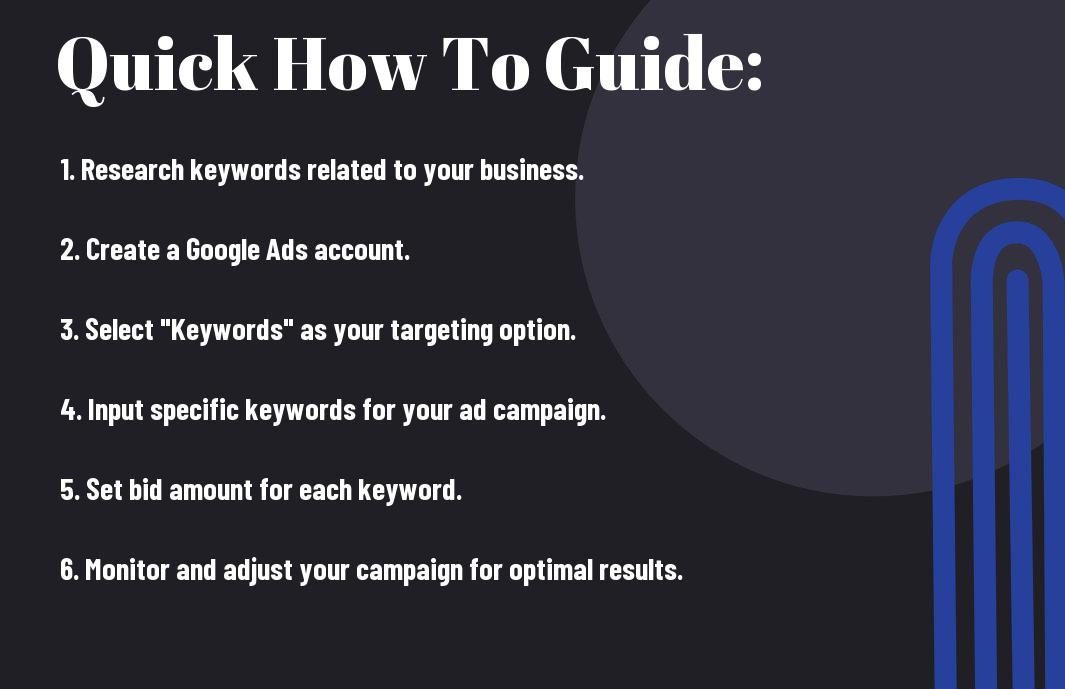
Once your account is set up, you can start creating your first Google Ads campaign. This involves selecting your advertising goals, choosing specific keywords related to your business, setting a budget, and creating compelling ad copy. Make sure to monitor your campaign regularly to track its performance and make necessary adjustments to optimize results. Setting up Google Ads may seem overwhelming at first, but with practice and experimentation, you’ll soon become familiar with the process.
Recall, setting up your Google Ads account is just the first step in reaching your target audience effectively. It’s vital to conduct thorough keyword research, analyze competitor ads, and continually refine your targeting strategies to stay ahead in the competitive online advertising landscape. By taking the time to set up your account properly and familiarize yourself with the platform, you’ll be on your way to creating successful Google Ads campaigns that drive results for your business.
Familiarizing Yourself with the Google Ads Interface
When you’ve started to explore the Google Ads interface, you’ll find a range of tools and features that can help you optimize your campaigns. Getting familiar with the dashboard layout, navigation menus, and reporting tools is crucial for effectively managing your ads. Take the time to browse through the various tabs and sections to understand where you can access key information about your campaigns, ad groups, and keywords.
The Google Ads interface offers valuable insights into your campaign performance, including click-through rates, conversion data, and budget tracking. By monitoring these metrics regularly, you can identify areas for improvement and make data-driven decisions to enhance your ad campaigns. Familiarizing yourself with the interface also allows you to take advantage of advanced targeting options, ad extensions, and ad scheduling features to maximize the effectiveness of your ads.
As you continue to explore the Google Ads interface, you’ll discover more advanced features such as audience targeting, remarketing strategies, and ad placement options. By experimenting with different settings and monitoring the outcomes, you can refine your targeting approach and create ads that resonate with your target audience. Recall, the key to success with Google Ads lies in continuous learning and optimization to stay ahead of the competition and achieve your advertising goals.

Understanding Keywords for Google Ads
What Are Keywords and Why Do They Matter?
You have probably heard the term keywords thrown around a lot when it comes to online advertising, but what exactly are they? Keywords are specific words or phrases that are used to target your ads to potential customers who are searching for products or services similar to yours. They matter because they are the bridge between what people are searching for and what you are offering. By choosing the right keywords, you can ensure that your ads are being shown to the right audience at the right time.
Keywords matter because they directly impact the performance of your Google Ads campaigns. When you choose relevant and highly-targeted keywords, you increase the chances of your ads being shown to users who are more likely to convert. On the other hand, using generic or broad keywords can result in your ads being shown to a larger but less targeted audience, which may not yield the desired results. Understanding keywords and their significance is crucial for the success of your advertising efforts.
Furthermore, keywords play a vital role in the overall optimization of your Google Ads campaigns. By continuously monitoring and refining your keywords based on performance data, you can improve the relevance and effectiveness of your ads. This iterative process of keyword analysis and optimization is crucial for maximizing the return on investment from your advertising budget.
Types of Keywords: Broad, Phrase, and Exact Match
Keywords can be categorized into three main types: broad match, phrase match, and exact match. Each type has its own characteristics and targeting capabilities that can affect the reach and performance of your ads. Understanding the differences between these keyword match types is crucial for creating a well-structured and optimized Google Ads campaign.
- Broad Match: This type of keyword allows your ads to show for a wide range of search terms related to your keyword, providing maximum reach but potentially lower relevance.
- Phrase Match: With this type, your ads will show for searches that include the exact phrase or close variations of it, offering a balance between reach and relevance.
- Exact Match: This keyword type triggers your ads to show only when the search query exactly matches your keyword, ensuring the highest level of relevance but potentially limiting reach.
Any successful Google Ads campaign utilizes a combination of these keyword match types to effectively target different segments of your audience. By strategically using broad, phrase, and exact match keywords, you can ensure that your ads are reaching the right users at the right time, maximizing your chances of driving conversions and achieving your advertising goals.
| Keyword Match Type | Description |
|---|---|
| Broad Match | Maximize reach with potentially lower relevance |
| Phrase Match | Balance between reach and relevance |
| Exact Match | Highest level of relevance but may limit reach |
How to Research Keywords
Not sure where to start when it comes to researching keywords for your Google Ads campaign? Keyword research is a crucial step in creating effective ads that target specific terms related to your business. By conducting thorough keyword research, you can identify the most relevant keywords that will help you reach your target audience and improve your ad performance.
Tools for Keyword Research
Clearly, there are several tools available to help you with keyword research. Google Keyword Planner is one of the most popular and powerful tools that can provide you with insights into keyword search volume, competition, and cost-per-click data. Other tools like SEMrush, Ahrefs, and Moz Keyword Explorer can also offer valuable information on keyword trends and suggestions for relevant terms to target.
Using these tools can help you discover new keywords to target, identify popular search terms related to your business, and understand the level of competition for each keyword. This data is vital for creating targeted ads that are likely to attract high-quality traffic to your website and generate leads or sales for your business.
By leveraging these tools for keyword research, you can make informed decisions about which keywords to target in your Google Ads campaign and optimize your ad performance for better results.
Analyzing Keyword Relevance and Search Volume
One of the key factors to consider when researching keywords is their relevance to your business and the search volume associated with each term. It’s important to target keywords that are closely related to your products or services and have a high search volume to maximize the visibility of your ads.
When analyzing keyword relevance, consider the intent behind each search term and how well it aligns with the offerings of your business. Additionally, reviewing search volume data can help you prioritize keywords that are popular among users and likely to drive significant traffic to your website.
With careful analysis of keyword relevance and search volume, you can ensure that your Google Ads are targeting the right keywords to attract potential customers and achieve your advertising goals.
Understanding Keyword Competition and Cost-Per-Click
Keyword competition and cost-per-click are crucial factors that can impact the performance and cost of your Google Ads campaign. High competition for certain keywords can make it more challenging to achieve top ad placements, while high cost-per-click rates can increase your advertising expenses.
Researching keyword competition will give you insights into how many advertisers are targeting the same keywords and how difficult it may be to rank for those terms. Understanding cost-per-click data will help you budget effectively and choose keywords that align with your advertising goals and budget constraints.
By gaining a deep understanding of keyword competition and cost-per-click, you can optimize your Google Ads campaign for better results and ensure that you are investing your advertising budget wisely.
Building a Keyword Strategy
How to Use Long-Tail Keywords for Niche Targeting
You must understand the power of long-tail keywords when crafting your Google Ads campaigns. Unlike broad keywords, long-tail keywords are more specific phrases that target a narrower audience. By targeting long-tail keywords related to your business niche, you can attract highly relevant traffic that is more likely to convert. For example, instead of targeting “shoes,” you could use long-tail keywords like “red running shoes for women” to reach customers looking for that specific product.
You can discover effective long-tail keywords by conducting thorough keyword research using tools like Google Keyword Planner or SEMrush. Look for keywords with lower competition and higher search volume to maximize your chances of reaching potential customers. Incorporate these long-tail keywords strategically in your ad copy and landing pages to improve your ad relevance and quality score.
You can also experiment with different variations of long-tail keywords to see which ones drive the most valuable traffic to your website. Continuously monitor and optimize your campaigns based on the performance of these keywords to ensure you are reaching the right audience effectively.
Balancing Broad and Specific Keywords
Any successful Google Ads campaign requires a balance between broad and specific keywords. Broad keywords, such as single words or general phrases, can help increase your reach and visibility but may attract less qualified leads. On the other hand, specific keywords, like long-tail keywords, can generate higher-quality traffic but may have lower search volume. Finding the right balance between broad and specific keywords is important for maximizing your campaign’s performance.
Another factor to consider when balancing broad and specific keywords is your budget and campaign goals. Investing more in specific keywords may yield higher conversion rates but at a higher cost per click. Evaluate the performance of both types of keywords regularly and adjust your strategy accordingly to achieve the best results within your budget constraints.
Organizing Keywords into Effective Campaigns
The key to a successful Google Ads campaign lies in organizing your keywords effectively into targeted ad groups. By grouping related keywords together, you can create highly relevant ads that resonate with your target audience. Utilize ad extensions and ad scheduling to further enhance your campaign’s performance and visibility.
Specific ad groups should focus on a single theme or product category to ensure your ads are tailored to the user’s search intent. Monitor the performance of each ad group closely and make necessary adjustments to optimize your campaigns for better results. Remember to align your keywords, ad copy, and landing pages to provide a seamless user experience and improve your chances of converting leads into customers.
Creating Google Ads with Targeted Keywords
For businesses looking to increase their online visibility and drive targeted traffic to their websites, creating Google Ads with targeted keywords is key. By focusing on specific keywords related to your business, you can reach potential customers who are actively searching for products or services like yours. This chapter will cover important tips and strategies for creating effective Google Ads that target specific keywords.
Tips for Writing Compelling Ad Copy
There’s no denying the power of compelling ad copy when it comes to driving clicks and conversions. To make your ads stand out and attract the right audience, it’s important to craft ad copy that resonates with your target customers. Here are some tips for writing compelling ad copy:
- Use relevant keywords in your headlines and ad copy to capture the attention of users searching for specific terms.
- Highlight your unique selling points and benefits to differentiate your business from competitors.
- Include a clear call-to-action that encourages users to take the desired action, such as making a purchase or contacting your business.
Thou shalt continuously test and optimize your ad copy to improve performance and maximize results.
How-to Guide: Implementing Keywords in Your Ad’s Display URL and Calls to Action
Howto effectively incorporate keywords into your ad’s display URL and calls to action can further enhance your ad’s relevance and appeal to users. By including keywords in your display URL, you can signal to users that your ad is highly relevant to their search query. Additionally, using keywords in your calls to action can prompt users to take action and improve the overall effectiveness of your ads.
Capture the attention of users by strategically placing keywords in your ad’s display URL and calls to action. By doing so, you can increase the relevance of your ads and drive higher click-through rates. Remember to align your keywords with your ad copy and landing page to create a cohesive and compelling user experience.
Optimizing Your Google Ads Campaigns
The Role of Negative Keywords in Refining Your Audience
Now, one crucial aspect of optimizing your Google Ads campaigns is the strategic use of negative keywords. These are keywords that you specify as irrelevant to your business, ensuring that your ads do not show up for searches including those terms. By excluding irrelevant keywords, you can refine your audience and focus your budget on users who are more likely to convert.
Additionally, negative keywords help prevent wasted clicks and improve your ad’s click-through rate (CTR). By filtering out unwanted traffic, you can increase the overall quality of your leads and ultimately improve the ROI of your advertising campaigns.
Regularly reviewing and updating your list of negative keywords is necessary for ongoing optimization. By analyzing search terms that trigger your ads and identifying any irrelevant patterns, you can continue to refine and improve the targeting of your campaigns.
Tips for Adjusting Keyword Bids for Better ROI
On the other hand, adjusting keyword bids is another key strategy for maximizing the ROI of your Google Ads campaigns. By closely monitoring the performance of your targeted keywords and adjusting your bids accordingly, you can ensure that your budget is allocated effectively.
- Regularly check the performance of your keywords and adjust bids for high-converting terms.
- Experiment with bid adjustments to find the optimal balance between cost and performance.
- Recognizing that bid optimization is an ongoing process is crucial for long-term success.
Factors That Influence Quality Score and Ad Ranking
Bids, ad relevance, and landing page experience are the primary factors that influence the quality score of your Google Ads. By optimizing these elements, you can improve your ad ranking and lower your cost per click (CPC).
Thou quality score is a dynamic metric that reflects the overall relevance and performance of your ads. By focusing on improving ad relevance and user experience, you can positively impact your quality score and achieve better ad positions.
- Ensure your ads are highly relevant to your target keywords and landing pages.
- Optimize your landing pages for a seamless user experience and clear call-to-actions.
- Thou regularly monitor and optimize your quality score to improve ad performance.
Another crucial factor that influences ad ranking is the expected click-through rate (CTR) of your ads. By creating compelling ad copy and targeting relevant keywords, you can increase your CTR and improve your ad’s visibility on Google search results.
How to Monitor and Adjust Your Keyword Strategy
Despite the meticulous planning that goes into creating your Google Ads campaigns, your work doesn’t stop once they are live. Monitoring and adjusting your keyword strategy is crucial to ensure that your ads are reaching the right audience and generating the desired results. This chapter will guide you through setting benchmarks, interpreting analytics, and conducting A/B testing to optimize your keyword strategy.
Setting Benchmarks and Goals for Your Campaigns
Setting benchmarks and goals for your campaigns is crucial for measuring the success of your keyword strategy. Before launching your ads, establish key performance indicators (KPIs) such as click-through rates, conversion rates, and cost per conversion. These benchmarks will help you track the effectiveness of your keywords and make informed decisions about adjustments to improve performance.
Regularly review your campaign’s progress against these benchmarks and goals. If you find that certain keywords are underperforming, consider pausing them or adjusting your bidding strategy. By continuously monitoring and analyzing your keyword performance, you can refine your strategy to maximize your ROI and reach your advertising objectives.
Remember that setting realistic and achievable goals is crucial for the success of your campaigns. By regularly evaluating your keyword strategy and making data-driven adjustments, you can ensure that your ads are effectively targeting potential customers and driving conversions.
How to Interpret Google Ads Analytics
Adjusting your keyword strategy based on Google Ads analytics is crucial for optimizing your campaigns. Analyzing metrics such as click-through rates, conversion rates, and cost per click can provide valuable insights into the performance of your keywords. Look for trends and patterns in the data to identify areas for improvement and make informed adjustments to your keyword targeting.
Pay close attention to the search terms report to see which keywords are triggering your ads and driving traffic to your website. Use this information to refine your keyword list, adding or excluding specific terms to better align with the interests of your target audience. By continually monitoring and interpreting Google Ads analytics, you can ensure that your ads are relevant and compelling to potential customers.
Google Ads analytics also provide insights into user behavior, allowing you to understand how people interact with your ads. By leveraging this data, you can create more personalized and impactful ad experiences that resonate with your audience and drive conversions. Adjusting your keyword strategy based on these analytics will help you stay competitive in the ever-evolving digital advertising landscape.
Tips for A/B Testing Your Google Ads
- Test Different Ad Copy: Create variations of your ad copy to see which messaging resonates best with your audience.
- Experiment with Landing Pages: Test different landing pages to optimize the user experience and increase conversions.
- Try Different Calls to Action: Test different CTAs to see which ones drive the most clicks and conversions.
Your Google Ads campaigns can benefit greatly from A/B testing, allowing you to fine-tune your keyword strategy for optimal performance. By testing different ad elements and analyzing the results, you can identify the most effective keywords and messaging to drive engagement and conversions. Remember to continually test and optimize your ads to stay ahead of the competition.
Your
- Utilize Ad Extensions: Experiment with different ad extensions to enhance visibility and provide additional information to users.
- Monitor Competitor Keywords: Keep an eye on your competitors’ keywords and adjust your strategy accordingly to stay competitive in the market.
- Regularly Review and Adjust: Continuously monitor and adjust your keyword strategy based on performance data to ensure optimal results.
Your keyword strategy is a critical component of your Google Ads campaigns. By implementing these tips and conducting regular A/B testing, you can refine your keyword targeting to reach your desired audience effectively. Though the process may require time and effort, the rewards of a well-optimized keyword strategy are well worth the investment.
Advanced Keyword Targeting Techniques
Keep your Google Ads campaigns focused and effective by implementing advanced keyword targeting techniques. By targeting specific keywords related to your business, you can reach your ideal audience and drive more relevant traffic to your website. Below are some advanced keyword targeting techniques to help you make the most of your Google Ads campaigns:
- Keyword Match Types
Keyword Match Type Description Exact Match Ads only show for searches that match the exact keyword Phrase Match Ads show for searches that include the keyword phrase in the specified order Broad Match Ads show for searches that include variations, synonyms, and related searches Modified Broad Match Ads show for searches that include the modified terms, providing more control Negative Match Ads do not show for searches that include the specified keyword
Exploring the Use of Keyword Match Types to Enhance Reach
There’s no one-size-fits-all approach to keyword match types. Depending on your goals and target audience, you may need to use a combination of match types to maximize your reach. Using exact match keywords ensures that your ads are shown to users searching for the specific terms you’ve chosen. Phrase match allows for some flexibility while still targeting specific phrases. Broad match helps to capture a wider audience but may require more extensive negative keyword usage to filter out irrelevant traffic. Modified broad match offers a balance between reach and control, giving you the ability to fine-tune your targeting. Negative match keywords are crucial to exclude irrelevant searches and improve the quality of your traffic. Any missteps in keyword match types can result in wasted ad spend and missed opportunities.
How to Use Remarketing with Keyword-Targeted Ads
Clearly, remarketing with keyword-targeted ads can be a powerful strategy to re-engage with users who have already shown interest in your products or services. By targeting specific keywords that are relevant to your remarketing audience, you can create tailored ads that speak directly to their needs and preferences. Reaching out to these users with personalized messaging can help increase brand awareness, drive conversions, and ultimately improve your ROI. By leveraging keyword targeting in your remarketing efforts, you can maximize the impact of your ads and stay top of mind with potential customers.
Adapting Your Strategy for Voice Search and Mobile Users
With the increasing use of voice search and mobile devices, it’s crucial to adapt your keyword targeting strategy to meet the changing needs of users. Voice searches are often longer and more conversational, so incorporating long-tail keywords and natural language into your campaigns can help you better align with user intent. Mobile users also have unique search behaviors, such as local searches and on-the-go queries, so optimizing your ads for mobile devices is crucial. By tailoring your keyword targeting to accommodate voice search and mobile users, you can improve the relevance of your ads and provide a better user experience. Your ability to meet the needs of these users could be the key to staying ahead of the competition and driving more conversions.
Maintaining a Successful Google Ads Strategy
The Importance of Continual Keyword Research
If you want your Google Ads to perform at their best, continual keyword research is crucial. By regularly updating your keyword list, you can ensure that your ads are targeting the most relevant and high-performing keywords for your business. Keywords trends can change over time, so staying on top of the latest search terms in your industry is key to maintaining a successful Google Ads strategy. Tools like Google Keyword Planner can help you identify new keyword opportunities and refine your targeting for better results.
Additionally, monitoring the performance of your existing keywords is necessary for optimizing your ad campaigns. By analyzing which keywords are driving the most clicks, conversions, and ROI, you can make data-driven decisions to improve your ads’ performance. Regularly auditing and refining your keyword list based on performance data is a best practice for maintaining a successful Google Ads strategy.
If you’re wondering Can I target specific companies using AdWords?, it’s important to note that while you can target specific companies indirectly through keyword targeting, AdWords primarily focuses on targeting users based on search intent and behavior rather than specific companies. However, by strategically selecting relevant keywords related to specific companies or industries, you can reach audiences with a higher likelihood of being interested in your products or services.
How to Stay Updated with Google Ads Best Practices
To stay ahead in the ever-evolving world of Google Ads, it’s crucial to stay updated with the latest best practices. Google frequently updates its algorithms and features, so keeping abreast of these changes can give you a competitive edge in your advertising efforts. Following industry blogs, attending webinars, and participating in Google Ads training programs are great ways to stay informed and adapt your strategies accordingly.
One effective way to stay current with Google Ads best practices is to join online communities and forums where digital marketers share insights and strategies. Engaging with other professionals in the field can provide you with valuable tips and tricks to optimize your ad campaigns. Additionally, subscribing to Google’s official announcements and newsletters can ensure you’re always in the know about new features and updates that could impact your advertising strategy.
A proactive approach to staying updated with Google Ads best practices can make a significant difference in the performance of your ads. By continuously learning and implementing new strategies, you can stay ahead of the competition and drive better results for your business.
When to Pivot Your Keyword Strategy for Maximum Impact
Knowing when to pivot your keyword strategy is necessary for maximizing the impact of your Google Ads. As market trends change and consumer behaviors evolve, your keyword targeting may need to be adjusted to stay relevant and competitive. Monitoring the performance of your ad campaigns and analyzing keyword data can help you identify opportunities to refine your keyword strategy for better results.
One key indicator that it may be time to pivot your keyword strategy is if you notice a decline in the performance of your ads or a drop in your ad’s relevancy score. By proactively addressing these issues and testing new keyword variations, you can optimize your targeting and improve your ad’s performance. Regularly evaluating your keyword strategy and making adjustments as needed is a best practice for ensuring your Google Ads remain effective and efficient.
Understanding the nuances of when to pivot your keyword strategy requires a deep understanding of your target audience and market dynamics. By staying attentive to changes in your industry and continuously monitoring your ad performance, you can make informed decisions to pivot your keyword strategy effectively and drive maximum impact for your Google Ads campaigns.
Best practices in maintaining a successful Google Ads strategy include continual keyword research, staying updated with Google Ads best practices, and knowing when to pivot your keyword strategy for maximum impact. By following these strategies and staying proactive in optimizing your ad campaigns, you can drive better results and stay ahead of the competition in the dynamic world of digital advertising.
To wrap up
As a reminder, creating Google Ads that target specific keywords related to your business is vital for driving relevant traffic to your website and increasing the chances of converting leads into customers. By conducting thorough keyword research, understanding your target audience, and optimizing your ad copy and landing pages, you can create compelling ads that resonate with potential customers.
It is also crucial to continuously monitor and analyze the performance of your ads, making adjustments as needed to optimize your campaign for better results. By testing different ad variations, refining your targeting options, and experimenting with bid strategies, you can improve the effectiveness of your Google Ads and maximize your return on investment.
Be mindful of, an effective Google Ads campaign is an ongoing process that requires constant attention and optimization. By following the strategies outlined in this guide, you can create Google Ads that target specific keywords related to your business successfully and achieve your marketing objectives. Stay committed to refining your strategy and adapting to changes in the digital landscape to ensure the success of your online advertising efforts.
FAQ
Q: Why is targeting specific keywords important in creating Google Ads?
A: Targeting specific keywords is crucial in creating Google Ads because it helps ensure that your ads are shown to the right audience who are actively searching for products or services related to your business.
Q: How can I research relevant keywords for my business?
A: You can use keyword research tools like Google Keyword Planner, SEMrush, or Ahrefs to find relevant keywords for your business. Look for keywords that have high search volume and low competition.
Q: What are match types in Google Ads and how do they impact keyword targeting?
A: Match types in Google Ads determine how closely a search query must match your chosen keyword for your ad to show. The match types include broad match, broad match modifier, phrase match, and exact match, each offering different levels of targeting precision.
Q: How can I create ad groups around specific keywords?
A: To create ad groups around specific keywords, first organize your keywords into themed groups based on relevance. Then, create ads that are tailored to each group of keywords to ensure higher click-through rates and better ad relevance.
Q: What is the importance of negative keywords in Google Ads targeting?
A: Negative keywords help you exclude irrelevant search terms from triggering your ads. By using negative keywords, you can prevent your ads from showing to users who are unlikely to convert, thus improving the overall performance of your ad campaigns.
Q: How can I optimize my Google Ads for better keyword targeting?
A: To optimize your Google Ads for better keyword targeting, regularly review and refine your keyword list, experiment with different match types, monitor search terms reports to identify new keyword opportunities, and test different ad copy to improve ad relevance.
Q: What metrics should I track to measure the effectiveness of my keyword-targeted Google Ads?
A: Key metrics to track for measuring the effectiveness of your keyword-targeted Google Ads include click-through rate (CTR), conversion rate, cost per click (CPC), and return on ad spend (ROAS). By monitoring these metrics, you can make informed decisions to optimize your ad campaigns for better results.