

There’s no denying the importance of implementing a Customer Relationship Management (CRM) system for efficient business operations. To ensure your small business maximizes its potential, follow these 4 vital steps to seamlessly integrate a CRM system. By understanding the significance of CRM in enhancing customer interactions, you can elevate your business’s success and profitability. Learn how to avoid common pitfalls and make the most of this powerful tool to take your customer relationships to the next level.
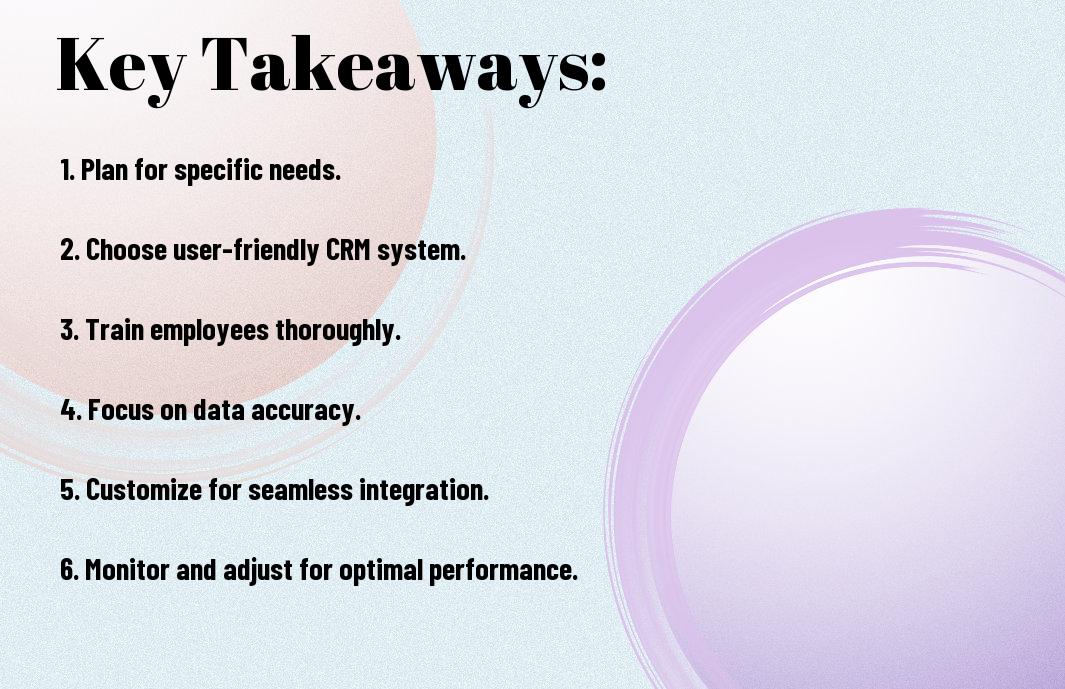
Key Takeaways:
- Evaluate your business needs: Before implementing a CRM system, identify your small business’s specific requirements and objectives to streamline customer interactions effectively.
- Choose the right CRM system: Select a CRM system that aligns with your business goals, size, budget, and features vital for enhancing customer relationships.
- Train your team: Provide comprehensive training to your employees to ensure they understand how to use the CRM system efficiently, maximizing its benefits for customer interactions.
- Customize and integrate: Tailor the CRM system to suit your small business needs by customizing fields, workflows, and reports, and integrating it with other tools for seamless customer interactions.
- Monitor and measure performance: Regularly track and analyze customer interactions, sales metrics, and feedback to identify areas for improvement and optimize your CRM system’s performance.
- Ensure data security: Implement robust security measures to protect sensitive customer data stored in the CRM system, ensuring compliance with data protection regulations and earning customer trust.
- Provide ongoing support: Offer continuous assistance and guidance to your team post-implementation to address any issues, optimize system usage, and ensure a smooth customer interaction process.
Planning Your CRM Implementation
Now that you have decided to implement a CRM system for your small business, it is crucial to plan the process carefully to ensure a successful integration. Effective planning can streamline customer interactions and boost overall efficiency. This chapter will guide you through the vital steps of planning your CRM implementation.
Setting Clear Objectives
Objectives are the cornerstone of a successful CRM implementation. Clearly define your goals for adopting a CRM system – whether it is to improve customer satisfaction, increase sales, or enhance marketing efforts. Make sure your objectives are specific, measurable, achievable, relevant, and time-bound (SMART). By setting clear objectives upfront, you can align your CRM implementation with your business strategy and track progress effectively.
Consider involving key stakeholders from different departments in the objective-setting process to gain diverse perspectives and ensure buy-in across the organization. Collaboratively establishing objectives can help create a shared vision for how the CRM system will support various business functions and drive overall growth.
Choosing the Right CRM Platform
To streamline customer interactions effectively, it is crucial to select the right CRM platform that aligns with your business requirements. Conduct a thorough evaluation of different CRM solutions based on factors such as your budget, scalability, customization options, integrations, and user-friendliness. Look for a CRM platform that not only meets your current needs but also has the flexibility to adapt to your business’s future growth.
With a myriad of CRM platforms available in the market, it is vital to prioritize features that are most important for your business. Consider the level of customization required, data security measures offered, and the training and support provided by the CRM vendor. Investing time in researching and selecting the right CRM platform can significantly impact the success of your CRM implementation.
Data Migration and System Integration
Preparing Your Data
System Streamline Customer Relationship Management with Marketing Tools implementation begins with the crucial step of preparing your data for migration. This phase involves identifying and analyzing the data that needs to be transferred to the new CRM system. You must ensure that the data is clean, accurate, and up-to-date to avoid any issues during the migration process. It is important to involve key stakeholders from different departments to validate the data and make necessary corrections.
Once you have identified the data to be migrated, create a data migration plan that outlines the migration process, timelines, and responsibilities. It is advisable to test the data migration process on a small scale before full implementation to identify and resolve any potential issues. By preparing your data thoroughly, you can streamline the migration process and ensure a successful implementation of your new CRM system.
Ensuring Seamless Integration with Existing Systems
Data integration is a critical aspect of CRM system implementation that ensures seamless communication between your new CRM system and existing systems. To achieve this, you must first identify all the systems that need to be integrated with the new CRM system. Determine the data flow between these systems and establish integration points to enable smooth data exchange.
Understanding the integration requirements and mapping out the integration processes is important to avoid any data silos and ensure that information is shared accurately across all systems. By ensuring seamless integration between your CRM system and existing systems, you can enhance operational efficiency and provide a unified view of customer data across your organization.
User Training and Adoption
Developing a Training Program
Keep in mind that user training is crucial for the successful implementation of a CRM system in your small business. The first step in developing a training program is to identify the needs and skill levels of your team members. This will help you tailor the training to their specific requirements, ensuring a more effective learning experience.
Next, create comprehensive training materials that are easy to understand and follow. This could include user guides, video tutorials, or interactive online modules. Make sure to provide hands-on training sessions as well, allowing users to practice using the CRM system in a controlled environment.
Encouraging User Engagement
Engagement is key to the successful adoption of a CRM system. Encourage user engagement by involving your team members in the implementation process from the beginning. Solicit their feedback and input on the system’s features and functionalities to make them feel invested in its success.
To further encourage user engagement, consider setting up incentives or rewards for employees who actively participate in training sessions and utilize the CRM system effectively. Recognizing and incentivizing positive behavior can help create a culture of enthusiasm and adoption among your team members.
To ensure a smooth transition to the new CRM system, continuous communication and support are necessary. Be available to address any questions or concerns that may arise and provide ongoing training opportunities to reinforce learning and promote user confidence.
Monitoring and Evaluation
Setting Key Performance Indicators (KPIs)
Your CRM system implementation is not complete without setting Key Performance Indicators (KPIs) to measure the success of your efforts. An important step in this process is identifying the specific metrics that align with your business goals and objectives. Whether it’s tracking customer acquisition rates, retention percentages, or sales conversions, establishing clear KPIs will enable you to monitor the effectiveness of your CRM system in real-time.
To ensure that your KPIs are meaningful and actionable, they should be specific, measurable, achievable, relevant, and time-bound (SMART). Regularly reviewing these KPIs will provide valuable insights into the performance of your CRM system and help you make data-driven decisions to enhance customer interactions and drive business growth.
Regularly Reviewing System Performance
To maintain a high level of efficiency and effectiveness, it is crucial to review your CRM system’s performance on a consistent basis. This involves analyzing data on a regular schedule to identify any areas of improvement or refinement. By reviewing system performance regularly, you can ensure that your CRM system is meeting the needs of your small business and delivering the desired results.
Reviewing system performance also allows you to address any potential issues or bottlenecks proactively, preventing them from escalating into more significant problems. By staying proactive in your approach to system evaluation, you can optimize your CRM system for peak performance and maximize its impact on your customer interactions.

Final Words
The importance of implementing a CRM system in your small business cannot be overstated. By following these 4 vital steps – defining goals, selecting the right CRM system, training your team, and continuously optimizing – you can streamline customer interactions and improve efficiency. Note, your CRM system is a powerful tool that can help you better understand your customers, anticipate their needs, and ultimately drive growth for your business. Take the time to carefully plan and execute your CRM system implementation, and you’ll be on your way to providing top-notch customer service and building long-lasting relationships with your clients.
FAQ
Q: What is a CRM system and why is it important for small businesses?
A: A CRM system, or Customer Relationship Management system, is a technology that helps businesses manage interactions with current and potential customers. It is important for small businesses as it can streamline customer interactions, improve customer satisfaction, and ultimately drive business growth.
Q: What are the benefits of implementing a CRM system for a small business?
A: Implementing a CRM system can provide several benefits for a small business, including better organization of customer data, improved communication with customers, increased efficiency in sales and marketing efforts, and enhanced customer relationships.
Q: What are the important steps to implement a CRM system for a small business?
A: The important steps to implement a CRM system for a small business include defining your business goals and objectives, choosing the right CRM software, customizing the system to meet your specific business needs, and providing training to your employees to ensure successful adoption.
Q: How can defining business goals and objectives help in CRM system implementation?
A: Defining clear business goals and objectives can help in CRM system implementation by guiding the selection of the right CRM features and functionalities that align with your business needs. It also helps in measuring the success of the CRM system in achieving the set objectives.
Q: What factors should small businesses consider when choosing a CRM software?
A: When choosing a CRM software, small businesses should consider factors such as their budget, the size of their business, the industry they operate in, the features and functionalities offered by the CRM software, and the level of customer support provided by the CRM vendor.
Q: How important is customization in a CRM system for small businesses?
A: Customization in a CRM system is crucial for small businesses as it allows them to tailor the system to meet their specific business needs and processes. By customizing the CRM system, small businesses can ensure that it aligns with their unique requirements and workflows.
Q: Why is employee training important for the successful implementation of a CRM system?
A: Employee training is important for the successful implementation of a CRM system as it ensures that employees understand how to use the system effectively. Proper training can improve user adoption, increase productivity, and maximize the benefits that a CRM system can provide for a small business.