

Brand success hinges on your ability to adapt and innovate. In today’s digital landscape, leveraging AI image creation can elevate your marketing strategy and enhance your visual storytelling. This blog post will guide you through seven crucial steps to master this powerful tool, enabling you to create stunning visuals that resonate with your audience. By following these steps, you will transform your brand, drive engagement, and amplify your marketing efforts in ways you never thought possible.
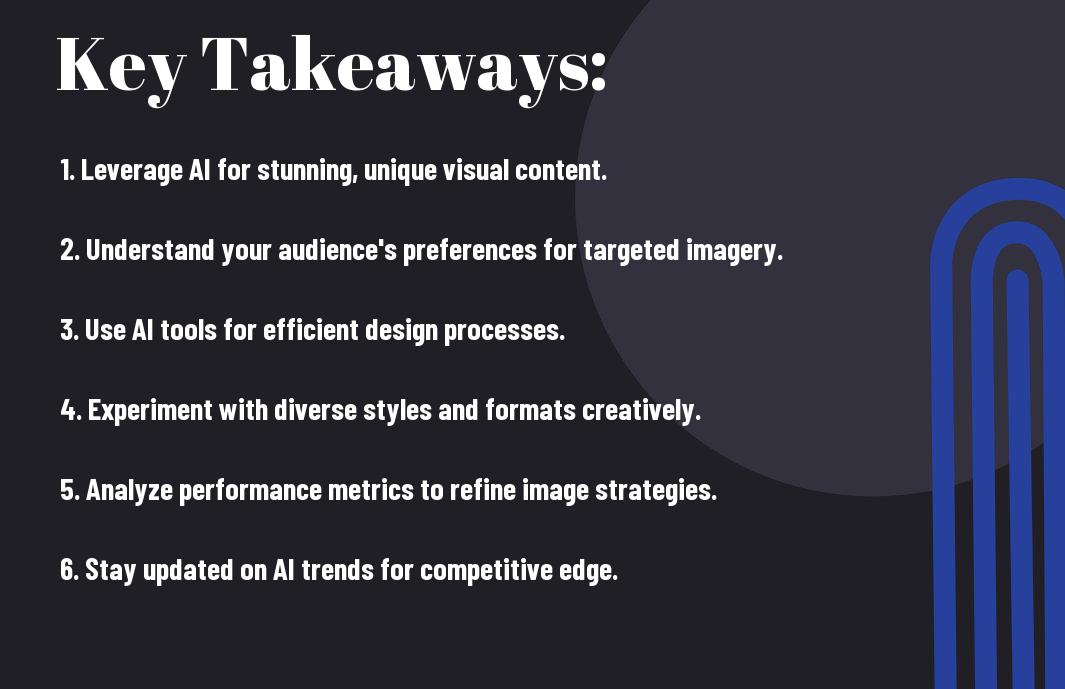
Key Takeaways:
- Leverage AI image creation tools to enhance your brand’s visual storytelling, allowing for unique and engaging content that resonates with your audience.
- Utilize data-driven insights to guide your image creation process, ensuring that visuals align with current market trends and customer preferences.
- Incorporate a variety of styles and formats in your marketing campaigns to keep your brand fresh and appealing, while showcasing the versatility of AI-generated imagery.
Understanding AI Image Generation Fundamentals
While stepping into AI image generation, it is important to grasp the foundational concepts that drive this innovative technology. You will explore how algorithms and neural networks work together to create images from textual descriptions, transforming your marketing efforts effectively. By understanding these fundamentals, you can better leverage AI to enhance your brand’s visual storytelling.
Current AI Image Generation Tools
Between the myriad of available tools, platforms like DALL-E, Midjourney, and Stable Diffusion stand out for their user-friendly interfaces and powerful capabilities. These tools allow you to create stunning visuals quickly, enabling you to experiment with different styles and ideas tailored to your marketing needs.
Key Technical Concepts and Terminology
Terminology plays an important role in navigating the world of AI image generation. Familiarizing yourself with terms like “deep learning,” “generative adversarial networks (GANs),” and “training datasets” will help you understand how AI creates visuals and how to optimize your inputs for better results.
Due to the complexity of AI image creation, mastering these technical concepts can significantly enhance your capabilities in using AI tools. Understanding how generative adversarial networks operate and the importance of training datasets empowers you to make informed choices in your image generation process. You can effectively refine your prompts, boost the quality of the images produced, and ensure that your visuals align with your branding goals.

Defining Your Brand’s Visual Identity
Even in a crowded marketplace, a distinctive visual identity allows your brand to resonate with your target audience. This encompasses not only colors and typography but also the overall aesthetic that communicates your brand’s values and personality. By establishing a clear visual identity, you’ll ensure your marketing materials are instantly recognizable, creating a consistent experience that builds trust and loyalty among your customers.
Establishing Style Guidelines
To effectively communicate your brand’s visual identity, you should establish comprehensive style guidelines that outline the specific colors, fonts, imagery, and design elements that will represent your brand. These guidelines serve as a reference for all your marketing materials, ensuring consistency and alignment across various channels. By doing so, you will create a cohesive visual experience that reinforces your brand message and enhances customer recognition.
Creating Brand-Specific Prompts
An effective way to leverage AI image creation is by crafting brand-specific prompts that clearly communicate your visual identity. This involves defining the emotions, themes, and specific styles that align with your brand, allowing AI tools to generate tailored visuals. By focusing on what makes your brand unique, you can guide the AI in producing images that accurately reflect your marketing goals and resonate with your target audience.
At this stage, your prompts should include specific keywords and phrases that embody your brand’s persona. For instance, if your brand has a playful and vibrant personality, your prompts could emphasize fun colors, friendly characters, or whimsical elements. Additionally, consider using adjectives that describe the mood or ambiance you wish to convey. This approach not only directs AI image creation effectively but also ensures the outputs align well with your established visual identity.
Mastering Prompt Engineering
Despite the rapid advancements in AI image generation, the effectiveness of your marketing visuals hinges on mastering prompt engineering. Your prompts serve as the foundation for the images produced; an effective prompt can inspire creativity and precision in AI-generated content. The key to transforming your brand lies in learning to communicate your ideas clearly and concisely to the AI, ensuring that it produces images that truly resonate with your audience.
Basic Prompt Structure
After establishing your goals, you should focus on the basic structure of a prompt. An effective prompt typically consists of three main components: a clear subject, the desired style or mood, and any specific details to guide the AI. By using this framework, you can create prompts that convey your vision accurately and yield more relevant images.
Advanced Techniques for Precise Results
Behind every stunning AI-generated image lies a well-crafted prompt. To elevate your image generation skills, advanced techniques can help you refine your prompts for more precise outcomes. Consider employing these strategies:
- Use descriptive adjectives to set the tone.
- Incorporate reference images or styles.
- Specify color palettes or lighting effects.
- Experiment with different formats and contexts.
| Component | Description |
| Subject | What you want the image to depict. |
| Style | The artistic direction or mood. |
| Details | Specific attributes to guide the AI. |
To ensure your prompts yield effective results, consider refining your approach by leveraging contextual information and experimenting with variations. The more you practice, the better you will become at crafting compelling prompts. Here are additional techniques:
- Break down your concept into smaller elements.
- Use analogies to explain your vision.
- Test and iterate on your prompts regularly.
- Incorporate feedback to improve your prompt construction.
| Technique | Purpose |
| Decomposition | Helps clarify complex ideas. |
| Analogy | Bridges understanding gaps. |
| Iteration | Enhances prompt effectiveness. |
Optimizing Image Quality
Your visual marketing strategy hinges on the quality of the images you use. High-quality visuals can significantly enhance your brand’s appeal and engagement levels. By mastering optimization techniques, you ensure that your AI-generated images not only captivate your audience but also meet the technical specifications necessary for various platforms. This chapter will guide you through imperative steps to refine your images for maximum impact.
Resolution and Format Considerations
About resolution, it’s imperative to understand that the clarity of your images affects how they are perceived. Different platforms have varying requirements, so it’s crucial to choose the right format and resolution to maintain image integrity while avoiding pixelation or blurriness. Aim for higher resolutions for print and optimized formats like JPEG and PNG for web usage to ensure quality across all channels.
Post-Processing Workflows
Along your journey, developing a solid post-processing workflow can elevate your AI images even further. This involves the steps you take after generating images, such as color correction, cropping, and adding branding elements. Employing software tools for enhancements allows you to create images that align perfectly with your marketing goals, ensuring a polished final product.
In fact, investing time in post-processing can transform a standard AI-generated image into a captivating visual that resonates with your audience. Techniques like adjusting brightness, contrast, and saturation can bring out the best in your images, while adding subtle filters can help match your brand’s aesthetic. Efficient workflows not only save time but also ensure consistency across your visual assets, making your brand instantly recognizable.
Ensuring Brand Consistency
After establishing a solid foundation with AI image creation, the next step is to ensure brand consistency across all your visual assets. This involves creating a cohesive look and feel that reinforces your brand identity, helping you connect with your audience. Consistent branding not only boosts recognition but also fosters trust and loyalty, making it easier for customers to remember and engage with your products or services.
Color Palette Management
For your brand to stand out, effective color palette management is necessary. By selecting a limited set of colors that reflect your brand identity, you can create a visually striking and harmonious appearance. AI tools can help you generate images that align with your brand colors, ensuring that all visuals maintain a consistent aesthetic that resonates with your target audience.
Style Transfer and Templates
Consistency in design is vital for brand recognition, and style transfer techniques can greatly enhance your creative process. This method allows you to apply the characteristics of a specific style to various images, resulting in a unified visual identity. By utilizing templates, you can streamline your image creation process, ensuring that all your graphics share the same branding elements, from typography to layout.
With the use of style transfer and templates, you can effortlessly transform your images to reflect your brand’s essence. This approach not only saves you time but also helps maintain visual consistency across all platforms. By applying predetermined styles and layouts, your marketing materials will resonate with your audience, making them instantly recognizable and reinforcing your brand’s core message.
Legal and Ethical Considerations
Once again, it’s necessary to navigate the legal and ethical landscape when utilizing AI-generated images in your marketing strategy. Understanding copyright laws, licensing agreements, and the importance of transparency will help you maintain your brand’s integrity while avoiding potential pitfalls. By adhering to these guidelines, you can harness the power of AI image creation effectively and responsibly.
Copyright and Licensing
Around the intricate world of copyright and licensing, it’s important to ensure that any AI-generated images you use do not infringe on existing intellectual property rights. You should verify the ownership and usage terms associated with every image, as this can prevent legal disputes and protect your brand’s reputation.
Disclosure and Transparency
Against the backdrop of trust and authenticity, being transparent about the use of AI-generated images in your marketing efforts is vital. It’s critical to openly communicate with your audience so that they understand the source of the content they interact with.
Considerations regarding disclosure involve not only ethical marketing but also building a relationship of trust with your audience. By informing them about the use of AI-generated visuals, you enable them to engage with your brand more authentically. This transparency can enhance customer loyalty and foster a positive brand image, setting you apart from competitors who may not adhere to these principles.
Implementation Strategies
To effectively implement AI image creation into your marketing strategy, you need a clear framework that blends technology with your brand’s vision. Start by selecting the right AI tools that resonate with your creative goals and align with your target audience’s expectations. You should also train your team on these tools and foster a culture of innovation where creativity and analytics can coexist. By establishing defined processes and regular review cycles, your team can leverage AI effectively, ensuring your brand’s visual narrative remains compelling and engaging.
Content Calendar Integration
Across your marketing strategy, integrating a content calendar with AI image creation tools can streamline your workflow and enhance coherence in your campaigns. By planning your visual content in advance and aligning it with key dates, product launches, or seasonal promotions, you ensure that your brand’s storytelling remains consistent and timely. This approach not only saves time but also allows you to focus on creating impactful visuals that resonate with your audience.
Performance Tracking and Analytics
To assess the effectiveness of your AI-created visuals, it’s imperative to integrate performance tracking and analytics into your strategy. This allows you to gather insights on audience engagement, conversion rates, and overall campaign success, helping you make data-driven adjustments for future projects.
Further, establishing key performance indicators (KPIs) will enable you to objectively measure the impact of your AI-generated images. Use analytics tools to monitor metrics such as social shares, click-through rates, and customer feedback. These insights will guide you in refining your visual content strategies, ensuring that each image contributes positively to your branding efforts and marketing goals.
Conclusion
Summing up, mastering AI image creation can significantly transform your brand’s marketing efforts. By following these 7 steps, you equip yourself with the tools to generate compelling visuals that resonate with your audience. Embrace the technology, hone your skills, and integrate creativity with AI to elevate your brand’s presence. As you implement these strategies, you’ll find that AI not only enhances your marketing materials but also streamlines your workflow, allowing you to focus on what truly matters—connecting with your customers.
FAQ
Q: What are the main benefits of using AI image creation for marketing?
A: Utilizing AI image creation in marketing offers several key advantages. Firstly, it allows for rapid image generation, enabling marketers to produce high-quality visuals in less time than traditional methods. This efficiency can significantly enhance campaign turnaround times. Additionally, AI can analyze data to create images that resonate with target audiences, increasing engagement. Moreover, it offers cost savings by minimizing the need for extensive photo shoots or graphic design resources. Brands can also experiment with different styles and concepts effortlessly, promoting creativity without additional overhead.
Q: How can I start implementing AI image creation into my marketing strategy?
A: To begin incorporating AI image creation into your marketing strategy, first identify your goals and the types of images you need for your campaigns. Next, explore various AI image generation tools available in the market, such as OpenAI’s DALL-E, Canva’s AI features, or Adobe’s AI-driven offerings. Once you’ve selected a tool, familiarize yourself with its capabilities through tutorials and documentation. Start with small projects to analyze its effectiveness, gather feedback from your audience, and refine your approach accordingly. Ultimately, integrating AI images should align with your brand’s identity and marketing objectives.
Q: Are there any best practices for creating effective AI-generated images for my brand?
A: Yes, there are several best practices for ensuring the effectiveness of AI-generated images. First, maintain consistency with your brand’s visual identity by using the same color schemes, fonts, and design styles across all AI-generated content. Second, define clear parameters and prompts for the AI to work with to achieve the desired results. Additionally, gather input from your team or target audience on the generated images to ensure they resonate well. Lastly, continuously analyze the performance of images in your marketing campaigns, adjusting your strategy as needed to enhance engagement and conversion rates.