

Banking institutions looking to create a seamless investment portal must consider a variety of critical factors to ensure the success and efficiency of their platform. From user experience to security measures, every aspect of the portal design plays a crucial role in attracting and retaining clients. By focusing on simplicity, accessibility, and data protection, banks can create an investment portal that not only meets the needs of their customers but also complies with industry regulations and safeguards against potential cyber threats. Designing an effective investment portal requires careful planning and attention to detail to provide a secure, user-friendly, and efficient platform for clients to manage their investments.
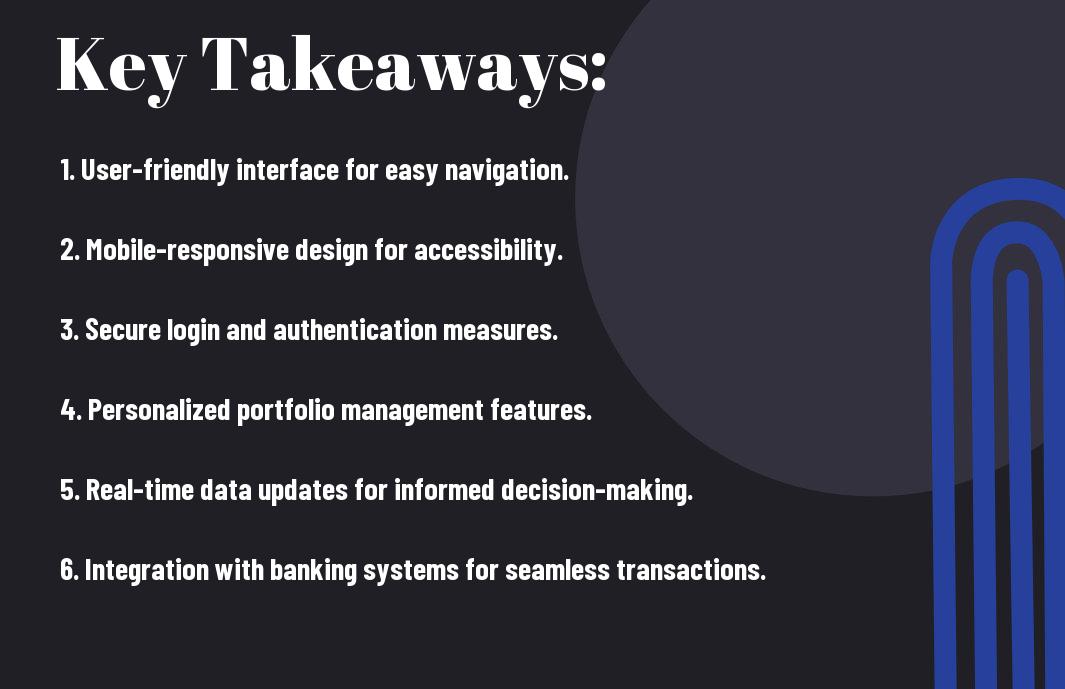
Key Takeaways:
- Understand user needs: Prioritize user experience by understanding the needs and expectations of both customers and employees using the investment portal.
- Personalization is key: Design the portal to provide personalized experiences, catering to unique preferences and behaviors of users.
- Secure and seamless integration: Ensure robust security measures are in place while integrating the investment portal with existing banking systems for a seamless user experience.
- Mobile responsiveness: Opt for a responsive design that adapts to various devices, enabling users to access the portal on smartphones, tablets, or laptops.
- Intuitive navigation: Simplify navigation within the portal by organizing information logically and providing clear pathways for users to find what they need.
- Transparent performance tracking: Include features that allow users to monitor the performance of their investments easily, providing clear and real-time data.
- Feedback and continuous improvement: Gather user feedback regularly to identify areas for improvement and ensure the investment portal meets evolving user needs.
Understanding User Needs and Expectations
Identifying the Target Audience
One crucial step in designing a seamless investment portal for banking institutions is identifying the target audience. By understanding who will be using the platform – whether they are individual investors, financial advisors, or institutional clients – we can tailor the user experience to meet their specific needs and expectations. Conducting market research and user surveys can provide valuable insights into the demographics, preferences, and behaviors of the target audience.
Prioritizing Features Based on User Feedback
Feedback from users is a goldmine of information when it comes to prioritizing features in an investment portal. This can be gathered through usability testing, focus groups, or direct feedback channels within the platform. By analyzing user feedback, we can identify pain points, preferences, and areas for improvement, allowing us to optimize the portal’s features and functionalities to better serve the users.
Another key aspect of prioritizing features based on user feedback is ensuring that the changes align with the overarching goals of the investment portal and the business objectives of the banking institution. It is necessary to strike a balance between addressing user needs and maintaining the integrity and security of the platform.
Ensuring Security and Compliance
Incorporating Robust Security Features
Clearly, when designing an investment portal for banking institutions, security is paramount. For an investment portal to be successful, it must incorporate robust security features to safeguard sensitive data, protect against cyber threats, and ensure compliance with industry regulations. Implementing multi-factor authentication, encryption protocols, secure data storage, and regular security audits are crucial components of a secure investment portal.
Navigating Regulatory Requirements
Clearly, incorporating compliance measures into the design of an investment portal is crucial. Meeting the regulatory requirements set forth by governing bodies is non-negotiable for banking institutions. Robust governance frameworks, adherence to anti-money laundering (AML) and know your customer (KYC) regulations, and data protection measures are crucial for maintaining compliance in the financial sector.
Streamlining User Experience
Designing an Intuitive Interface
For a seamless investment portal, designing an intuitive interface is crucial. Users should be able to navigate the platform effortlessly, with clear labels and easily accessible features. A clean and uncluttered design will help users focus on their investment activities without unnecessary distractions. Utilizing familiar design patterns and ensuring consistency across the portal will enhance user experience and make interactions more intuitive.
Integrating Real-Time Data and Analytics
For enhancing the user experience, integrating real-time data and analytics is imperative. By incorporating real-time data feeds and advanced analytics tools, users can make informed decisions promptly. Providing users with up-to-date market information and personalized insights can empower them to manage their investments effectively. Real-time data integration will enable users to track market trends, portfolio performance, and investment opportunities in real-time.
With real-time data, users can react quickly to changing market conditions and optimize their investment strategies accordingly. Integrating robust analytics capabilities can offer users valuable insights and recommendations, fostering a more engaging and personalized experience. This combination of data and analytics can significantly improve user satisfaction and loyalty towards the investment portal.
Technological Infrastructure and Support
Choosing the Right Software and Hardware Solutions
One of the fundamental elements in designing a seamless investment portal for banking institutions is selecting the appropriate software and hardware solutions. It is crucial to opt for robust and scalable technologies that can handle large volumes of transactions securely. Investing in reliable hardware ensures smooth operations and minimizes downtime, while cutting-edge software solutions can enable advanced features and functionalities for users.
Providing Continuous Technical Support and Maintenance
An vital component of a successful investment portal is ongoing technical support and maintenance. Ensuring that a dedicated team is available round the clock to address any technical issues or queries from users is paramount. Routine maintenance and updates must be conducted regularly to enhance security measures and ensure the portal operates efficiently.
Technical support should include regular monitoring of the portal’s performance, prompt resolution of any issues that may arise, and timely communication with users regarding system updates or maintenance schedules. By prioritizing continuous technical support, banking institutions can build trust with their customers and uphold the integrity of their investment portal.

Marketing and User Adoption
To How to Design a Seamless UX for Online Banking Platforms, it is crucial for banking institutions to focus on marketing and user adoption strategies to ensure the success of their investment portal.
Effective Strategies for Portal Launch and Promotion
An investment portal’s successful launch depends on a comprehensive marketing strategy. It is necessary to generate awareness through targeted digital marketing campaigns, engaging with potential users through social media channels, and leveraging email marketing to drive traffic to the platform. Collaborating with influencers and industry experts can also help create a buzz around the portal’s launch.
Encouraging Adoption and Sustained Use
Promotion of the investment portal should not stop at the launch phase. It is necessary to continue engaging users through personalized communication, providing incentives for using the platform regularly, and offering rewards for referrals and app downloads. Implementing features like gamification and loyalty programs can also encourage sustained use and loyalty among users.
Plus, monitoring user behavior through analytics and feedback mechanisms can help identify pain points and areas for improvement, ensuring a seamless and user-friendly experience that fosters adoption and long-term engagement.
Summing up
Drawing together the key considerations for designing a seamless investment portal for banking institutions, it is evident that factors such as user experience, security measures, integration capabilities, and regulatory compliance are critical to success. Embracing technology and Fintech innovations is imperative in the digital transformation of financial services within the banking sector. To examine deeper into this topic, refer to Fintech and the digital transformation of financial services.
FAQ
Q: Why is designing a seamless investment portal important for banking institutions?
A: Designing a seamless investment portal is crucial for banking institutions to provide their customers with a user-friendly and efficient platform for managing their investments.
Q: What are the key considerations when designing an investment portal for banking institutions?
A: Key considerations when designing an investment portal include user experience, security measures, scalability, integration with existing systems, regulatory compliance, and data analytics capabilities.
Q: How can user experience be optimized in an investment portal for banking institutions?
A: User experience can be optimized by ensuring a clean and intuitive interface, easy navigation, personalized dashboards, real-time updates, and seamless access across devices.
Q: What security measures should be implemented in an investment portal for banking institutions?
A: Security measures such as two-factor authentication, encryption protocols, secure socket layer (SSL) certificates, intrusion detection systems, and regular security audits are crucial for protecting sensitive financial data.
Q: Why is scalability important in the design of an investment portal for banking institutions?
A: Scalability is important to accommodate growing numbers of users and transactions without compromising performance. It ensures that the portal can handle increased traffic and data volumes effectively.
Q: How can an investment portal be integrated with existing systems in a banking institution?
A: Integration with existing systems can be achieved through application programming interfaces (APIs), middleware solutions, data synchronization processes, and collaboration with IT teams to ensure seamless communication and data exchange.
Q: What role does regulatory compliance play in designing an investment portal for banking institutions?
A: Regulatory compliance ensures that the investment portal meets legal requirements, such as data protection laws, anti-money laundering regulations, Know Your Customer (KYC) guidelines, and financial reporting standards to protect both the institution and its customers.