
You want your website to be easily found by potential customers, and that’s where SEO optimization comes into play. By implementing effective SEO strategies, you can improve your website’s search engine rankings and drive more organic traffic. In this blog post, we’ll research into some secret techniques that can help take your website to the next level.
One of the most important aspects of SEO optimization is keyword research. By understanding the keywords your target audience is searching for, you can tailor your content to meet their needs and improve your chances of ranking higher in search engine results. Additionally, quality content creation plays a significant role in SEO success. Search engines favor websites that offer valuable, relevant content to users, so make sure your website is filled with engaging and informative content.
However, it’s not just about keywords and content. Technical SEO also plays a crucial role in improving your website’s search engine rankings. Optimizing your website’s loading speed, improving mobile-friendliness, and building quality backlinks are all important components of technical SEO that can help boost your website’s visibility online.
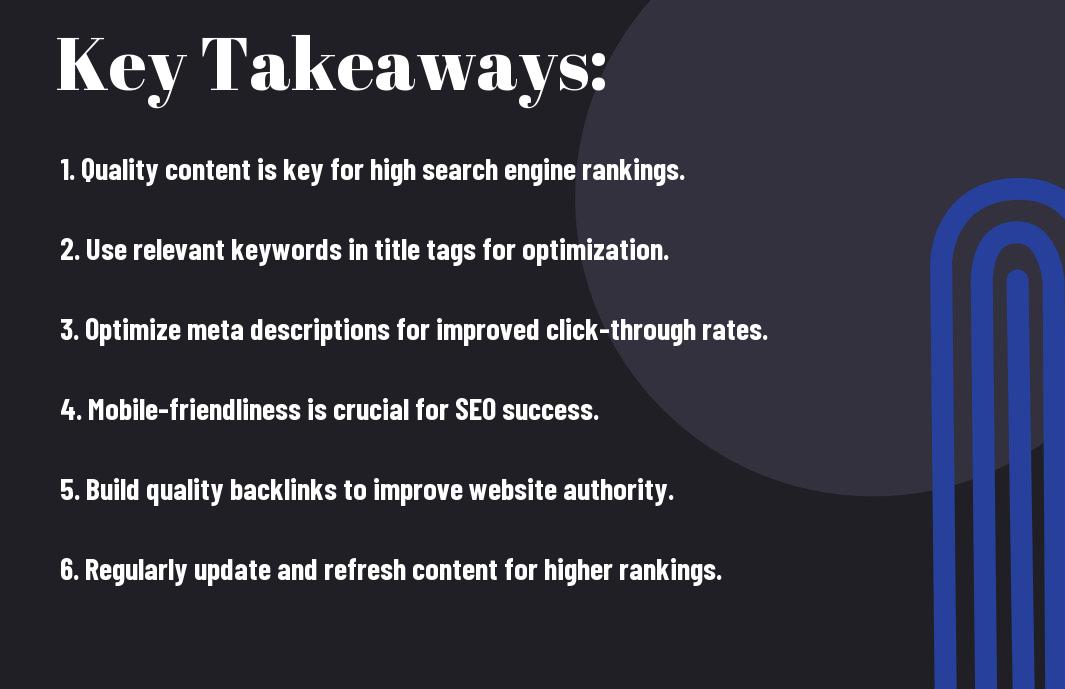
Key Takeaways:
- Keyword Research: Conduct thorough keyword research to identify relevant and high-performing keywords for your website.
- On-Page SEO: Optimize your website’s title tags, meta descriptions, headings, and content with targeted keywords.
- Quality Content: Create high-quality, engaging content that provides value to your audience and includes relevant keywords.
- Link Building: Build quality backlinks from reputable websites to improve your website’s authority and search engine rankings.
- Mobile Optimization: Ensure your website is mobile-friendly to provide a better user experience and improve search rankings.
- Site Speed: Improve your website’s loading speed by optimizing images, using a content delivery network (CDN), and reducing unnecessary scripts.
- Regular Monitoring and Adjustments: Monitor your website’s performance, track keyword rankings, and make necessary adjustments to improve SEO results over time.

Understanding SEO Basics
What is SEO?
The world of Search Engine Optimization, or SEO, can seem daunting to beginners. It is the practice of optimizing your website to increase its visibility for relevant searches. This means driving organic (unpaid) traffic to your site from search engines like Google. SEO is crucial for your online presence as it helps improve your website’s search engine rankings, resulting in more traffic and potential customers.
How Search Engines Function
Search engines like Google use complex algorithms to crawl and index websites, determining the most relevant ones for specific keywords. Understanding how search engines function is key to optimizing your website effectively and improving your search engine rankings.
When a user enters a query, the search engine scans its index and provides a list of results based on relevance and authority. It is crucial to create high-quality, relevant content and use proper SEO techniques to ensure your website ranks well in search engine results.
The Difference Between On-Page and Off-Page SEO
On-page SEO focuses on optimizing elements within your website, such as content, meta tags, and keywords, to improve its search engine rankings. It is important to pay attention to on-page factors to ensure your website is well-optimized for search engines.
Off-page SEO, on the other hand, involves external factors like backlinks and social signals that impact your website’s authority and credibility. Off-page SEO is crucial for establishing your website’s reputation and increasing its visibility in search engine results.
White Hat vs Black Hat SEO Practices
White hat SEO practices are ethical techniques that abide by search engine guidelines to improve website rankings. They focus on creating quality content and providing a positive user experience. White hat SEO practices are crucial for long-term success and sustainable results.
Black hat SEO practices, on the other hand, involve deceptive tactics to manipulate search engine rankings. They can result in penalties and damage to your website’s reputation. Avoid black hat practices at all costs to maintain a strong online presence and avoid being banned by search engines.
Keyword Research and Analysis
Fundamentals of Keyword Research
Once again, keyword research plays a crucial role in improving your website’s search engine rankings. Fundamentals of keyword research involve understanding the language your target audience uses when searching for information online. It’s crucial to identify relevant keywords that have high search volume but low competition to optimize your website effectively.
By conducting thorough keyword research, you can uncover valuable insights into the behavior of your potential customers. Understanding their search intent will help you create content that addresses their needs and concerns. This, in turn, can drive more organic traffic to your website and increase your chances of converting visitors into customers.
Keep in mind, keyword research is an ongoing process. Regularly analyzing and updating your keyword strategy based on market trends and changes in search engine algorithms is key to maintaining a competitive edge in the digital landscape.
Tools for Keyword Discovery and Analysis
Analysis of keyword data is made easier with the use of various tools designed for keyword discovery and analysis. These tools provide valuable insights into search volume, competition level, and potential traffic sources for specific keywords. Tools like Google Keyword Planner, SEMrush, and Ahrefs can help you identify relevant keywords for your website and track their performance over time.
To ensure the success of your SEO efforts, it’s crucial to leverage these tools to monitor keyword performance, identify new keyword opportunities, and adjust your strategy accordingly. By using data-driven insights, you can optimize your website for better search engine rankings and attract more organic traffic.
For instance, by analyzing keyword trends and competition levels, you can identify emerging keywords in your industry and capitalize on them before your competitors do. This proactive approach can give you a competitive advantage and help you stay ahead in the search engine rankings.
Understanding Keyword Intent
Any successful keyword strategy must take into account the intent behind a user’s search queries. Understanding keyword intent involves categorizing keywords based on whether the user is looking for information, products, or specific services. By aligning your content with the user’s intent, you can improve your website’s relevance and visibility in search engine results.
For instance, if a user searches for “best SEO tools,” they are likely looking for recommendations and reviews of SEO tools. By creating content that addresses this specific intent, you can attract users who are ready to make informed decisions about their SEO tool purchases.
By analyzing keyword intent and tailoring your content to match user expectations, you can increase the chances of ranking higher in search engine results and driving qualified traffic to your website.
Long-Tail vs Short-Tail Keywords
On understanding the difference between long-tail and short-tail keywords is crucial for developing a comprehensive keyword strategy. Short-tail keywords are typically broad terms with high search volume and intense competition, while long-tail keywords are more specific phrases with lower search volume and less competition.
Understanding the nuances of long-tail and short-tail keywords can help you target different segments of your audience more effectively. Short-tail keywords are suitable for attracting a broader audience, while long-tail keywords can help you capture more qualified leads who are closer to making a purchase decision.
By incorporating a mix of long-tail and short-tail keywords into your content strategy, you can maximize your website’s visibility in search engine results and attract a diverse range of visitors with varying search intents.
Competitive Analysis
Analysis of your competitors’ keyword strategies can provide valuable insights into the keywords they are targeting and their search engine performance. By identifying your competitors’ top-performing keywords and search ranking positions, you can refine your keyword strategy and target gaps in the market.
Tools like SEMrush and Ahrefs offer competitive analysis features that allow you to compare your website’s performance against your competitors and identify areas for improvement. By leveraging these tools, you can stay ahead in the competitive landscape and optimize your website for better search engine rankings.
By conducting regular competitive analysis and monitoring your competitors’ keyword strategies, you can adapt your SEO approach to stay competitive and drive more organic traffic to your website.
On-Page SEO Techniques
Content is King: Creating High-Quality Content
Unlike other SEO strategies, focusing on high-quality content can have a significant impact on your website’s search engine rankings. Any successful SEO campaign starts with valuable and relevant content that engages users and keeps them on your site longer. Search engines like Google prioritize websites that provide helpful, well-written content that meets the needs of users.
To create high-quality content, any website owner should conduct keyword research to understand what their target audience is searching for. By incorporating relevant keywords naturally into your content, you can improve your chances of ranking higher in search results. Additionally, content should be well-organized, easy to read, and include images or videos to enhance the user experience.
Note, quality over quantity is key when it comes to content creation. Any pages filled with keyword stuffing or low-value content will not only turn off users but can also lead to search engine penalties that harm your rankings. By prioritizing high-quality content that adds value to your audience, you can improve your overall SEO performance.
Optimizing Meta Tags and Descriptions
Optimizing meta tags and descriptions is another crucial aspect of on-page SEO that can impact your website’s search engine rankings. Optimizing the title tag, meta description, and header tags can help search engines understand the content of your pages better and improve their visibility in search results.
Meta tags should accurately describe the content on the page while incorporating relevant keywords. The meta description, displayed below the title tag in search results, should be compelling and encourage users to click through to your website. Optimizing header tags (H1, H2, H3, etc.) can also help organize your content and emphasize important keywords.
Additionally, understanding the importance of optimizing meta tags and descriptions can lead to higher click-through rates and increased organic traffic to your website. By crafting informative and keyword-rich meta tags and descriptions, you can improve the overall visibility of your pages in search results.
Structuring Content with Headers and Subheaders
For effective on-page SEO, structuring content with headers and subheaders is necessary. Headers (H1, H2, H3) not only break up your content into digestible sections for readers but also provide search engines with important signals about the topic and hierarchy of the information presented.
Structuring your content with headers and subheaders can help improve the readability of your pages, making it easier for users to scan and find the information they are looking for. Moreover, properly formatted headers can help search engines understand the context of your content and index it more accurately.
Structuring content with headers and subheaders also allows you to include relevant keywords in a strategic manner, further optimizing your pages for search engines. By structuring your content effectively, you can enhance the user experience and improve your website’s SEO performance.
Image Optimization and ALT Tags
To optimize your website for search engines, to pay attention to image optimization and ALT tags is crucial. Images play a vital role in engaging users and breaking up textual content, but they can also impact your site’s SEO performance when optimized correctly.
When adding images to your website, make sure to use descriptive file names and include relevant keywords in the ALT tags. This not only helps visually impaired users understand the content of the images but also provides search engines with valuable information about the topic of the image.
The proper optimization of images and ALT tags can improve your website’s overall visibility in image search results and enhance the user experience. By following best practices for image optimization, you can boost your on-page SEO efforts and attract more organic traffic to your site.
URL Structure and Navigation
The HighQuality of your website’s URL structure and navigation can have a significant impact on its search engine rankings. A well-structured URL that includes relevant keywords and is easy to understand can help search engines crawl and index your pages more effectively.
Tags
Off-Page SEO Strategies
The Power of Backlinks
Many SEO experts agree that backlinks are one of the most crucial factors in improving a website’s search engine rankings. One of the main reasons why backlinks are so important is that they serve as a vote of confidence from other websites. When a high-quality website links to your site, search engines view this as a positive signal and are more likely to rank your site higher in search results.
In the matter of link building techniques, there are various strategies one can employ to acquire backlinks. Some popular methods include guest posting on relevant websites, reaching out to influencers in your industry for collaborations, and participating in online communities to share valuable content that can attract links. OffPage, link building requires a strategic approach and continuous effort to build a diverse and authoritative backlink profile.
Plus, it’s vital to focus on obtaining backlinks from reputable websites with high domain authority. Quality over quantity is a key principle in backlink building, as not all backlinks are created equal. A few high-quality backlinks from authoritative websites can have a more significant impact on your search engine rankings than a large number of low-quality links.
Social Media’s Role in SEO
Many website owners underestimate the power of social media in SEO optimization. Social signals, such as likes, shares, and comments on social media platforms, can indirectly impact a website’s search engine rankings. Social media platforms are a great way to promote content and attract organic backlinks, which can improve a site’s authority and visibility in search results.
In the matter of social media strategies for SEO, consistency is key. Posting regularly and engaging with your audience can help boost your social signals and attract more traffic to your website. It’s also important to optimize your social media profiles with relevant keywords and links to your website to make it easier for users to find you online.
Techniques such as creating shareable content, running social media contests, and collaborating with influencers can all help improve your social signals and ultimately boost your website’s SEO performance. Link Each social media platform has its unique strengths, so it’s vital to tailor your strategy to each platform to achieve the best results.
The Role of Local SEO and Citations
Local SEO and citations play a significant role in improving a website’s visibility in local search results. Citations are mentions of your business name, address, and phone number on other websites, online directories, and social platforms. Having consistent and accurate citations across the web can enhance your local SEO efforts and help search engines understand the relevance and credibility of your business.
Local businesses can benefit from local citations by increasing their online presence and improving their chances of appearing in local search results. By listing your business on popular directories such as Google My Business, Yelp, and Yellow Pages, you can enhance your visibility to local customers searching for products or services in your area.
Local SEO strategies such as optimizing your website for local keywords, encouraging customer reviews, and obtaining backlinks from local websites can further strengthen your local search presence. By focusing on Local SEO and citations, businesses can attract more targeted traffic and improve their overall online visibility.
The Influence of Social Signals
Social signals, such as likes, shares, and comments on social media platforms, can impact a website’s search engine rankings. Techniques that improve social signals include creating engaging content that resonates with your audience, posting regularly on social media platforms, and encouraging social sharing of your content.
In the matter of boosting social signals for SEO, user engagement is key. The more interactions your content receives on social media, the more likely it is to be seen as valuable and relevant by search engines. By creating compelling and shareable content, you can increase your chances of receiving social signals that can positively impact your website’s SEO performance.
Social media platforms can also serve as a channel for building relationships with your audience and influencers in your industry. By leveraging social media to engage with your followers and share valuable content, you can create a network of supporters who are more likely to engage with and share your content, ultimately boosting your social signals and improving your search engine rankings. Social
Technical SEO Considerations
Crawling and Indexing Issues
To ensure that search engines crawl and index your website effectively, it is crucial to address any technical issues that may hinder their ability to do so. Common crawling and indexing issues include blocked pages, faulty redirects, and duplicate content. By resolving these issues, you can improve your website’s visibility and ranking on search engine results pages. Regularly monitor your website’s crawlability and indexability using tools like Google Search Console to identify and fix any issues promptly.
Consider implementing 301 redirects for broken links and updating your robots.txt file to properly instruct search engine bots on which pages to crawl and index. Additionally, use the meta robots tag to control indexing instructions at the page level. Optimizing your website’s structure and internal linking can also help ensure that all relevant pages are easily discoverable by search engines.
Remember that search engine algorithms are constantly evolving, so staying informed about the latest best practices and updates in crawling and indexing is important. Regular audits and maintenance of your website’s technical SEO aspects will help keep your site in good standing with search engines and improve its overall performance in organic search results.
XML Sitemaps and Robots.txt Files
To aid search engines in understanding the structure of your website and its content, XML sitemaps and robots.txt files play a crucial role in technical SEO. An XML sitemap provides a roadmap of all the important pages on your site, helping search engines crawl and index them more efficiently. On the other hand, the robots.txt file allows you to manage which areas of your site search engine bots can access.
Technical issues related to XML sitemaps and robots.txt files can impact how search engines interpret and rank your website’s content. Ensure that your XML sitemap is up to date and includes all relevant pages, while your robots.txt file is properly configured to allow search engines access to important content and block irrelevant or duplicate pages.
With regular monitoring and updates to your XML sitemaps and robots.txt files, you can improve the overall crawlability and indexability of your website, leading to better search engine visibility and rankings. Keep these technical aspects in check to ensure that search engines can effectively navigate and understand your site’s content.
HTTPS and Secure Connections
An SSL certificate and HTTPS encryption are important for securing your website and protecting user data. HTTPS connections are now considered a ranking signal by search engines, so transitioning to HTTPS can positively impact your site’s SEO performance. Look for a reputable SSL certificate provider to ensure that your website is secure and that users can browse with peace of mind.
Implementing HTTPS across your site can improve user trust and confidence, reduce the risk of data breaches, and enhance your overall website security. Regularly check for any HTTPS-related issues and ensure that all pages are correctly served over secure connections to avoid any warnings or penalties from search engines.
Issues with HTTPS and secure connections can negatively affect your website’s SEO performance and user experience. By prioritizing website security and implementing HTTPS, you can boost your search engine rankings and provide a safer browsing experience for your visitors.
Structured Data and Schema Markup
Structured data and schema markup help search engines better understand the content of your website and can improve how your site appears in search results through rich snippets and enhanced SERP features. Incorporating structured data into your website’s code can provide valuable context about your content, products, and services to search engines.
HTTPS implementation and secure connections are important for maintaining the integrity of your website and ensuring that users can trust your site with their sensitive information. Regularly updating your SSL certificate and monitoring HTTPS-related issues can help safeguard your website’s security and reputation.
When considering structured data and schema markup, consistency and accuracy are key. Ensure that your markup aligns with schema.org guidelines and accurately represents your content to help search engines display your website more prominently and effectively in search results.
Canonical Tags and Managing Duplicate Content
Managing canonical tags and removing duplicate content are crucial for maintaining a healthy website and avoiding SEO pitfalls. Canonical tags help search engines identify the preferred version of a page and consolidate link equity, preventing duplicate content issues that can harm your search engine rankings. Regularly audit your website for duplicate content and implement canonical tags where necessary to guide search engines on the authoritative version of your content.
Understanding how to properly use canonical tags and manage duplicate content is important for ensuring that your website’s SEO efforts are not diluted by duplicate or conflicting pages. Regularly check for duplicate content issues and implement canonical tags strategically to maintain a strong SEO foundation and improve your website’s search engine rankings.
Core web vitals and user experience signals play a crucial role in determining your website’s performance in search results. Optimizing for core web vitals and improving user experience can enhance your site’s visibility and engagement with users, leading to better rankings and increased organic traffic.
Core Web Vitals and User Experience Signals
To optimize your website for core web vitals and user experience signals, focus on improving loading speed, interactivity, and visual stability across all devices and platforms. Optimize images, minify code, and leverage caching techniques to enhance your site’s performance and provide a seamless user experience. Regularly monitor your site’s performance metrics and address any issues that may impact core web vitals to maintain a high standard of user experience and SEO performance.
Core web vitals are now a key ranking factor for search engines, so prioritizing user experience optimization can significantly impact your website’s search engine visibility and rankings. By focusing on core web vitals and user experience signals, you can create a more user-friendly website that is well-positioned to succeed in organic search results.
Understanding the importance of core web vitals and user experience signals is crucial for developing a holistic SEO strategy that considers both technical optimization and user engagement. By aligning your website’s performance with search engine requirements and user expectations, you can enhance your website’s overall SEO performance and achieve sustainable growth in organic search rankings.
Content Marketing and SEO
Many experts in the field of SEO agree that content marketing is a powerful tool for improving search engine rankings. Developing a solid content strategy is imperative to achieving success in the digital landscape. For businesses looking to enhance their online presence, it’s crucial to create high-quality, relevant, and valuable content that resonates with their target audience. A well-thought-out content strategy not only helps drive organic traffic to a website but also establishes credibility and authority in the eyes of both users and search engines.
Developing a Content Strategy
For businesses aiming to boost their SEO efforts, developing a content strategy is a fundamental step. It involves researching keywords, understanding the target audience, and creating a content calendar to ensure consistency in publishing. By aligning content creation with SEO goals, companies can better optimize their website for search engines and attract more organic traffic. Furthermore, a well-defined content strategy lays the foundation for building a strong online presence and engaging with customers effectively.
Leveraging Blogging for SEO
With the growing importance of content marketing in SEO, blogging has emerged as a powerful tool for driving organic traffic and improving search engine rankings. Companies that regularly publish blog posts can capitalize on keywords, attract backlinks, and engage with their audience on a more personal level. By incorporating relevant keywords and providing valuable insights, businesses can increase their visibility in search results and establish themselves as industry leaders.
For instance, by creating informative and engaging blog posts, companies can not only improve their SEO performance but also build brand awareness and enhance customer loyalty. Consistent blogging can lead to increased website traffic, higher engagement rates, and better conversion rates, ultimately contributing to the overall growth and success of a business.
The Intersection of Content Marketing and Social Media
Blogging is just one aspect of the intersection between content marketing and social media. Social media platforms provide businesses with additional channels to promote their content, engage with their audience, and drive website traffic. By sharing blog posts, infographics, videos, and other multimedia content on social media, companies can reach a wider audience, boost brand awareness, and increase website visibility. Furthermore, social signals such as likes, shares, and comments can also impact a website’s SEO performance, making social media an integral part of any content marketing strategy.
Strategy
Using multimedia content effectively is crucial in today’s digital landscape. Incorporating videos, infographics, podcasts, and other visual content into a content marketing strategy can enhance user engagement, increase time spent on site, and improve conversion rates. Multimedia content not only attracts attention but also conveys information in a more engaging and memorable way, making it an imperative component of any successful SEO strategy.
Understanding
Content promotion and distribution channels play a vital role in maximizing the reach and impact of content marketing efforts. Leveraging channels such as email marketing, influencer partnerships, and online communities can help businesses amplify their message, attract new audiences, and drive traffic to their website. By strategically promoting content across various channels, companies can increase brand visibility, generate leads, and ultimately improve their search engine rankings.
Content
Content promotion and distribution channels are imperative for reaching a larger audience and maximizing the impact of content marketing campaigns. Utilizing a mix of organic and paid promotion strategies can help businesses expand their reach, attract new followers, and drive conversions. By leveraging the power of different distribution channels, companies can increase their online visibility, engage with their target audience, and ultimately achieve their SEO goals.
Measuring and Tracking SEO Success
Your Unlocking the Secrets of SEO Ranking: The Most Crucial … website’s search engine rankings is a crucial aspect of your digital marketing strategy. To effectively measure and track the success of your SEO efforts, you need to probe into analytics and search console data.
Understanding Analytics and Search Console Data
Data analysis from tools like Google Analytics and Google Search Console is necessary for understanding how users interact with your website and how search engines perceive it. These insights can help you identify which keywords are driving traffic, which pages are performing well, and where improvements can be made to boost your SEO rankings.
By examining metrics such as organic traffic, click-through rates, bounce rates, and conversion rates, you can gain valuable insights into the effectiveness of your SEO strategies. Additionally, monitoring metrics like backlink profiles and indexing status can help you identify and rectify any technical issues that may be impacting your search engine rankings.
Utilizing this data to make informed decisions and refine your SEO strategies is key to achieving long-term success in improving your website’s search engine rankings.
Key Performance Indicators (KPIs) for SEO
An necessary part of measuring SEO success is establishing key performance indicators (KPIs) to track and evaluate the performance of your strategies. KPIs can vary depending on your specific objectives, but common indicators include organic traffic growth, keyword rankings, backlink quality, and conversion rates.
With a clear understanding of which KPIs are most relevant to your goals, you can effectively measure the impact of your SEO efforts and make data-driven decisions to optimize your website for search engines.
Regularly monitoring these KPIs and adjusting your strategies accordingly is crucial for staying ahead of the competition and maximizing the visibility of your website in search engine results.
Using SEO Audit Tools
Measuring the technical aspects of your website is necessary for identifying areas that may be hindering your SEO performance. Utilizing SEO audit tools can help you pinpoint issues such as broken links, duplicate content, page speed issues, and mobile responsiveness.
By conducting regular audits and addressing any issues that arise, you can ensure that your website is optimized for search engines, ultimately improving your search engine rankings and user experience.
Key indicators to look out for in SEO audit tools include website health scores, crawlability, indexability, and on-page SEO factors. Addressing these issues promptly can have a significant impact on your website’s overall SEO performance.
Regular Reporting and SEO Adjustments
An integral part of maintaining and improving your website’s search engine rankings is regular reporting and making necessary SEO adjustments based on the data. By generating reports that track your KPIs and performance metrics over time, you can identify trends and areas for improvement.
Using this data, you can make informed decisions on which SEO strategies are working well and which require adjustments. Implementing changes based on these insights can help you stay ahead in the ever-evolving landscape of search engine optimization.
Regular reporting and adjustments are fundamental for achieving sustainable growth and maintaining a competitive edge in the digital marketplace.
Case Studies and Learning from Successes and Failures
Performance tracking through case studies allows you to analyze real-life scenarios and learn from both successes and failures. Reviewing case studies can provide valuable insights into effective SEO strategies, best practices, and common pitfalls to avoid.
- Case Study 1: Increased organic traffic by 50% in 3 months by optimizing title tags and meta descriptions.
- Case Study 2: Decreased bounce rate by 20% through content optimization and user experience enhancements.
- Case Study 3: Improved keyword rankings by 10 positions by focusing on high-quality backlink acquisition.
Studying these cases can help you fine-tune your SEO approach, prioritize your efforts, and achieve better results for your website in search engine rankings.
Audit your website regularly to identify and address issues that may be holding back your SEO performance. Utilize SEO audit tools to assess critical areas such as site speed, mobile-friendliness, and metadata optimization to improve your website’s search engine rankings.
Advanced SEO Tactics
-
The Future of Voice Search Optimization
Voice Search Optimization Utilizes spoken queries Target long-tail keywords Requires natural language Focus on local SEO
The Future of Voice Search Optimization
With the increasing prevalence of voice assistants like Siri, Alexa, and Google Assistant, optimizing for voice search is becoming critical for businesses. Consumers are shifting towards using spoken queries, which require a different approach to traditional keyword optimization.
Integrating long-tail keywords and focusing on natural language will be necessary for voice search optimization. Businesses should also pay attention to local SEO strategies to ensure visibility in location-based voice searches.
This shift towards voice search signals a new era in SEO where understanding user intent and delivering relevant, conversational content will be key to success.
Artificial Intelligence and Machine Learning in SEO
IntelligenceAdvancements in artificial intelligence (AI) and machine learning are revolutionizing the way search engines rank websites. These technologies enable search engines to analyze user behavior, predict preferences, and deliver more personalized search results.
This level of sophistication allows search engines to understand context, semantics, and user intent better, resulting in more accurate search rankings. As AI continues to evolve, businesses must adapt their SEO strategies to align with these changes and provide the most relevant content to users.
This fusion of AI and SEO presents exciting opportunities for businesses to enhance their online visibility and connect with their target audience more effectively.
International SEO and Global Reach
OneExpanding your SEO strategy to target international markets can significantly increase your website’s reach and potential for growth. International SEO involves optimizing your website for different languages, cultures, and search engines to attract a global audience.
GlobalKeyword research, localized content, and hreflang tags are necessary components of international SEO. By implementing these strategies, businesses can improve their chances of ranking high in international search results and engaging with diverse audiences around the world.
One leveraging international SEO can lead to increased brand visibility, website traffic, and revenue opportunities on a global scale.
The Impact of Personalization
VoicePersonalization has become a pivotal factor in SEO, with search engines increasingly prioritizing personalized search results for users. By tailoring content to individual preferences and behavior, businesses can enhance user experience and drive higher engagement.
For instance, implementing personalized recommendations, dynamic content, and user-specific offers can help businesses create more meaningful interactions with their audience.
Integrating these personalization tactics into your SEO strategy can result in improved search rankings, increased website traffic, and better customer retention rates.
Integrating with Paid Search Campaigns
OneCombining SEO with paid search campaigns can amplify your online presence and drive more targeted traffic to your website. By leveraging both organic and paid search strategies, businesses can maximize their visibility on search engine results pages and reach a broader audience.
SearchIntegrating SEO keywords with paid search ads, optimizing landing pages for conversions, and analyzing data to refine campaigns are necessary steps in merging these two marketing approaches.
SearchBy integrating SEO and paid search efforts, businesses can achieve a more comprehensive online marketing strategy that delivers consistent results and enhances overall digital performance.
Ethical Considerations and Avoiding Penalties
Staying Updated with Search Engine Guidelines
After implementing SEO strategies on your website, it’s crucial to stay updated with search engine guidelines to ensure compliance and continued success. Considerations must be made to keep up with the ever-evolving algorithms and rules set by search engines like Google. Failure to adhere to these guidelines can result in penalties, which can severely damage your website’s search engine rankings.
One way to stay updated is to regularly check official communication channels from search engines, such as Google Webmaster Central Blog and Bing Webmaster Guidelines. These sources provide valuable insights and updates on algorithm changes, best practices, and potential penalties to watch out for. Additionally, attending industry conferences and webinars can help you stay informed about the latest trends and updates in the SEO landscape.
By staying proactive and informed about search engine guidelines, you can ensure that your website remains in good standing with search engines and avoids any unnecessary penalties that could hinder your SEO efforts.
Dealing with Search Engine Penalties
Engine penalties can have detrimental effects on your website’s search engine rankings, leading to a drop in organic traffic and visibility. When faced with a penalty, it’s crucial to identify the root cause and take immediate action to rectify the issue. This may involve fixing technical errors, removing low-quality content, or disavowing toxic backlinks.
To deal with penalties effectively, it’s recommended to conduct a thorough audit of your website to identify any areas of non-compliance with search engine guidelines. Additionally, submitting a reconsideration request to the search engine can help demonstrate your commitment to resolving the issue and regaining your website’s rankings.
Remember that dealing with search engine penalties requires patience and persistence. By addressing the issues and making necessary changes, you can work towards recovering your website’s organic traffic and search engine rankings over time.
Maintaining a User-Focused Approach
Staying true to a user-focused approach is crucial for long-term success in SEO. By prioritizing the needs and experiences of your website visitors, you can create valuable and engaging content that resonates with your target audience. This not only helps improve user satisfaction but also contributes to higher search engine rankings.
Staying committed to providing relevant and high-quality content, optimizing website performance, and ensuring a seamless user experience can help build credibility and trust with both users and search engines. Additionally, engaging with your audience through social media, email marketing, and other channels can further enhance your website’s visibility and authority in your niche.
By maintaining a user-focused approach, you can establish a strong foundation for sustainable SEO success and create a positive online reputation for your brand.
Strategies for Sustainable SEO
Maintaining a sustainable SEO strategy involves implementing ethical and effective practices that prioritize long-term growth and success. This includes focusing on creating valuable content, building quality backlinks, and optimizing website performance for both users and search engines.
One key strategy is to conduct regular audits of your website to identify and fix any issues that may be affecting your search engine rankings. Additionally, staying updated with the latest SEO trends and algorithm changes can help you adapt your strategy accordingly and stay ahead of the competition.
To maintain sustainable SEO, it’s important to prioritize user experience, provide valuable and relevant content, and engage with your audience to build trust and authority in your industry. By following these strategies, you can create a strong foundation for long-term success in SEO and improve your website’s search engine rankings over time.
SEO Tools and Resources
Comprehensive List of SEO Tools
For any digital marketer or website owner looking to improve their SEO efforts, leveraging the right tools is crucial. The market is flooded with various tools that can assist in keyword research, on-page optimization, backlink analysis, and performance tracking. Whether you are a beginner or an experienced SEO professional, having access to a comprehensive set of tools can significantly boost your website’s search engine rankings.
From popular tools like SEMrush, Ahrefs, and Moz to free alternatives like Google’s Keyword Planner and Google Search Console, there are plenty of options available to suit different needs and budgets. The key is to experiment with different tools and find a combination that works best for your specific SEO objectives.
For those who are just starting, exploring tools like Screaming Frog for website audits, AnswerThePublic for keyword research, and Ubersuggest for competitive analysis can provide valuable insights to kickstart your SEO journey. The continuous evolution of SEO practices also means that staying updated on the latest tools and trends is necessary for long-term success.
Recommendations for Learning and Staying Updated
Listed below are some recommended ways to enhance your SEO knowledge and stay abreast of industry updates:
1. Regularly follow reputable SEO blogs such as Search Engine Land, Moz Blog, and Search Engine Journal for the latest news and insights.
2. Enroll in online courses or attend webinars offered by platforms like Coursera, Udemy, or HubSpot Academy to deepen your understanding of SEO fundamentals and advanced strategies.
3. Join industry-specific forums and communities like Reddit’s r/SEO, Webmaster World, or inbound.org to engage with fellow SEO enthusiasts, share experiences, and learn from others’ successes and challenges.
Helpful SEO Communities and Forums
To dive deeper into the world of SEO and connect with like-minded professionals, tapping into SEO communities and forums can be immensely beneficial. Whether you have burning questions that need answers or want to stay updated on the latest trends, these platforms offer a wealth of knowledge and networking opportunities.
To get started, consider joining popular SEO forums like Warrior Forum, Black Hat World, or SEO Chat, where you can interact with industry experts, ask for advice, and participate in discussions on a wide range of SEO topics. The sense of community in these forums can provide valuable insights and support as you navigate the complex world of search engine optimization.
Top SEO Influencers to Follow
Comprehensive Lists of top SEO influencers provide curated recommendations on industry experts and thought leaders who regularly share valuable insights, tips, and updates on SEO practices. By following these influencers on social media platforms, reading their blogs, and attending their webinars or events, you can stay informed about the latest trends and strategies shaping the SEO landscape.
Some renowned SEO influencers include Rand Fishkin (founder of Moz and SparkToro), Neil Patel (co-founder of Neil Patel Digital), and Barry Schwartz (founder of Search Engine Roundtable). It is worth noting that following these influencers not only offers educational benefits but also helps in building a strong network within the SEO community, opening doors to collaboration and learning opportunities.
Summing up
So, understanding the importance of SEO optimization and implementing the right strategies is crucial for improving your website’s search engine rankings. By focusing on keyword research, creating high-quality content, optimizing meta tags, building backlinks, and improving website speed, you can significantly enhance your site’s visibility and attract more organic traffic.
Additionally, keeping up to date with the latest trends and algorithms in the SEO world can help you stay ahead of the competition and continue to improve your website’s performance. Regularly analyzing your site’s metrics and making necessary adjustments will ensure that you are on the right path towards achieving higher search engine rankings and ultimately, driving more conversions.
Note, SEO optimization is an ongoing process that requires dedication, time, and effort. By following the secrets outlined in this guide and consistently working towards improving your website’s SEO, you can boost your online presence, attract more visitors, and ultimately, achieve your business goals. Let these strategies be the foundation of your SEO efforts, and watch your website climb the ranks on search engine results pages.
FAQ
Q: What is SEO Optimization?
A: SEO Optimization, or Search Engine Optimization, is the process of improving your website’s visibility in search engine results pages to drive more organic traffic to your site.
Q: Why is SEO important for my website?
A: SEO is crucial for your website because it helps increase your online presence, drive targeted traffic to your site, and boost your search engine rankings, leading to more leads and conversions.
Q: What are some key SEO Optimization secrets?
A: Some key SEO Optimization secrets include optimizing your website’s content with relevant keywords, improving site speed and user experience, building quality backlinks, and creating high-quality, shareable content.
Q: How do keywords impact SEO Optimization?
A: Keywords play a significant role in SEO Optimization as they help search engines understand what your content is about and match it to relevant search queries. By strategically using keywords in your content, meta tags, and headings, you can improve your website’s search engine rankings.
Q: What is the importance of backlinks in SEO Optimization?
A: Backlinks are crucial in SEO Optimization as they signal to search engines that your website is a trusted source of information. Quality backlinks from authoritative sites can improve your site’s credibility and help boost your search engine rankings.
Q: How can I improve user experience for better SEO Optimization?
A: To enhance user experience for better SEO Optimization, focus on creating a mobile-friendly website, improving site speed, organizing content effectively, using clear navigation, and optimizing your website for readability and accessibility.
Q: How long does it take to see results from SEO Optimization efforts?
A: The timeframe to see results from SEO Optimization efforts can vary depending on various factors such as the competitiveness of your industry, the quality of your SEO strategies, and the age and authority of your website. Generally, you may start seeing significant results within 3 to 6 months, but it can take longer to achieve sustainable and long-term improvements in your search engine rankings.