

In today’s ultra-competitive digital landscape, mastering the art of PPC campaigns is essential for driving significant results for your business. Whether you’re a seasoned marketer or a small business owner looking to make a big impact, these 10 expert tips will elevate your PPC game to new heights. From crafting compelling ad copy to optimizing your landing pages, this comprehensive guide is packed with powerful techniques that will help you maximize your ROI and stay ahead of the competition. Don’t miss out on these game-changing insights that are sure to transform your PPC campaigns.
Key Takeaways:
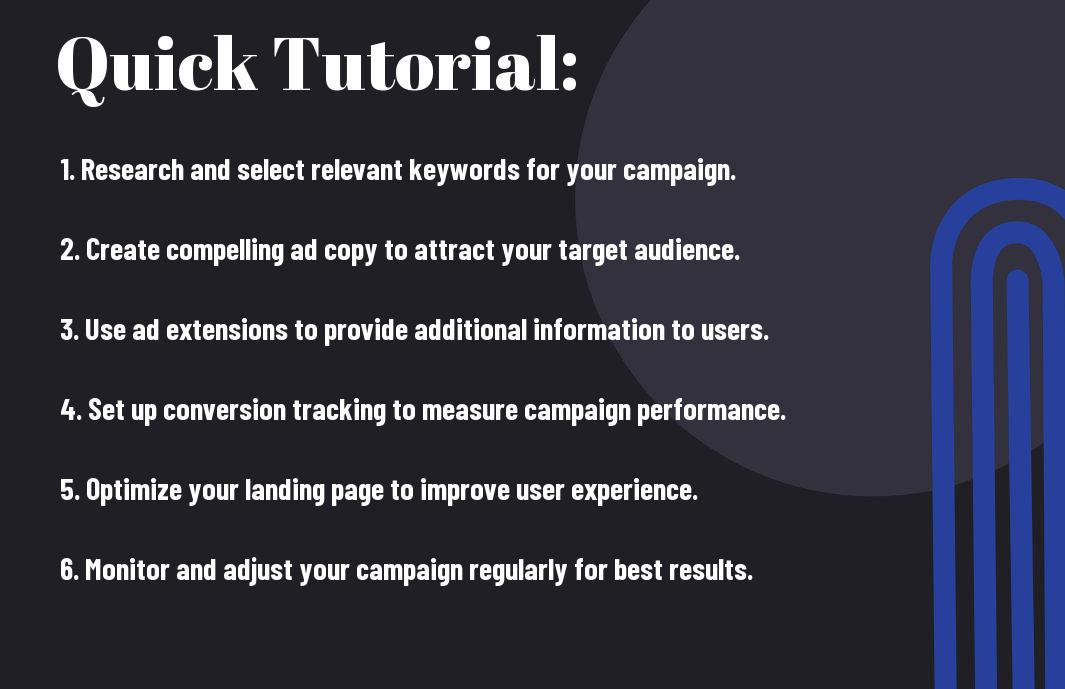
- Keyword Research is Crucial: Understanding your audience’s search behavior and targeting the right keywords is essential for a successful PPC campaign.
- Compelling Ad Copy: Creating attention-grabbing ad copy that addresses the customer’s needs and encourages action is key to increasing click-through rates.
- Landing Page Optimization: Ensuring that your landing pages are optimized for conversions and provide a seamless user experience is crucial for driving results from PPC traffic.
- Constant Monitoring and Testing: Regularly monitoring and testing different elements of your PPC campaign can help you identify what works best and optimize for better results.
- Ad Extensions Matter: Utilizing ad extensions can provide additional information and value to your ads, making them more impactful and improving ad rank.
- Quality Score and Ad Rank: Understanding and improving your quality score and ad rank can lead to lower costs and better ad placement in search results.
- Conversion Tracking: Implementing conversion tracking allows you to measure the effectiveness of your PPC campaign and make data-driven decisions for optimization.
Research Keywords Thoroughly
A successful PPC campaign begins with thorough research of relevant keywords. By understanding the search terms and phrases that potential customers use, you can optimize your campaign for maximum effectiveness.
Use long-tail keywords
Keywords are the foundation of any PPC campaign, and long-tail keywords are particularly valuable. These longer, more specific phrases may have lower search volume, but they often result in higher conversion rates. By targeting long-tail keywords, you can reach potential customers who are further along in the buying process and are more likely to make a purchase.
When using long-tail keywords, it’s important to consider the user’s intent. Think about the specific problem or need that your product or service addresses, and tailor your keywords accordingly. This will help you attract highly relevant traffic to your website, increasing the likelihood of conversions.
Focus on relevance
The relevance of your keywords to your ad copy and landing pages plays a crucial role in the success of your PPC campaign. By ensuring that your keywords align closely with the content you’re presenting, you can improve your Quality Score and ad ranking. This, in turn, can lead to lower costs and higher ad positions, ultimately driving more traffic and conversions to your site.
Optimize Landing Pages
If you want to run effective PPC campaigns, optimizing your landing pages is crucial. The success of your paid search efforts heavily relies on the relevance and quality of your landing page. For more actionable PPC tips and PPC optimization strategies, check out 11 Actionable PPC Tips & PPC Optimization Strategies – Lunio.
Speed is crucial
Any successful PPC campaign requires fast-loading landing pages. Speed is crucial because it directly impacts user experience and conversion rates. Slow-loading pages can result in high bounce rates and decreased ad relevance, which can negatively impact your Quality Score and ad rankings.
Invest in optimizing your landing page speed by compressing images, minifying code, and utilizing reliable hosting. These small changes can make a significant difference in your campaign’s performance.
Clear call-to-action
Clear call-to-action buttons are essential for guiding visitors to take the desired action. Ensure that your call-to-action is prominent, visually appealing, and clearly communicates the next step you want the user to take. Avoid cluttering the page with too many options that may distract from the primary goal.
A/B testing different call-to-action placements, colors, and verbiage can help you identify the most effective approach for your audience.
A compelling call-to-action can significantly influence the success of your PPC campaigns. It can lead to higher conversion rates and ultimately drive more sales or leads for your business.
Utilize Geo-Targeting
To maximize the effectiveness of your PPC campaigns, it’s crucial to utilize geo-targeting. This advanced targeting technique enables businesses to reach their ideal audience based on specific locations, leading to higher conversion rates and more relevant traffic.
Target specific locations
Utilize geo-targeting to focus your PPC ads on specific locations where your target audience is most likely to be located. By narrowing down your target area, you can ensure that your ads are seen by potential customers in the most relevant locations. Whether you want to target a specific city, state, or even a radius around your business location, geo-targeting allows you to precisely hone in on the areas that matter most to your business.
Exclude irrelevant areas
To further enhance the precision of your PPC campaigns, exclude irrelevant areas from your targeting. This ensures that your ads are not being shown to audiences in locations that are unlikely to convert, saving your budget for the areas that truly matter. By excluding irrelevant areas, you can prevent wastage of ad spend and focus on reaching the most valuable audiences.
With geo-targeting, you have the ability to control where your ads are shown, allowing you to tailor your campaigns to specific geographical areas based on customer behavior and preferences. This level of granularity is essential for effectively reaching your target audience and maximizing the ROI of your PPC campaigns.
Implement Ad Scheduling
Despite the temptation to have your PPC ads run 24/7, implementing ad scheduling can be crucial to the success of your campaigns. Ad scheduling allows you to control when your ads are shown to your target audience. This can help you optimize your budget by focusing on peak times when your potential customers are most likely to convert.
Bid on peak times
To maximize the impact of your PPC budget, consider increasing your bids during peak times when your audience is most active. By adjusting your bids based on the time of day and day of the week, you can ensure that your ads are more prominent when your potential customers are ready to make a purchase or take action. This strategic approach can help you improve your ad position and compete more effectively during high-converting hours.
Lower bids off-peak
Lowering your bids during off-peak hours can help you save budget and prevent your ads from being shown when the likelihood of conversion is lower. By leveraging ad scheduling to decrease your bids during less active periods, you can allocate your budget more efficiently and focus your resources on the times when your audience is most engaged.
A well-planned ad scheduling strategy that includes bidding adjustments based on peak and off-peak times can drastically improve the ROI of your PPC campaigns. It allows you to strategically allocate your budget to maximize the impact of your ads during high-converting hours, while minimizing wasted spend during less active periods.
Test Different Ad Extensions
Your PPC ad extensions play a crucial role in the success of your campaigns. They provide additional information to your potential customers, making your ads more relevant and attractive. Testing different ad extensions is essential to understand which ones work best for your business and audience. Here are some tips for optimizing different ad extensions to enhance the performance of your PPC campaigns.
Test Use sitelink extensions
Test using sitelink extensions to direct users to specific pages on your website, such as product pages, contact pages, or service pages. By providing more options for users to explore, you can increase the chances of them finding what they are looking for, ultimately leading to higher conversion rates. Additionally, sitelink extensions can improve the visibility of your ads, taking up more real estate on the search results page and standing out from your competitors.
Test Incorporate call extensions
Test incorporating call extensions to make it easier for potential customers to contact your business directly from the search results. With call extensions, users can simply click a button to call your business, eliminating extra steps in the conversion process. This is particularly effective for businesses that rely on phone calls as a primary form of communication with their customers, such as service-based businesses or local businesses looking to drive phone inquiries.
Incorporate call extensions can significantly improve your ads’ performance, especially for mobile users who prefer to make quick calls rather than visiting a website. By providing a direct line of communication, you can increase the likelihood of conversions and customer engagement.
Embrace Negative Keywords
Keep your pay-per-click (PPC) campaigns cost-effective and efficient by embracing the power of negative keywords. Negative keywords allow you to exclude specific search terms from triggering your ads, preventing irrelevant clicks and ultimately saving your budget.
Filter out unqualified traffic
Embrace the potential of negative keywords to filter out unqualified traffic. By specifying negative keywords related to products or services you don’t offer, you can prevent your ads from showing to users who are not likely to convert, thus increasing the overall quality of traffic to your website. This can lead to a decrease in bounce rate and an increase in conversion rate, ultimately improving your ROI.
Regularly update list
Unqualified traffic can waste your budget and negatively impact your campaign performance. Therefore, it’s essential to regularly update your list of negative keywords based on search terms triggering your ads and the performance of your campaign. By doing so, you can ensure that your ads are not being displayed for irrelevant searches, ultimately maximizing the effectiveness of your PPC campaigns.
A well-maintained negative keyword list is essential for the success of your PPC campaigns. It helps you improve your ROI, reduce wasted ad spend, and increase the quality of traffic to your website. Make sure to regularly review and refine your list to optimize your campaigns and achieve better results.
Monitor Quality Score
For a successful PPC campaign, it is crucial to monitor Quality Score consistently. Quality Score is a metric used by search engines to determine the relevance and quality of your keywords, ads, and landing pages. By regularly monitoring your Quality Score, you can identify areas for improvement and take necessary actions to optimize your campaign performance.
Improve landing page relevance
With a focus on improving landing page relevance, you can enhance the user experience and increase your Quality Score. Make sure that the content on your landing page is closely related to the ad and keywords you are targeting. Utilize relevant keywords, clear calls-to-action, and a compelling value proposition to ensure that visitors are more likely to engage with your landing page.
Enhance ad copy
Enhance your ad copy to improve relevance, click-through rates, and Quality Score. Craft compelling ad copy that directly relates to the keywords and provides a clear value proposition to your audience. Include strong call-to-action and relevant keywords to improve the overall performance of your ads.
Any successful PPC campaign requires attention to detail in ad copy creation. By tailoring your ad copy to reflect the user’s search intent, you can increase the chances of converting a potential customer into a lead or sale.

Utilize Remarketing Strategies
Unlike traditional advertising, remarketing allows you to continue to engage with potential customers even after they have left your website. By targeting users who have already shown interest in your products or services, you can significantly increase your chances of converting them into paying customers. Here are some secret tips to make the most out of your remarketing efforts.
Target site visitors
On average, only 2% of site visitors convert on their first visit. This means that 98% of your site visitors are leaving without taking the desired action. By setting up remarketing campaigns to specifically target these non-converting visitors, you can stay top of mind and entice them to come back and complete the desired action, whether it’s making a purchase, signing up for a newsletter, or filling out a contact form.
An effective remarketing strategy involves segmenting your site visitors based on their behavior, such as the pages they visited or the actions they took. This allows you to create customized ad messaging that speaks directly to their interests or needs, increasing the likelihood of a conversion.
Customize messaging
An essential aspect of remarketing is the ability to customize your ad messaging based on the user’s actions. By delivering personalized messages that align with the specific behavior of each user, you can create a more compelling and relevant experience. This may involve highlighting the products they viewed, offering a special discount, or emphasizing the benefits of your services based on their previous interactions with your site.
The key to successful customized messaging is to make the user feel understood and valued, increasing the likelihood of them returning to your site to complete the desired action. By leveraging remarketing with tailored messaging, you can drive higher engagement and ultimately boost your conversion rates.
Analyze and Adjust
Not seeing the results you expected from your PPC campaigns? Don’t give up just yet. The key to successful pay-per-click advertising lies in the ability to analyze and adjust your strategies for optimal performance.
Regular performance reviews
The first step to effectively managing your PPC campaigns is to conduct regular performance reviews. By analyzing your campaign data and performance metrics on a frequent basis, you can identify patterns, trends, and areas of improvement. This allows you to make informed decisions and adjustments to boost the effectiveness of your campaigns.
Adjust strategies accordingly
Strategies that work initially may not always produce the desired results in the long run. Adjusting your strategies accordingly is crucial for maintaining a competitive edge in the dynamic landscape of PPC advertising. Be prepared to quickly pivot and implement changes basedon the insights garnered from your performance reviews. It’s important to continually refine your approach to ensure maximum ROI and success.
Regular performance reviews and adjustments are essential for achieving sustained success in the competitive world of PPC advertising.They can help you stay ahead of the competitionand optimize your campaigns for better results, leading to agreater return on investment for your business.
Final Words
Summing up, implementing these 10 secret tips for effective PPC campaigns can truly elevate the success of your business. By understanding your target audience, optimizing your ad copy, leveraging negative keywords, and utilizing ad extensions, you can improve your campaign’s performance and achieve a higher return on investment. It’s important to continuously monitor and adjust your campaigns based on data and performance metrics to ensure ongoing success. Ultimately, mastering PPC advertising takes time and effort, but by implementing these proven strategies, you can take your business to the next level and stay ahead of the competition.
FAQ
Q: What are PPC campaigns?
A: PPC (Pay-Per-Click) campaigns are online advertising efforts where advertisers pay a fee each time their ad is clicked. This is a way of buying visits to your site, rather than attempting to “earn” those visits organically.
Q: Why are PPC campaigns important for business owners?
A: PPC campaigns are important for business owners as they provide a targeted approach to reaching potential customers, increase brand visibility, and drive qualified traffic to their websites, ultimately leading to potential sales and conversions.
Q: What are some key tips for effective PPC campaigns?
A: Some key tips for effective PPC campaigns include conducting thorough keyword research, creating compelling ad copy, optimizing landing pages, setting clear campaign goals, and monitoring performance regularly to make necessary adjustments.
Q: How can businesses improve their quality score in PPC campaigns?
A: Businesses can improve their quality score in PPC campaigns by focusing on relevant keywords, creating high-quality ad copy, ensuring a positive user experience on landing pages, and optimizing ad performance based on historical data.
Q: What are the common mistakes to avoid in PPC campaigns?
A: Common mistakes to avoid in PPC campaigns include neglecting negative keywords, not testing ad variations, ignoring ad extensions, not utilizing ad scheduling, and failing to track conversions effectively.
Q: What role does landing page optimization play in PPC campaigns?
A: Landing page optimization plays a crucial role in PPC campaigns as it directly impacts the user experience and conversion rates. An optimized landing page ensures that visitors find relevant information and are more likely to take the desired action, such as making a purchase or filling out a form.
Q: How can businesses measure the success of their PPC campaigns?
A: Businesses can measure the success of their PPC campaigns by tracking key performance indicators (KPIs) such as click-through rate (CTR), conversion rate, cost per acquisition (CPA), return on ad spend (ROAS), and overall return on investment (ROI).