

Welcome to our latest blog post where we discuss how startups can maximize their budget efficiency by utilizing cost-effective marketing strategies through social media management. For small businesses and startups, identifying the most effective and efficient marketing strategies is crucial for success in a highly competitive marketplace.
In this post, we will delve into the importance of social media management for startups, highlighting the positive impact it can have on reaching target audiences, increasing brand awareness, and driving sales. Additionally, we will explore the dangerous pitfalls that startups should avoid when implementing social media marketing, and how to effectively navigate them. It is crucial to understand the cost-effective benefits and potential drawbacks associated with social media marketing in order to achieve optimal results while maximizing budget efficiency.
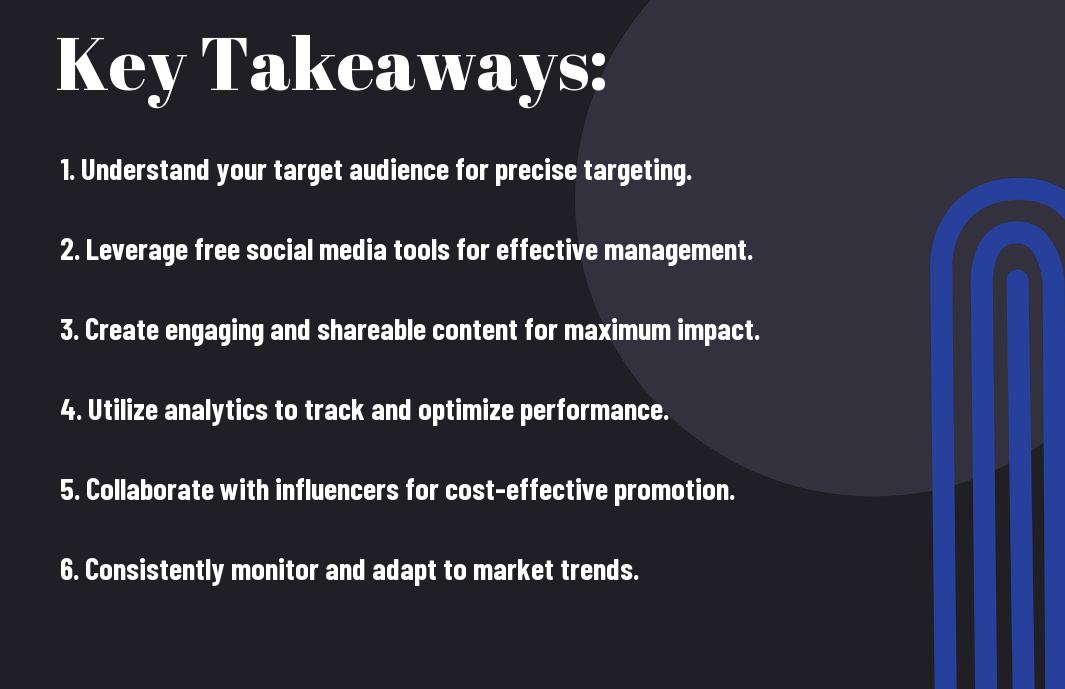
Key Takeaways:
- Targeted approach: Utilizing social media management allows startups to reach their specific audience with targeted content, maximizing the efficiency of their marketing budget.
- Cost-effective strategy: By leveraging social media platforms, startups can save money on traditional marketing methods and achieve a high ROI with minimal financial investment.
- Data-driven decisions: Social media management provides valuable insights and analytics that enable startups to make informed decisions, adjust their strategies, and optimize their marketing efforts for better efficiency.
Establishing a Marketing Budget
Any startup needs to establish a marketing budget to effectively allocate funds for their marketing efforts. This budget will ensure that resources are used efficiently while maximizing the return on investment (ROI).
Assessing Your Financial Position
Assessing your financial position is crucial before setting a marketing budget. Take a thorough look at your current financial status, including revenue, expenses, and available capital. Consider any outstanding debts or financial commitments that may impact your ability to allocate funds to marketing efforts. Understanding your financial position will help you determine a realistic budget that aligns with your financial capabilities.
Allocating Funds for Marketing Efforts
Positioning funds for marketing efforts requires careful consideration and strategic planning. It is important to prioritize marketing initiatives based on their potential impact on the target audience and the overall business goals. Consider allocating a portion of the budget to social media management, content creation, paid advertising, and other cost-effective marketing strategies that can effectively reach and engage your target market.
Marketing efforts, such as social media management and content creation, can be cost-effective ways for startups to reach their target audience. By allocating funds towards these strategies, startup businesses can maximize their budget efficiency while achieving their marketing objectives.
Importance of Return on Investment (ROI)
Return on investment (ROI) is a critical factor in determining the success of your marketing efforts. It measures the profitability of your marketing campaigns and helps you understand the effectiveness of your allocated funds. By analyzing the ROI of each marketing initiative, startups can identify which strategies are yielding the highest returns and adjust their budget allocation accordingly.
For instance, monitoring the ROI of paid advertising on social media platforms can help startups understand the effectiveness of their marketing spend and make informed decisions about future budget allocation. It is important for startups to regularly evaluate the ROI of their marketing efforts to ensure that their budget is being used efficiently and effectively.

Social Media Platforms for Startups
After deciding to utilize social media as part of your marketing strategy, the next step is to determine which platforms will be the most effective for your startup. With a multitude of social media networks available, it’s important to carefully consider where to invest your time and resources.
Overview of Major Social Media Networks
The landscape of social media is constantly changing and evolving, but some of the major platforms include Facebook, Instagram, Twitter, LinkedIn, and YouTube. Each of these platforms has its own unique features and audience demographics, making them suitable for different types of marketing strategies. The key is to understand the strengths and weaknesses of each platform in order to make informed decisions about where to focus your efforts.
Identifying the Right Platforms for Your Business
Businesses must consider their target audiences, products, and goals when identifying the most appropriate social media platforms. Major factors to consider include the demographics of each platform, the type of content that performs well, and the level of engagement from followers. It’s essential to choose platforms that align with your business objectives and that will allow you to connect with your target audience effectively.
Social media can provide businesses with numerous opportunities to engage with their audience, build brand awareness, and increase website traffic. However, it’s also important to be aware of the potential limitations, such as algorithm changes, platform competition, and the need for consistently high-quality content.
Advantages and Limitations of Each Platform
It’s important for startups to carefully consider the specific advantages and limitations of each platform before making a decision. Instagram, for example, is known for its highly visual nature, making it ideal for businesses that can create compelling visual content. On the other hand, the platform’s algorithm changes can make organic reach challenging for some businesses. Similarly, while LinkedIn is a powerful platform for B2B marketing and networking, it may not be as effective for businesses targeting a younger demographic.
It’s crucial for startups to weigh the benefits and challenges of each platform in order to make informed decisions about where to allocate their resources. Understanding the unique advantages and limitations of each platform will allow businesses to develop a social media strategy that maximizes their budget efficiency and delivers measurable results.
Crafting Your Social Media Strategy
Unlike traditional marketing tactics, social media management for startups requires a strategic approach to maximize budget efficiency. Crafting a social media strategy involves defining your brand’s voice and message, building a content calendar, and implementing audience engagement tactics.
Defining Your Brand’s Voice and Message
Crafting a strong brand voice and message is crucial for establishing your startup’s identity on social media. This involves clearly defining your brand persona, target audience, and key messaging. Your brand’s voice should be consistent across all social media platforms, conveying a cohesive message that resonates with your target audience. This will help build brand awareness and loyalty among your followers, ultimately leading to increased engagement and conversions.
Building a Content Calendar
Social media content calendar, with a predetermined schedule for posting, is essential for staying organized and consistent with your social media content. Your content calendar should include a mix of promotional, educational, and entertaining content to keep your audience engaged. It should also align with your overall marketing strategy and incorporate relevant keywords and hashtags to improve discoverability.
By planning your social media content in advance, you can ensure a steady stream of valuable content that resonates with your audience, driving traffic to your website and generating leads for your startup.
Audience Engagement Tactics
For startups, audience engagement tactics play a vital role in building a loyal community of followers on social media. By implementing strategies such as conducting polls, hosting live Q&A sessions, and responding to comments and messages, you can foster meaningful interactions with your audience. These tactics help humanize your brand and build trust with your followers, ultimately leading to increased brand loyalty and customer retention.
Audience engagement is a two-way street, Social media is also a platform for startups to gather valuable feedback and insights from their audience, enabling them to continually improve their products and services.
Content Creation on a Budget
Now, let’s discuss how to create engaging content for your social media marketing strategy without breaking the bank. Content creation is a crucial element of a successful social media presence, and it doesn’t have to cost a fortune.
Utilizing In-House Resources
One of the most cost-effective ways to create content for your startup’s social media is by utilizing in-house resources. Your team members can provide valuable insights and expertise in their respective areas, whether it’s product development, customer service, or sales. Encourage team members to contribute ideas and content, which not only saves money but also gives your social media presence an authentic and personal touch.
Cost-Effective Content Ideas and Examples
An effective way to create engaging content on a budget is by utilizing user-generated content. Encourage your followers to share their experiences with your products or services, and then repurpose their posts into your social media content. Hosting contests or challenges can also generate a wealth of user-generated content, which can be leveraged for your marketing efforts.
Utilizing user-generated content not only saves money on content creation but also builds a sense of community and loyalty among your followers. It’s a win-win situation that can drive positive engagement and ultimately, sales.
Scheduling and Automation to Save Time
Utilizing scheduling and automation tools can save time and effort in managing your social media. Platforms like Hootsuite, Buffer, or Sprout Social allow you to plan and schedule posts in advance, ensuring consistent and timely content delivery. Automation features can also help in repurposing and recycling evergreen content, maximizing its reach and impact.
Creation of a social media content calendar can help in organizing and planning your content strategy, ensuring that you maintain a consistent posting schedule. By automating repetitive tasks and scheduling content in advance, you can free up your time to focus on other important aspects of your startup’s marketing efforts.
Growth Hacking with Social Media
Your startup can leverage the power of social media for growth hacking. By implementing cost-effective marketing strategies, you can maximize your budget efficiency and achieve rapid growth.
Leveraging User-Generated Content
An effective way to drive growth through social media is by leveraging user-generated content. Encourage your customers to share their experiences with your products or services, and then amplify that content across your social media platforms. This not only increases brand authenticity and trust but also expands your reach to new potential customers.
Viral Marketing Techniques
Techniques such as creating shareable and engaging content, running contests or giveaways, and tapping into trending topics can help your startup achieve viral success on social media. By utilizing growth hacking strategies, you can propel your startup’s brand and message to a wider audience, increasing brand awareness and customer acquisition.
Growth hacking, social media, viral marketing, shareable content, contests, brand awareness, customer acquisition
Collaboration and Influencer Partnerships
An effective method for exponential growth on social media is through collaboration and influencer partnerships. By teaming up with like-minded brands or influencers in your industry, you can reach a larger audience and gain credibility through association. This approach can significantly boost your startup’s visibility and attract new customers.
With the right collaboration and influencer partnerships, your startup can tap into established audiences, drive engagement, and ultimately convert more leads into customers. This can be a game-changer for startups looking to grow rapidly and cost-effectively through social media marketing.
collaboration, influencer partnerships, visibility, engagement, customer conversion
Analyzing and Optimizing Performance
To maximize budget efficiency and ensure cost-effective marketing, it is imperative for startups to constantly analyze and optimize the performance of their social media marketing efforts. By closely monitoring key metrics and interpreting data, startups can make informed decisions and pivot their strategy when necessary.
Tools for Tracking Metrics
The use of analytics tools is crucial for tracking the performance of social media marketing campaigns. These tools provide valuable insights into metrics such as engagement, reach, and conversions, allowing startups to assess their overall effectiveness. Popular tools like Google Analytics, Facebook Insights, and Hootsuite offer detailed reports and dashboards that enable startups to monitor the performance of their marketing efforts in real-time.
Interpreting Data to Make Informed Decisions
Analyzing data is essential for startups to make informed decisions regarding their social media marketing strategy. By closely examining metrics such as click-through rates, conversion rates, and audience demographics, startups can gain valuable insights into their target audience and the effectiveness of their content. Interpreting this data allows startups to identify areas for improvement and optimize their marketing efforts accordingly.
Interpreting the data also helps startups make informed decisions about allocating their budget and resources. By understanding which strategies and content perform best, startups can focus on what works and eliminate what doesn’t, maximizing their budget efficiency and achieving a higher return on investment.
When to Pivot Your Strategy
For startups, it is important to recognize when their social media marketing strategy is not delivering the desired results. This could be indicated by a decline in engagement, low conversion rates, or the inability to reach the target audience effectively. When this occurs, it is essential for startups to pivot their strategy and explore new approaches to achieve better results.
This may involve adjusting the targeting criteria, experimenting with different types of content, or exploring new social media platforms to reach their audience more effectively. By being willing to pivot their strategy based on the performance data, startups can adapt to changing market dynamics and continue to maximize their budget efficiency.
Legal Considerations and Best Practices
Not paying attention to legal considerations and best practices can lead to serious consequences for startups engaging in social media marketing. It is important to be aware of the guidelines and laws surrounding social media use to avoid potential legal trouble and protect the brand’s reputation.
Understanding Social Media Guidelines and Laws
On social media, startups must adhere to the guidelines and laws set forth by the platforms as well as local, national, and international regulations. This includes understanding copyright laws, data protection regulations, and the specific terms of service for each social media platform. Ignorance of these guidelines and laws is not an excuse, and startups can face severe penalties for non-compliance.
Maintaining Transparency and Authenticity
An important aspect of social media management for startups is maintaining transparency and authenticity in all communications. Being honest and open with the audience helps to build trust and credibility, while misleading or dishonest practices can damage the brand’s reputation. Considerations should be made to ensure that all content and interactions are genuine and reflect the brand’s values and voice.
Considerations should also be given to the use of disclaimers, promotions, and endorsements to ensure compliance with advertising and consumer protection regulations.
Crisis Management on Social Media
Maintaining a proactive approach to crisis management on social media is essential for startups. In the event of a crisis or negative publicity, a prompt and transparent response can make a significant difference in how the situation is perceived by the audience. Developing a crisis management plan and training the social media team on how to handle such situations is crucial to mitigating any potential damage to the brand’s reputation.
Guidelines for addressing crisis situations should include staying calm, acknowledging the issue, providing accurate information, and outlining the steps being taken to resolve the situation.
Case Studies and Success Stories
Keep your startup marketing budget in check by learning from the success stories of other companies who have effectively utilized social media management. Here are some case studies that demonstrate the power of cost-effective marketing through social media:
- Company A: Increased website traffic by 50% and generated 100 leads in 3 months through targeted social media ads.
- Company B: Achieved a 200% ROI on their social media marketing efforts by focusing on engaging content and community building.
- Company C: Grew their social media following by 300% within a year through consistent posting and strategic use of hashtags.
For more in-depth strategies on how to create a social media marketing budget, check out this article on Small Business Trends.
Successful Low-Budget Social Media Campaigns
Stories of startups achieving remarkable results with minimal budgets through social media campaigns serve as great inspiration for others. By leveraging creativity, engagement, and the right platforms, these companies have proven that it is possible to achieve big results even with limited resources.
Lessons Learned from Startup Failures
Media coverage often focuses on the success stories, but there is much to be learned from the failures of startups in their social media marketing efforts. Understanding the reasons behind these failures can provide valuable insights for avoiding similar pitfalls and maximizing the efficiency of your budget.
Success in social media management is not guaranteed, and learning from the mistakes of others can help your startup navigate potential challenges more effectively.
Interviews with Marketing Experts
Case studies and success stories are valuable, but hearing directly from marketing experts can provide even deeper insights into effective social media campaigns. By learning from the experiences and expertise of industry professionals, startups can gain valuable knowledge to make the most of their marketing budget.
Campaigns that have benefited from expert guidance and insights often yield more impactful results, making it essential for startups to seek out advice from those with proven success in the field of social media management.
Conclusion
Following this cost-effective approach to social media management for startups can help maximize budget efficiency and ensure that every dollar spent delivers a strong return on investment. By strategically targeting the right audience, consistently engaging with followers, and utilizing data-driven insights, startups can build a strong online presence and effectively market their products or services without breaking the bank. As social media continues to play a critical role in modern marketing strategies, mastering cost-effective tactics for social media management will be essential for startups to thrive in competitive markets.
It is clear that investing in social media management for startups can yield valuable results without major financial commitments. By focusing on creating high-quality content, engaging with the audience, and utilizing social media analytics, startups can effectively and affordably reach their target market and grow their brand. It is important for startups to prioritize cost-effective strategies in order to make the most out of their budget and achieve sustainable growth in the competitive business landscape.
Maximizing Budget Efficiency – Cost-Effective Marketing through Social Media Management for Startups
Q: What is social media management and how can it benefit startups in terms of budget efficiency?
A: Social media management involves creating, scheduling, analyzing, and engaging with content posted on social media platforms. It allows startups to reach their target audience and build a brand presence without the high costs associated with traditional marketing. By effectively managing social media, startups can maximize their budget efficiency by targeting specific demographics, engaging with potential customers, and measuring the success of their marketing efforts in real-time, all while keeping costs low.
Q: How can startups ensure cost-effective social media marketing while maximizing their budget efficiency?
A: Startups can ensure cost-effective social media marketing by carefully selecting the right social media platforms for their target audience, creating a content calendar to schedule posts, utilizing organic reach through engaging content, and leveraging analytics to measure the success of their campaigns. Additionally, startups can collaborate with influencers, engage in community management, and run cost-effective paid advertising campaigns targeting specific demographics. By focusing on these strategies, startups can optimize their budget efficiency and achieve meaningful results without overspending.
Q: What are the key metrics that startups should focus on to measure the effectiveness of their social media marketing efforts in terms of budget efficiency?
A: Startups should focus on key metrics such as reach, engagement, conversion rates, click-through rates, and return on investment (ROI) to measure the effectiveness of their social media marketing efforts. By analyzing these metrics, startups can understand the impact of their marketing strategies on their budget efficiency. For example, by tracking conversion rates and ROI, startups can determine the cost-effectiveness of their social media campaigns and make data-driven decisions to optimize their budget allocation for future marketing efforts.