

Social media has become an integral part of the modern business landscape, and startups can leverage social media management tools to gain valuable insights into their customers, competitors, and market trends. By utilizing these tools to track and analyze social media engagement, startups can uncover key information about their target audience’s behavior and preferences, allowing for more personalized marketing strategies and product development. Furthermore, through competitor analysis, startups can gain a better understanding of industry trends and identify potential opportunities for differentiation and growth in the market.
One of the most powerful aspects of social media management tools is their ability to provide startups with real-time data and analytics that can inform better-informed business decisions. By tracking and monitoring social media metrics, startups can identify patterns and trends that can guide their strategic planning and resource allocation, ultimately leading to a competitive edge in their industry. In this blog post, we will explore the various ways in which startups can harness the power of social media management tools to gain valuable insights and make data-driven decisions for long-term success.
Key Takeaways:
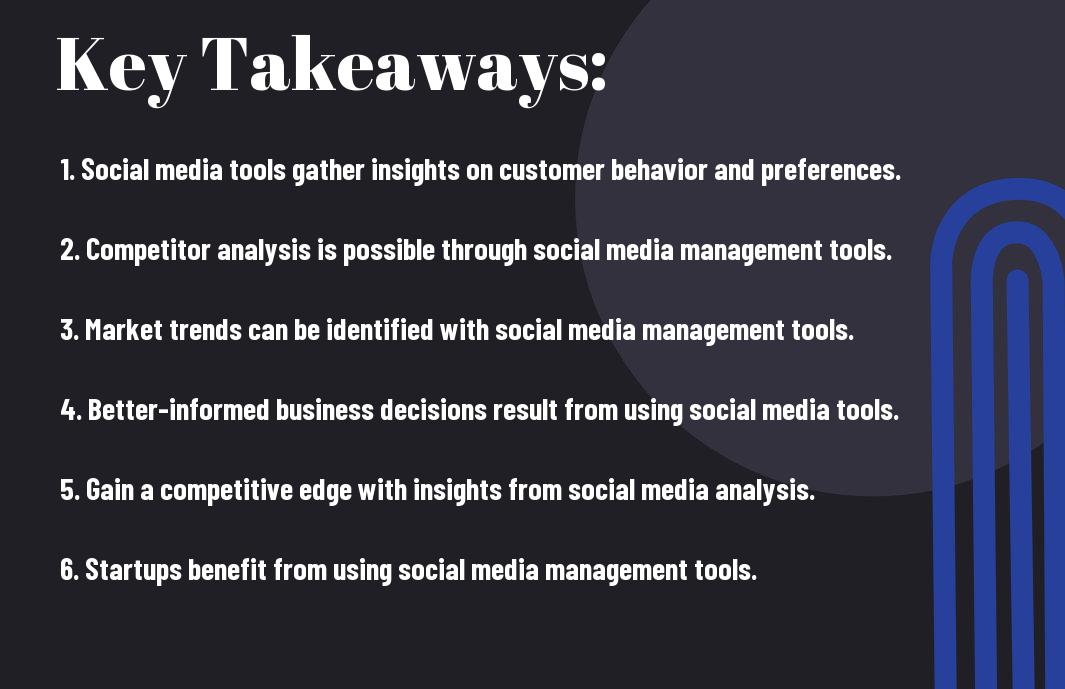
- Social Media Management Tools for Gathering Customer Insights: Startups can use social media management tools to monitor and analyze customer behavior and preferences, such as tracking engagement metrics, sentiment analysis, and identifying trending topics and conversations among their target audience.
- Competitor Analysis: Social media management tools can be utilized to track and analyze competitors’ social media activities, including their content strategies, engagement levels, and audience demographics, allowing startups to gain valuable insights and identify opportunities for differentiation.
- Market Trends and Informed Business Decisions: By leveraging social media management tools, startups can stay updated on the latest market trends, industry news, and consumer sentiments, enabling them to make informed business decisions and adapt their strategies to gain a competitive edge.
Understanding Customer Behavior through Social Media
Even in the digital age, understanding customer behavior remains a crucial aspect of any successful business strategy. Social media has become a goldmine for startups looking to gain insights into their customers’ preferences, habits, and attitudes. By leveraging social media management tools, startups can uncover valuable data that can inform better business decisions and give them a competitive edge in their market.
Monitoring Customer Interactions
Any startup can use social media management tools to track and monitor customer interactions on platforms like Facebook, Twitter, and Instagram. By closely monitoring these interactions, startups can gain a deeper understanding of their customers’ needs, interests, and pain points. This real-time data allows startups to respond quickly and effectively to customer inquiries, complaints, and feedback, ultimately improving customer satisfaction and loyalty.
Analyzing Feedback and Engagement Patterns
Media, startups can analyze feedback and engagement patterns to identify trends and preferences among their target audience. By examining likes, comments, shares, and other forms of engagement, startups can gain valuable insights into what resonates with their customers and what doesn’t. This data can be used to tailor marketing campaigns, product features, and customer service efforts to better meet the needs and expectations of the target audience.
The ability to analyze feedback and engagement patterns on social media provides startups with invaluable insights into customer behavior and preferences. By leveraging social media management tools, startups can gain a deeper understanding of their customers’ needs, monitor interactions, analyze feedback, and make data-driven decisions that drive business success and give them a competitive edge in their market.
Leveraging Social Media for Customer Preference Insights
If startups want to truly understand their customers, social media is the perfect place to start. By utilizing social media management tools, such as Hootsuite, Buffer, and Sprout Social, startups can gather valuable insights into customer behavior and preferences. These insights can then be used to make more informed business decisions and gain a competitive edge in the market.
Tracking Consumer Trends on Social Platforms
Social media platforms are a goldmine of information when it comes to tracking consumer trends. By using social media management tools to monitor conversations and engagements, startups can gain valuable insights into what their target audience is talking about, what they like, and what they dislike. This information can be used to tailor products and messaging to better fit the needs and desires of the customer base.
Utilizing Surveys and Polls for Direct Feedback
Tracking consumer trends is important, but sometimes startups need more direct feedback to truly understand customer preferences. Social media management tools can be used to conduct surveys and polls to gather this direct feedback from the target audience. By engaging customers in this way, startups can gather valuable information about their preferences, which can inform product development and marketing strategies.
Feedback from surveys and polls can provide startups with insights into customer behavior and preferences, helping them to make better-informed business decisions. This direct feedback can also help in understanding how a company’s products and messaging are perceived in the market, giving them a competitive edge over their competitors.
Competitor Analysis via Social Media
Unlike traditional methods of competitor analysis, social media management tools provide startups with the ability to gather real-time data on their competitors’ activities, interactions, and strategies. This invaluable information can be used to gain a deeper understanding of the competitive landscape and make more informed business decisions.
Identifying Key Competitors
With social media management tools, startups can identify their key competitors by tracking and analyzing their online presence. These tools allow startups to monitor the social media activities of similar products, personas, and subjects to see which competitors are gaining the most engagement and traction. By understanding who their main competitors are, startups can focus their efforts on improving their own strategies and staying ahead of the competition.
Analyzing Competitor Social Media Strategies
Competitors’ social media strategies can be analyzed through social media management tools to gain insights into the type of content they are creating, the frequency of their posts, and the level of engagement they are receiving. By understanding what content resonates most with their target audience, startups can tailor their own social media strategies to be more effective. Additionally, by analyzing competitor social media strategies, startups can identify any potential gaps or weaknesses in the market that they can capitalize on.
A thorough analysis of competitor social media strategies can provide startups with a competitive edge, enabling them to make informed decisions and stay ahead in the market.
## Market Trend Identification through Social Listening
Despite the vast amount of noise on social media, startups can use social media management tools to gain valuable insights into market trends through social listening. By analyzing conversations, mentions, and topics in real-time, startups can stay ahead of the curve and make informed business decisions.
### Observing Conversations and Topics in Real-Time
Through social media management tools, startups can observe conversations and topics in real-time, allowing them to understand what their potential customers are discussing. By monitoring hashtags, mentions, and keywords related to their products or personas, startups can gain a deeper understanding of customer behavior and preferences. This real-time insight enables them to tailor their marketing strategies and product development to match the current market demands, giving them a competitive edge.
### Predicting Market Shifts with Social Media Data
For startups, predicting market shifts is crucial for staying relevant and competitive. Social media data can provide early indicators of changing market trends, allowing startups to adjust their strategies accordingly. By analyzing sentiment analysis, customer feedback, and industry discussions, startups can anticipate shifts in customer preferences and adapt their products and marketing efforts proactively, rather than reactively.
With the right social media management tools, startups can predict market shifts, identify emerging trends, and make better-informed business decisions that give them a competitive edge in the market.
Data-Driven Business Decision-Making
Your startup can leverage social media management tools to gather valuable insights on customer behavior, preferences, competitor analysis, and market trends. By utilizing these tools, you can make better-informed business decisions and gain a competitive edge in the market.
Integrating Social Media Insights into Strategic Planning
The integration of social media insights into your startup’s strategic planning can provide invaluable information for understanding the market landscape and the preferences of your target audiences. This data can help in identifying emerging trends, monitoring competitors, and ultimately shaping your business strategy to stay ahead in the market.
Enhancing Product Development with Customer Insight
With access to customer insights gathered from social media, startups can tailor their product development efforts to meet the specific needs and preferences of their customer segments. This can lead to the creation of more innovative and competitive products, ultimately improving the startup’s market position.
To achieve this, startups can use social media management tools to analyze customer feedback, sentiment analysis, and demographic information to inform their product development strategies. These insights can help in creating products that resonate with the target audience, thereby driving business growth and success.
Gaining a Competitive Edge with Advanced Social Media Practices
Keep ahead of the competition by leveraging advanced social media practices to gather valuable insights into customer behavior, preferences, competitor analysis, and market trends. This information can lead to better-informed business decisions and a clear competitive edge. Here are some key strategies to implement:
- Customer Behavior and Preferences
- Competitor Analysis
- Market Trends
Implementing Targeted Marketing Campaigns
Media management tools can provide detailed analytics on customer behavior and preferences, allowing startups to create highly targeted marketing campaigns. This enables them to reach the right audience with the right message at the right time, ultimately improving conversion rates and ROI.
Engaging Influencers and Building Partnerships
Edge out the competition by leveraging social media to engage with influencers and build strategic partnerships. By collaborating with influencers, startups can expand their reach and credibility, gaining access to new audiences and potential customers.
This approach can provide valuable insights into customer behavior and preferences, competitor analysis, and market trends, leading to better-informed business decisions and a competitive edge.
Addressing Challenges in Social Media Management
Now that we have discussed the benefits of using social media management tools for startups, it is crucial to address the challenges that come with it. As valuable as these tools can be, they also come with their own set of obstacles that need to be navigated effectively.
Ensuring Data Privacy and Ethical Considerations
Considerations surrounding data privacy and ethical practices are of utmost importance when utilizing social media management tools. Startups need to ensure that they are obtaining data in a transparent and ethical manner, and that the privacy of their customers is upheld. It is imperative to comply with regulations such as GDPR and to have stringent data protection measures in place to safeguard the personal information of their audience.
Overcoming Information Overload
To effectively gather insights from social media management tools, startups must overcome the challenge of information overload. With the vast amount of data available, it can be overwhelming to sift through and extract meaningful insights. This calls for the need to filter and analyze data efficiently, so that relevant information can be translated into actionable strategies.
Data overload can lead to analysis paralysis, where startups are unable to make decisions due to the abundance of information. It is important to use data visualization tools and analytics software to simplify complex data and identify key trends and patterns. Additionally, setting specific goals and parameters for data collection can help in streamlining the process and focusing on the most pertinent information.
Conclusion
Drawing together customer behavior, competitor analysis, and market trends through social media management tools can provide startups with invaluable insights to make better-informed business decisions and gain a competitive edge. By utilizing these tools, startups can gain a deeper understanding of their target audience’s preferences and behaviors, allowing them to tailor their products and services to meet customer needs more effectively. Additionally, social media management tools can provide valuable data on competitor activity and market trends, enabling startups to stay ahead of the curve and adapt their strategies accordingly.
Ultimately, the use of social media management tools can give startups a significant advantage in the ever-evolving business landscape. By leveraging the wealth of information available through these tools, startups can make informed decisions that drive their business forward and set them apart from the competition.
FAQ
Q: How can startups use social media management tools to gather insights on customer behavior and preferences?
A: Startups can use social media management tools to analyze customer interactions, comments, and feedback across various social media platforms. These tools can track engagement metrics, sentiment analysis, and demographics to understand what customers are talking about, their preferences, and behaviors. By gathering this data, startups can tailor their products and services to meet customer needs and improve overall satisfaction.
Q: How can startups use social media management tools for competitor analysis?
A: Social media management tools allow startups to monitor and analyze competitors’ social media activities, such as their content strategy, engagement levels, and audience demographics. By understanding what content and messaging resonate with the competitor’s audience, startups can refine their own social media strategies to stand out and attract a larger market share. This competitive analysis helps startups stay informed about industry trends and make strategic decisions to differentiate themselves in the market.
Q: How can startups use social media management tools to stay updated with market trends and make better-informed business decisions?
A: Social media management tools provide startups with real-time data on market trends, industry news, and consumer behavior. By tracking relevant hashtags, keywords, and industry influencers, startups can gain insights into emerging trends and consumer preferences. This information enables startups to pivot their strategies, launch new products or services, and make informed business decisions based on the latest market dynamics. By leveraging these insights, startups can gain a competitive edge and stay ahead of the curve in their industry.